Bydgoszcz as „Klein Berlin”
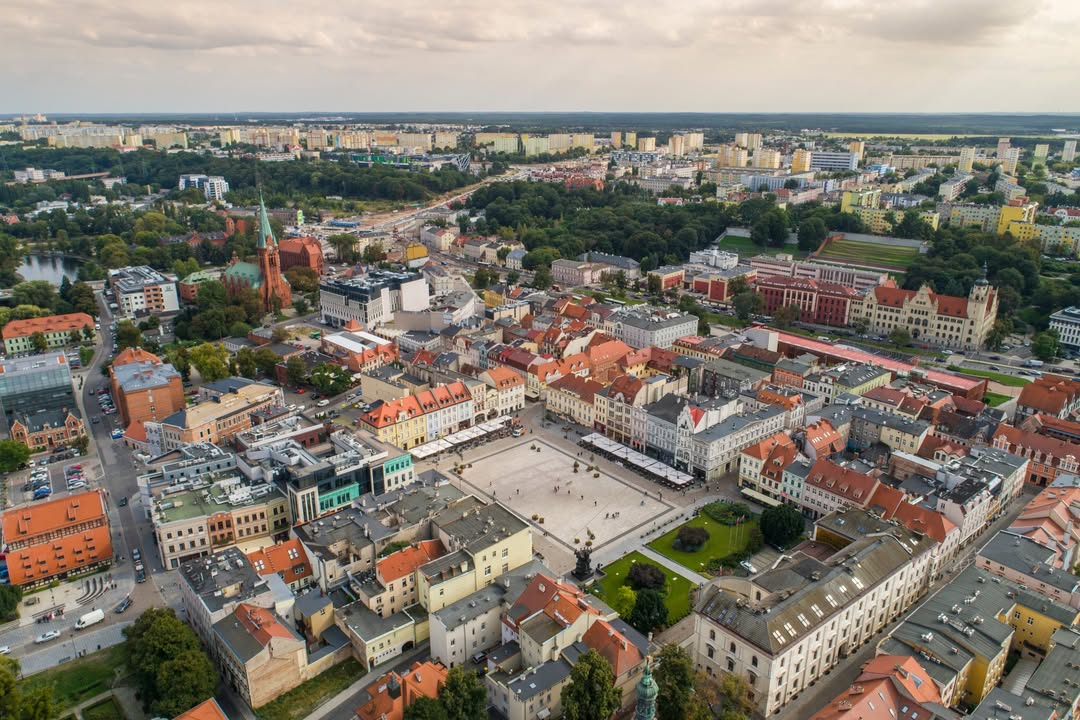
As a result of the First Partition of Poland (1772), Bydgoszcz was incorporated into Prussia. The Prussians took over a city devastated and heavily depopulated by wars. Bydgoszcz, known at that time as Bromberg (the German name of the city), became an important administrative and military centre. The city began to develop again as a place of industry and trade, to a large extent thanks to the King of Prussia, Frederick II the Great, who decided to build the Bydgoszcz Canal (1773-1774). The railway connection with Berlin (1851) further helped the development of the city, significantly contributing to its prosperity.
Bydgoszcz as „Klein Berlin”
Thus, Bydgoszcz experienced dynamic growth in the second half of the 19th and the beginning of the 20th century. This time can be called the second golden period in the history of the city. Most inhabitants of Bydgoszcz at that time were people who came from Prussia. Berlin, becoming the capital of the newly established German Empire, would therefore exercise a huge influence on the residents of the city on the Brda River. At the beginning of the 20th century, it was possible to get by train from Bydgoszcz to the capital of the German Empire in five hours. The residents could choose from more than ten connections a day. Bydgoszcz merchants, entrepreneurs, factory owners and architects travelled to Berlin. However, such movement also took place in the other direction. Local but also Berlin architects would design buildings in Bydgoszcz. Many tenement houses, public edifices and industrial plants with interesting architecture were built on the Brda River. That is why the city was called little Berlin (‘Klein Berlin’). We kindly invite you for a walk around the German Bydgoszcz from the turn of the 20th century.
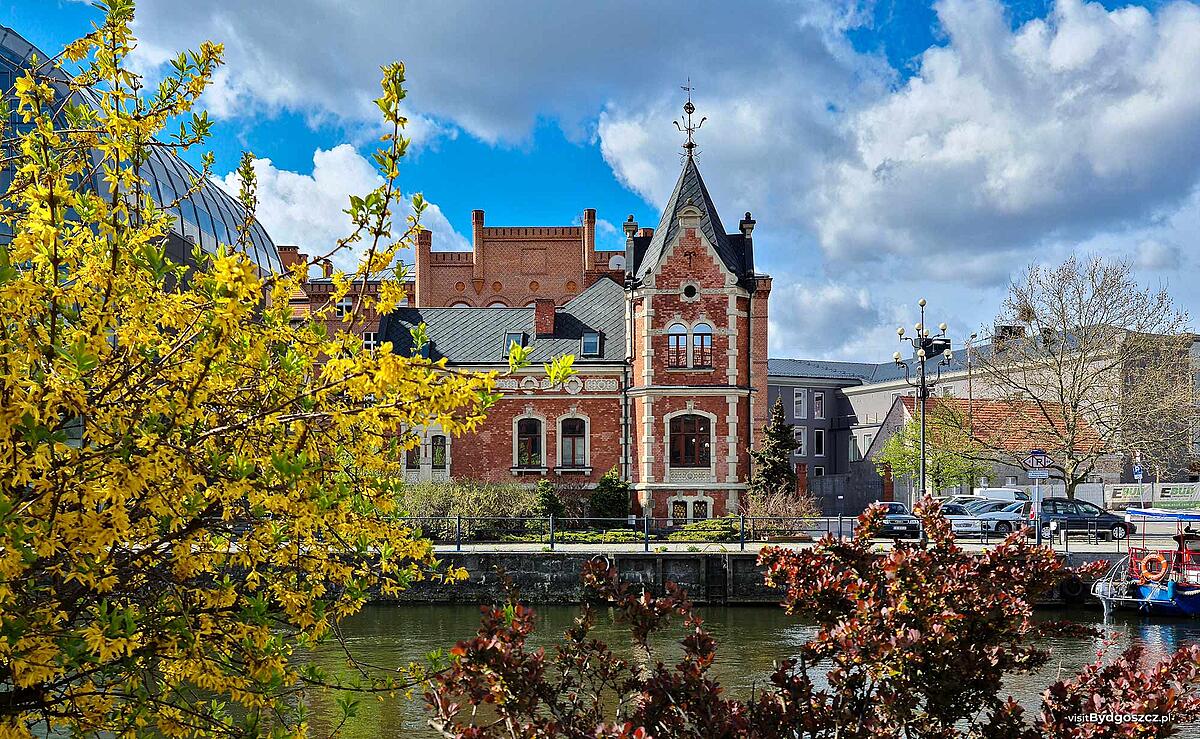
1. Lloyd’s Palace, 17 Grodzka Street*
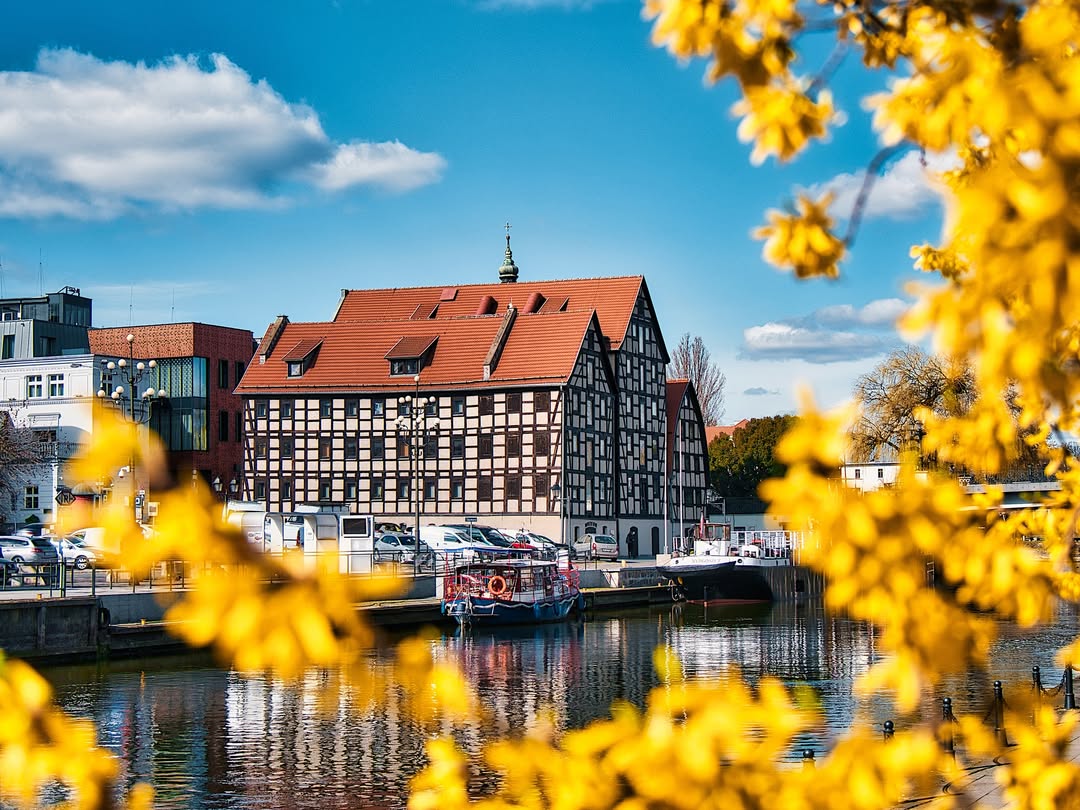
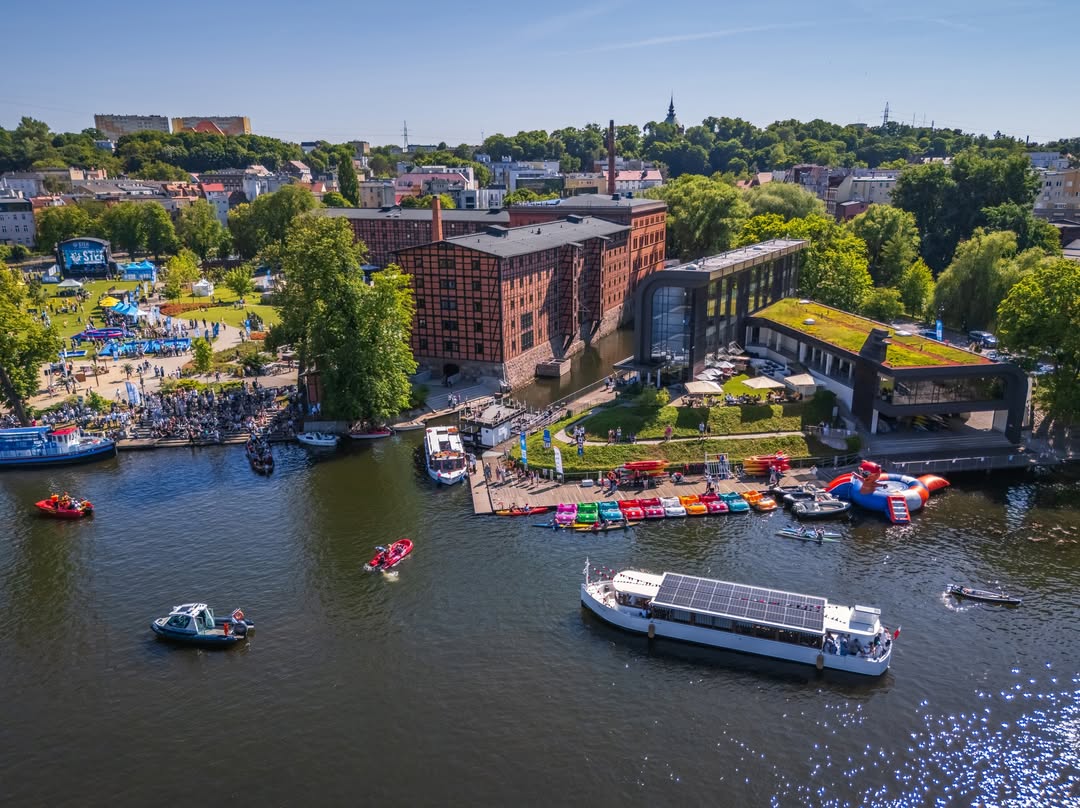
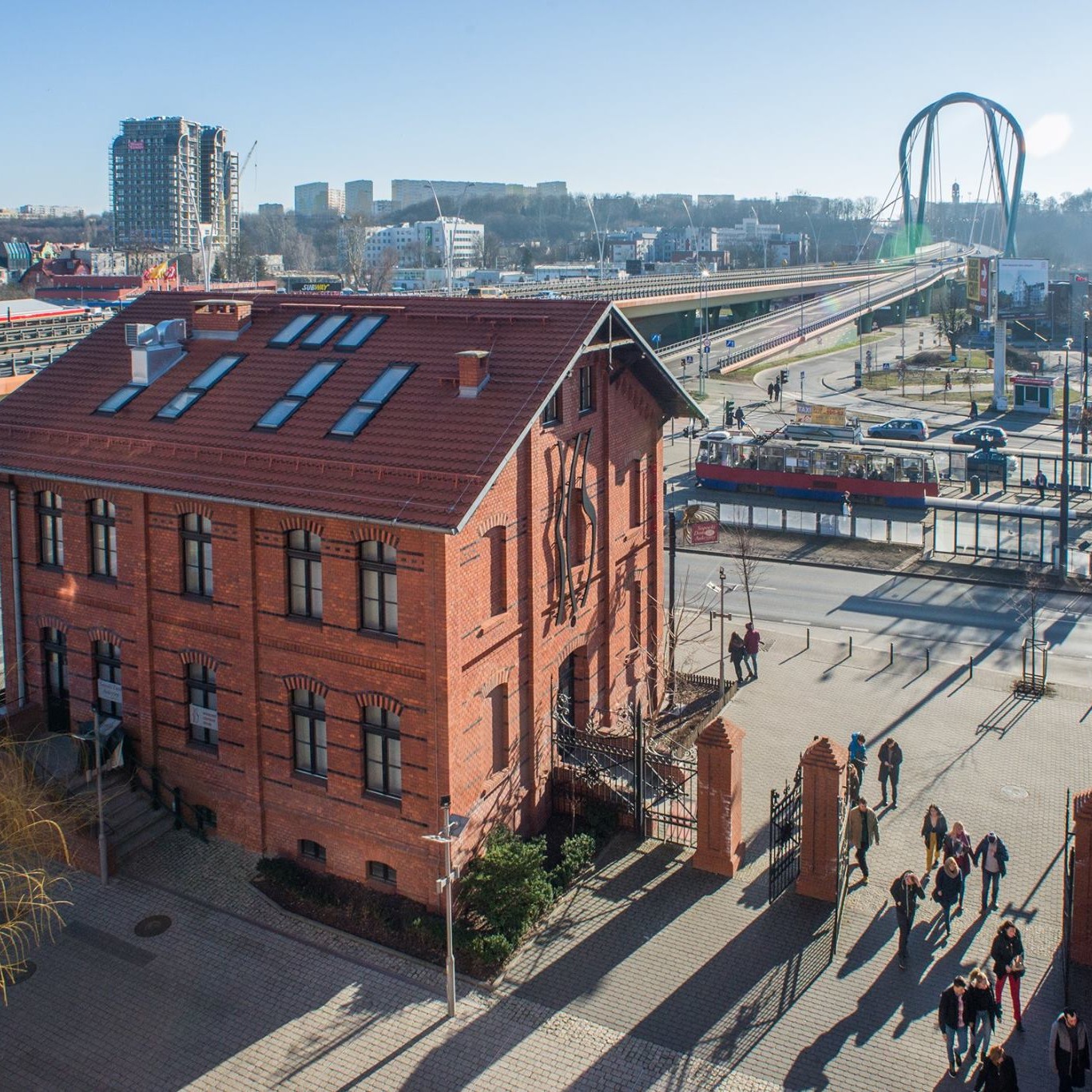
The building was erected in the style of the Dutch Mannerism in the years 1885-1886 for the captain Otto Liedtke. The small structure hides over 100 years of history connected to the inland navigation in Bydgoszcz. The property, purchased at the beginning of the 20th century by the Bydgoszcz Inland Navigation Society (Bromberger Schleppschiffahrt), reminds us about the role that the river trade played in the history of the city. Bydgoszcz’s heritage related to water, including some unusual hydrotechnical facilities as well as the city’s 19th-century industrial past can be seen on Mill Island.
* The German language was used in the names of streets and squares at that time; Grodzka street was called Schloßstraße, later Burgstraße.
2. The Church of Saint Andrew Bobola, 7 Kościeleckich Square
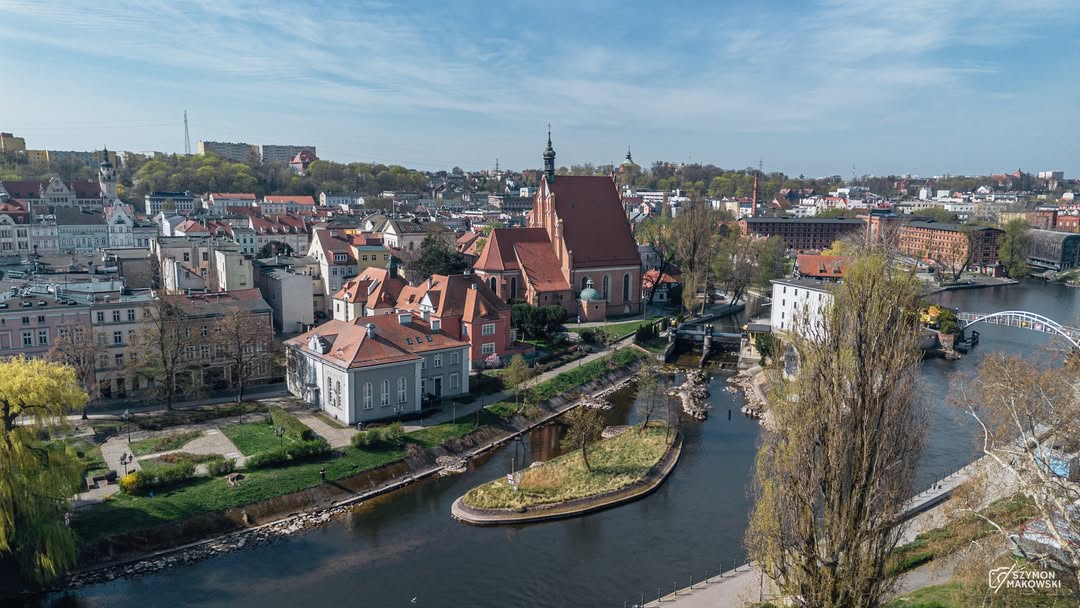
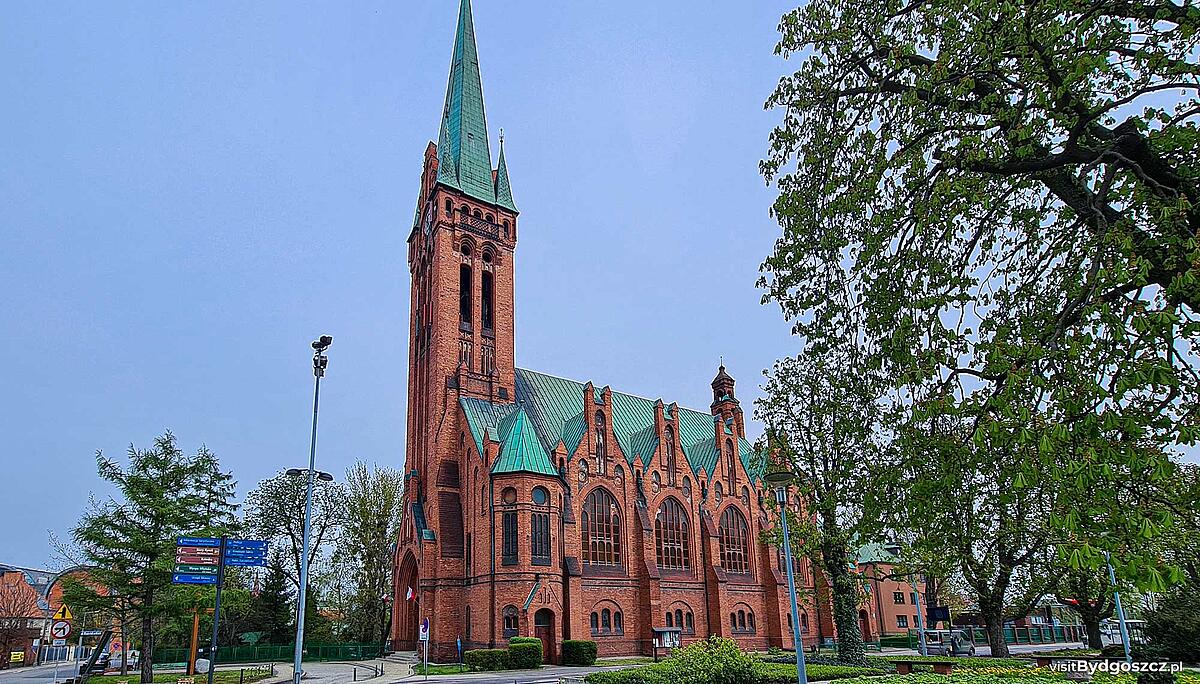
The temple, visible from the Old Town Bridge, was erected between 1901 and 1903 for the German religious community as an Evangelical parish church. Most inhabitants of Bydgoszcz at that time were Germans, mostly Protestants. The imposing structure, still the tallest building in the city (75 metres), was designed by the Berlin architect Heinrich Seeling. Although he specialized in the construction of theatre buildings, Seeling designed two temples in Bydgoszcz, the only churches he ever executed.
3. The building of the Main Post Office in Bydgoszcz, 6 Jagiellońska Street
A vast complex of post office buildings was erected in the space between the Brda River and Jagiellońska Street in the years 1883-1885 and 1896-1900. After the victorious war with France (1870-1871) and gaining huge war reparations, the Prussian authorities decided to expand the postal institutions in the newly created German Empire. The building, erected in the neo-Gothic style, recognized as a national style by the Prussian parliament in the 19th century, still serves its original function. On the facade, among many interesting details, one can still see the well-preserved inscriptions in the German language above the entrances to the building.
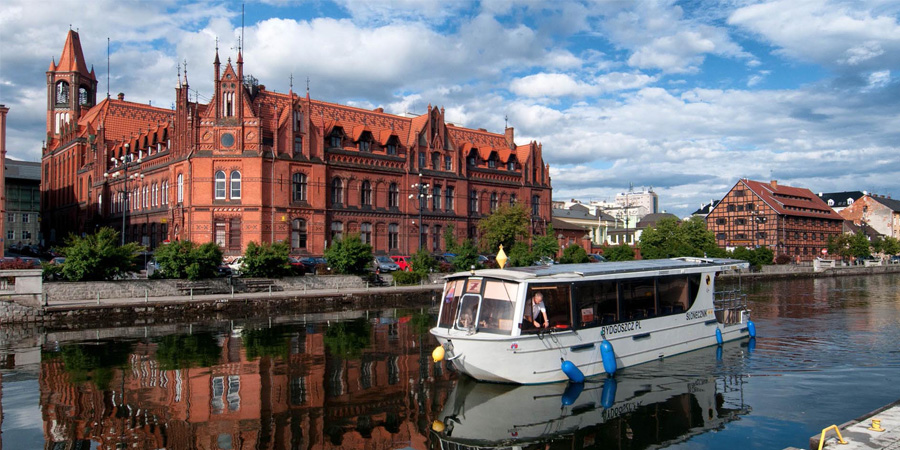
4. Tenement house at 1-3 Stary Port Street
The neo-baroque corner building, erected by one of the most famous Bydgoszcz architects and builders, Józef Święcicki, was designed as the Hohenzollern House. The sculpture of the German Emperor Wilhelm I, placed in the niche in the corner of the building at the height of the third floor, was an interesting decorative element. The King of Prussia, who became the first ruler of the united Germany, had been looking at the Brda River from 1893 until 1920 – the year when Bydgoszcz returned to Poland.
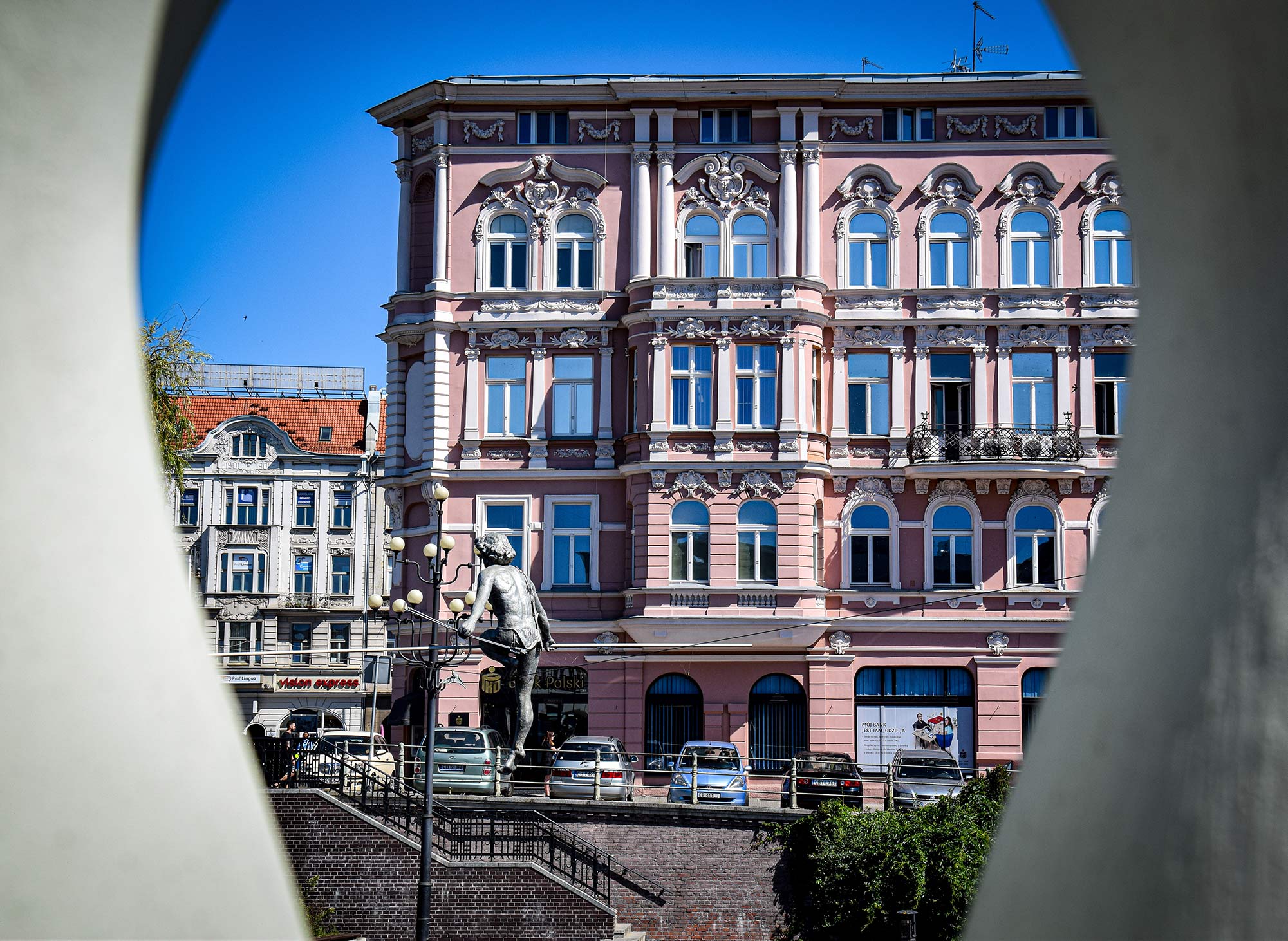
5. Tenement house at 6 Theatre Square
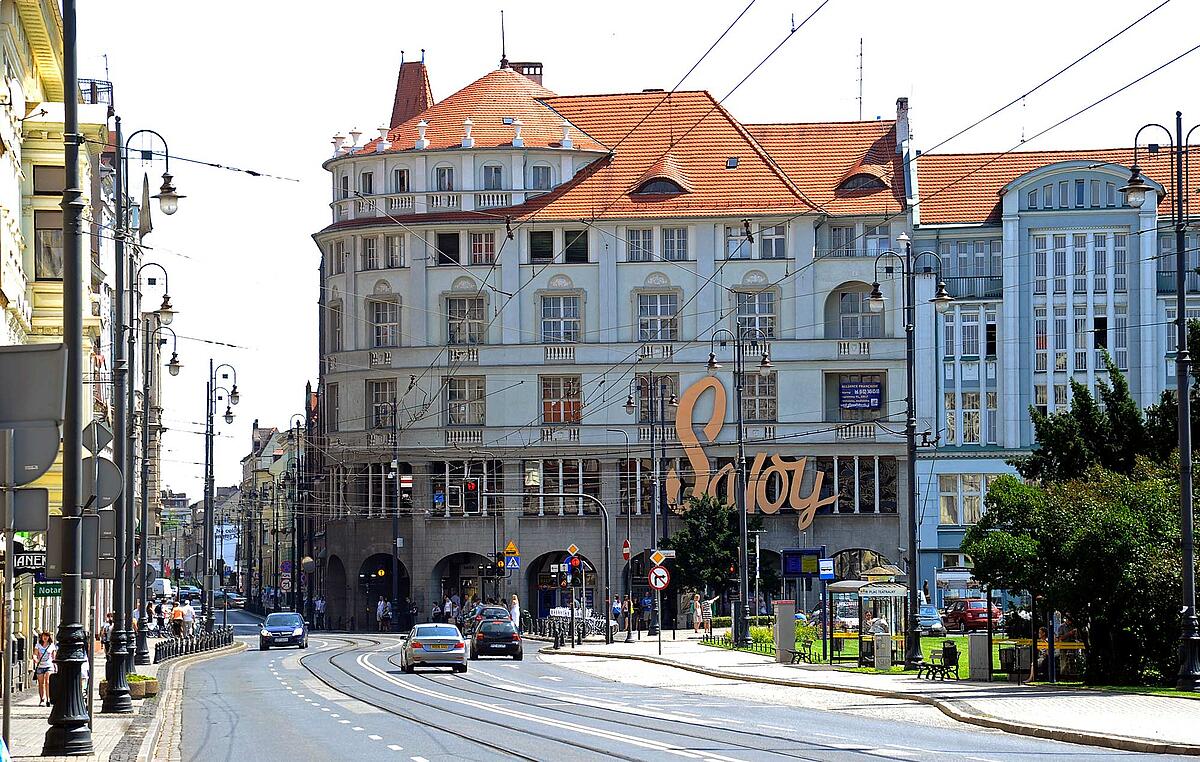
The characteristic big-city tenement house was designed in 1912 by the Berlin architect Henry Gross for Otto Pfefferkorn, a merchant and Bydgoszcz furniture manufacturer. The furniture industry in Bydgoszcz developed extremely dynamically in the second half of the 19th century. There were several sawmills in the city, some of them belonged to timber merchants from Berlin. The capital of Germany was undoubtedly the main recipient of ‚Bydgoszcz’ wood and local furniture products.
6. Emil Werkmeister’s tenement house, 4 Jagiellońska Street
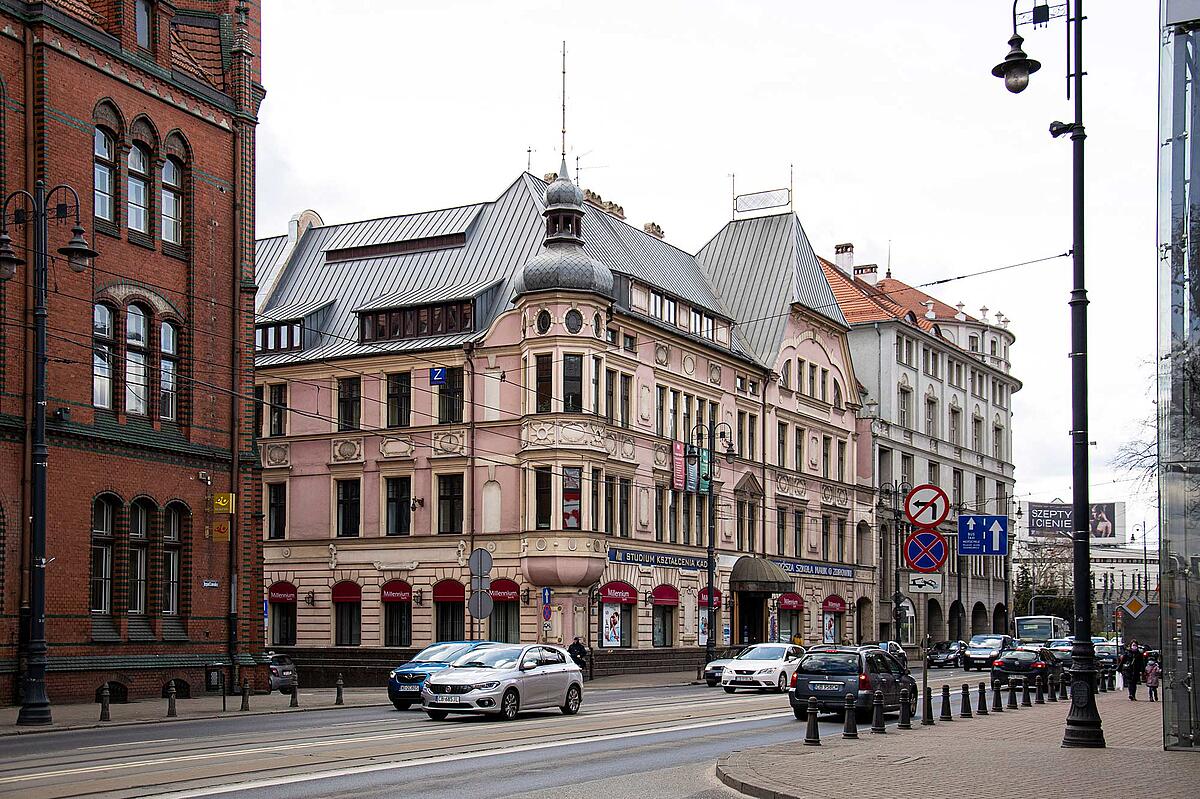
The edifice was designed by a well-known and prominent Berlin architect Heinrich Seeling. It was erected between 1910 and 1912. The building, a truly modern structure at that time, was commissioned by Emil Werkmeister, a Bydgoszcz wine wholesaler. The house, with a limited detail and an interesting solar motif in the bay window, was built on the site once occupied by granaries.
7. The building of the Polish Central Bank, 8 Jagiellońska Street
The building was erected in the years 1863-1864 for the needs of the Bydgoszcz branch of the Central Bank of Prussia, Berlin. The representative building was designed by the German architect Herman Cuno. The Neo-Renaissance edifice stylistically refers to the palace architecture of the Italian Renaissance. At the time of its construction, the treasury inside the building boasted extremely modern security devices.
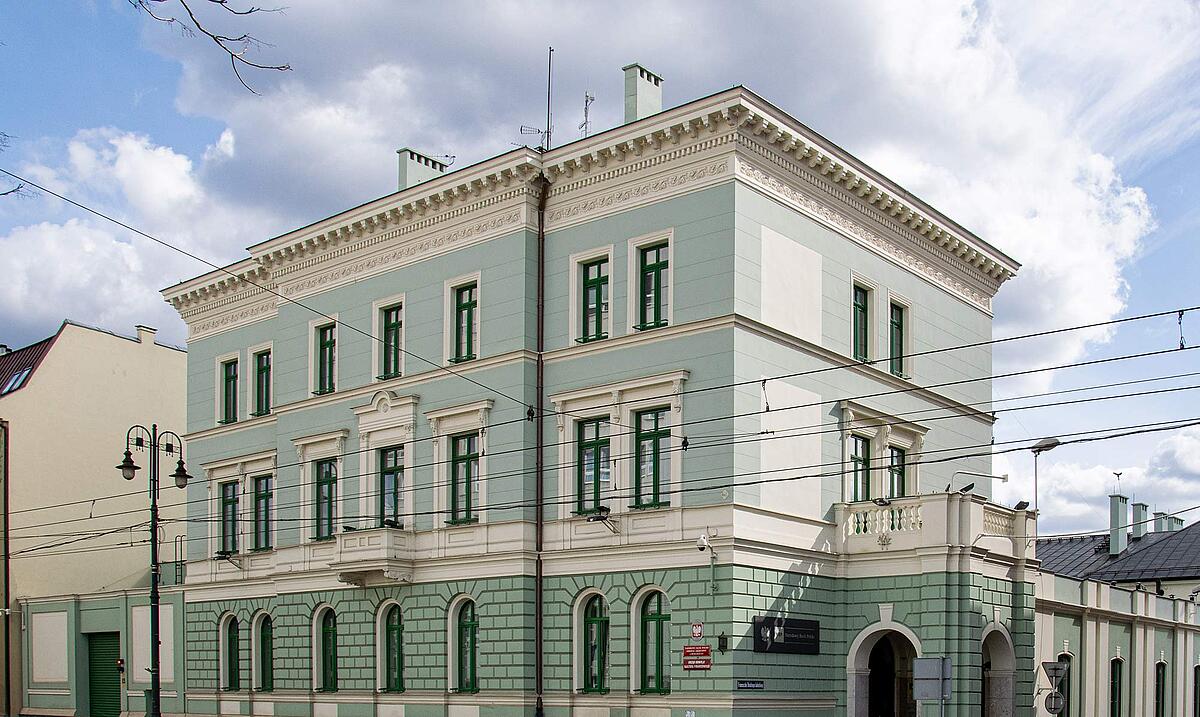
8. The Building of the the Voivodeship Office in Bydgoszcz, 3 Jagiellońska Street
The oldest part of the present complex was erected in the years 1834-1836 to accommodate the offices of Bromberg Region (Polish: rejencja bydgoska, an administrative unit in Prussia established in 1815 by the decision of King Frederick William III). The neoclassical edifice was built according to the plans prepared by the Higher Construction Department in Berlin. The building was designed by Carl Adler. However, it is worth noting that the design was corrected by Karl Friedrich Schinkel (1781-1841), a German architect and urban planner, one of the most prominent representatives of Classicism in the Kingdom of Prussia.
9. The Deluge Fountain, Casimir the Great Park
The fountain, executed by the Berlin sculptor Ferdinand Lepcke, author of “the Archer”, was officially unveiled in 1904. The creation of the „Deluge” was the result of a competition for the design of a monument-fountain which was to decorate this part of the city. It quickly became an attraction, a landmark of the city, and above all, one of the most photographed sights in Bydgoszcz. The central group of the fountain, people and the lion saving themselves from the Biblical Flood, was about 6 meters high. The fountain disappeared from the city’s landscape in 1943 when it was melted down for war purposes. As a result, the German army gained almost 9 tons of bronze. Thanks to the determination of social activists, this unique monument was reconstructed and placed in its original location in 2014.
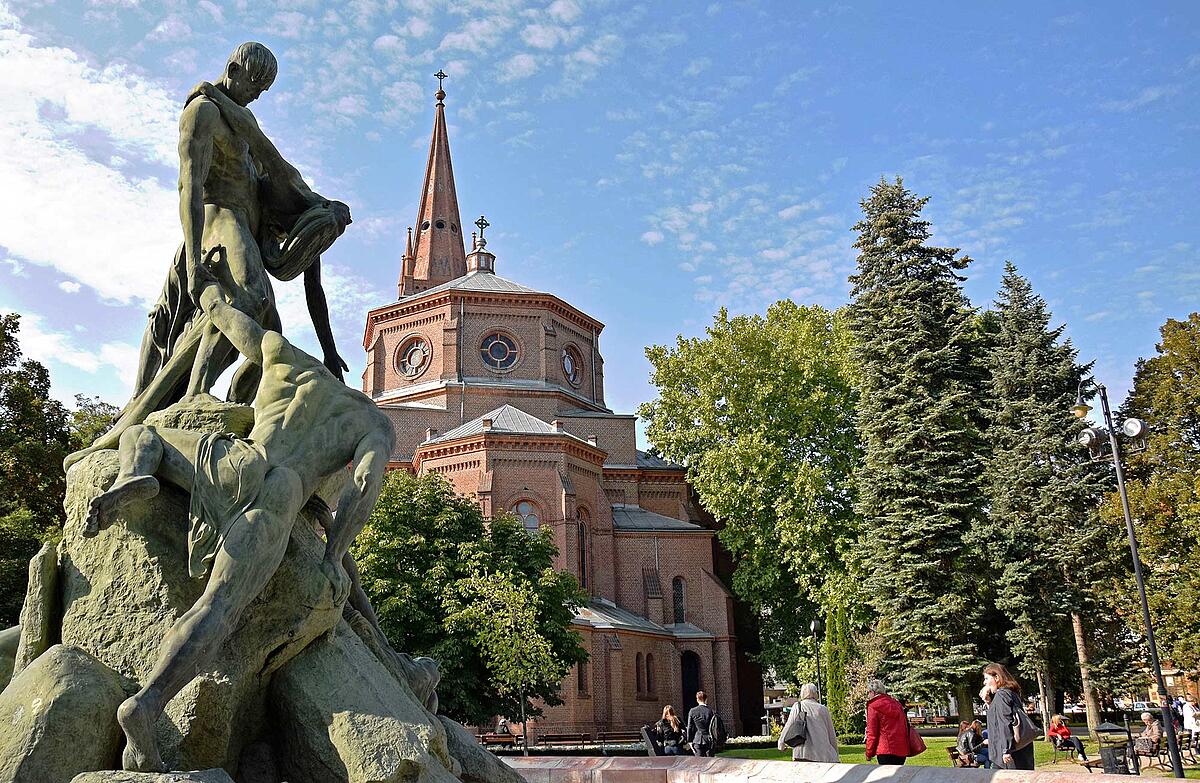
10. The Church of Saints Peter and Paul, Freedom Square
The temple was erected in the years 1872-1876 for the needs of the Bydgoszcz Evangelical community. The building, very modern at that time, was designed by the Berlin architect Frederick Adler. He was a lecturer at the Berlin Building Academy. Adler, who specialized in sacred buildings, designed an interesting structure for Bydgoszcz, dominated by the forms typical of the Neo-Romanesque and Neo-Gothic styles. The stained glass windows in the chancel were funded by the German Emperor Wilhelm I. They were executed by the Royal Stained Glass Institute in Berlin. The church received modern gas underfloor heating and was illuminated by around 200 gas lamps. The profiled bricks and terracotta tiles decorating the facade were brought from Charlottenburg (now a district of Berlin).
11. Copernicanum, 1 Kopernika Street
This beautiful building, now belonging to Kazimierz Wielki University, was erected in the years 1903-1906. This edifice, decorated with some interesting Art Nouveau details (the sundial on the south elevation attracts attention), was designed in the Berlin architecture studio of Carl Zaar and Rudolf Vahl.
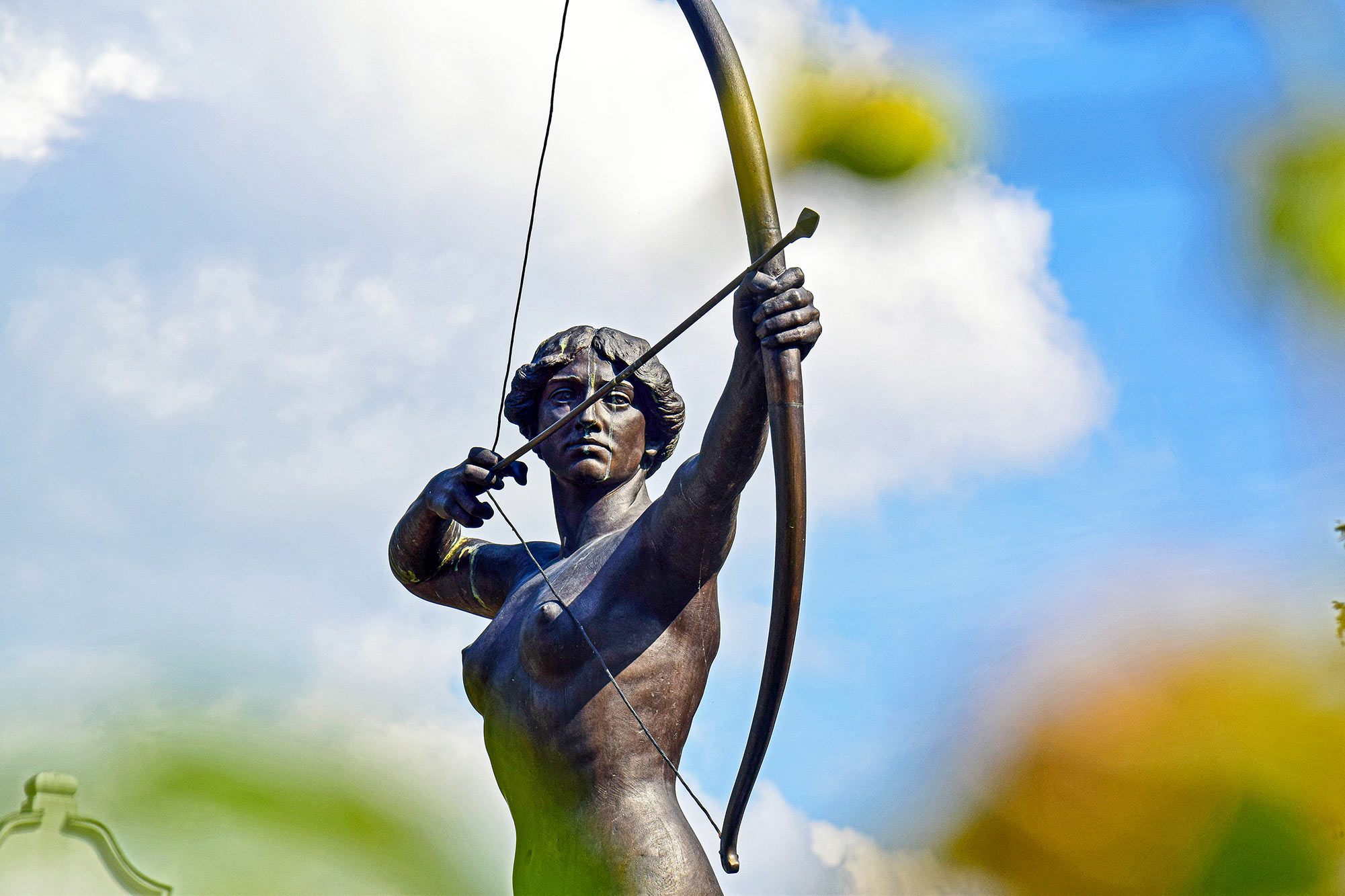
12. The „Archer” sculpture, Jan Kochanowski Park
The statue made by the Berlin sculptor Ferdinand Lepcke is one of the most important symbols of the city. The sculpture was brought to Bydgoszcz in 1910 thanks to the efforts of, among others, the mayor of the city, Hugo Wolff. Various copies of „the Archer” can be found in German cities, including Coburg – the hometown of Ferdinand Lepcke, Wilhelmshaven – the twin city of Bydgoszcz, and on the Museum Island in Berlin.