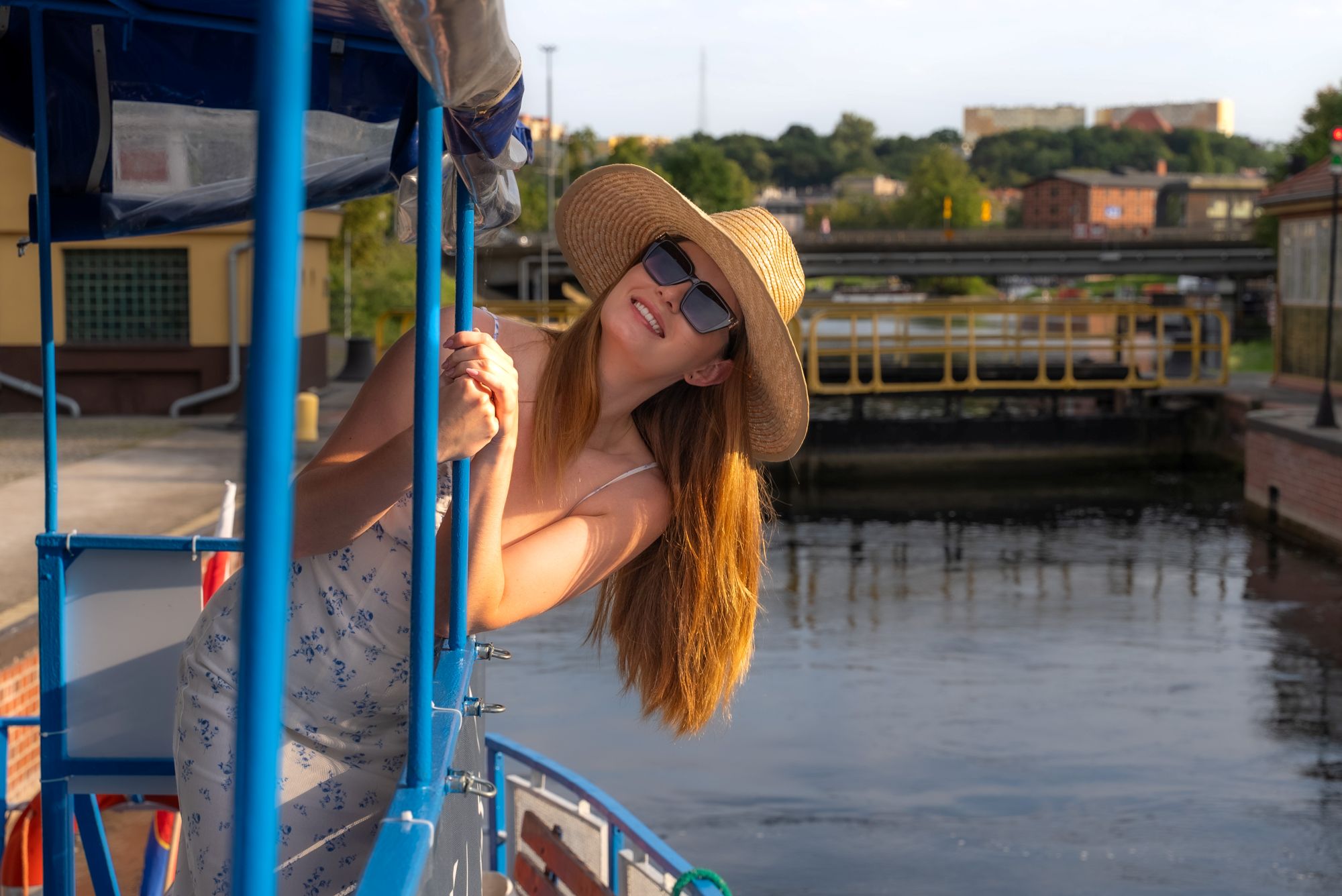
Old Town Route Cruise
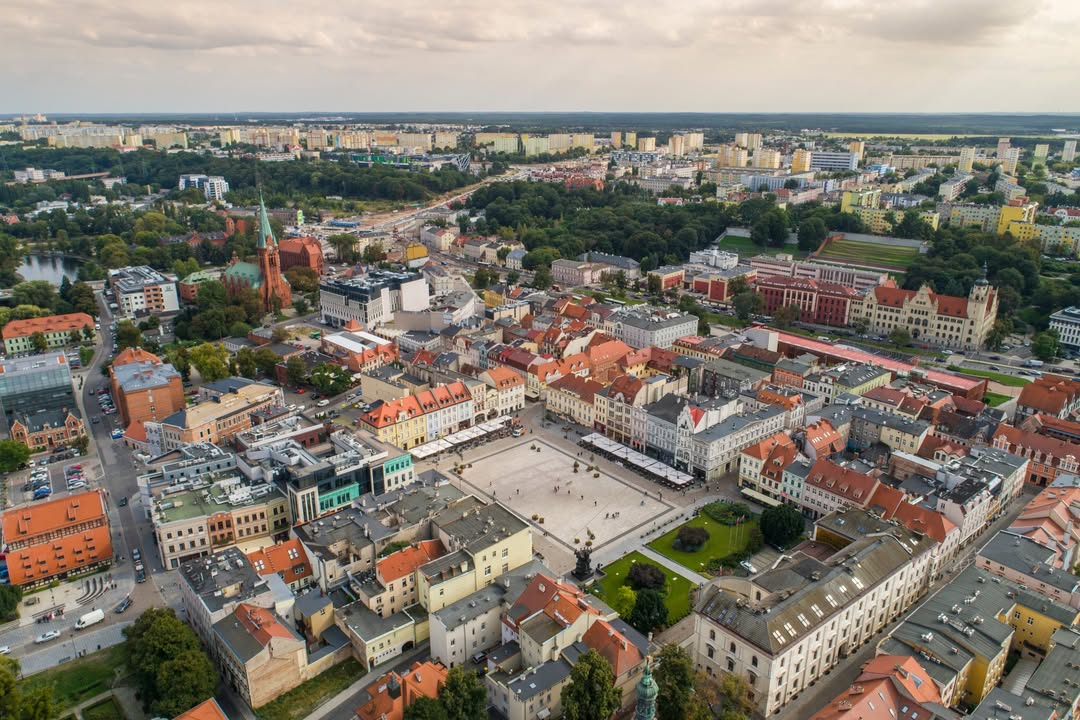
See Bydgoszcz from a completely different perspective. The Old Town Route Cruise is a one-hour journey through the very heart of Bydgoszcz. From the deck of the boat, you will see the city's most important symbols: from the historic granaries and the cathedral, past the modernly redeveloped Rother's Mills, all the way to the unique locking process. Below, you will find descriptions of the landmarks you will pass during our journey together down the Brda River.
Tickets for a cruise on the Old Town Route
Tickets for the Old Town Route cruise on the Sunflower ship, which departs from Fish Market, are available online HERE
.
Fish Market
Marcin Zaborowski
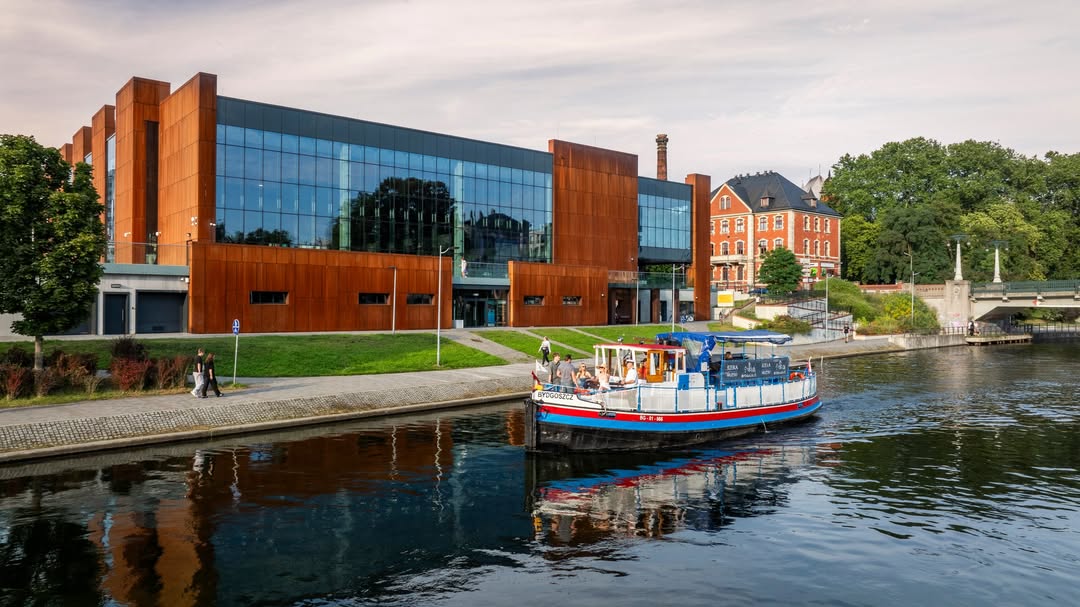
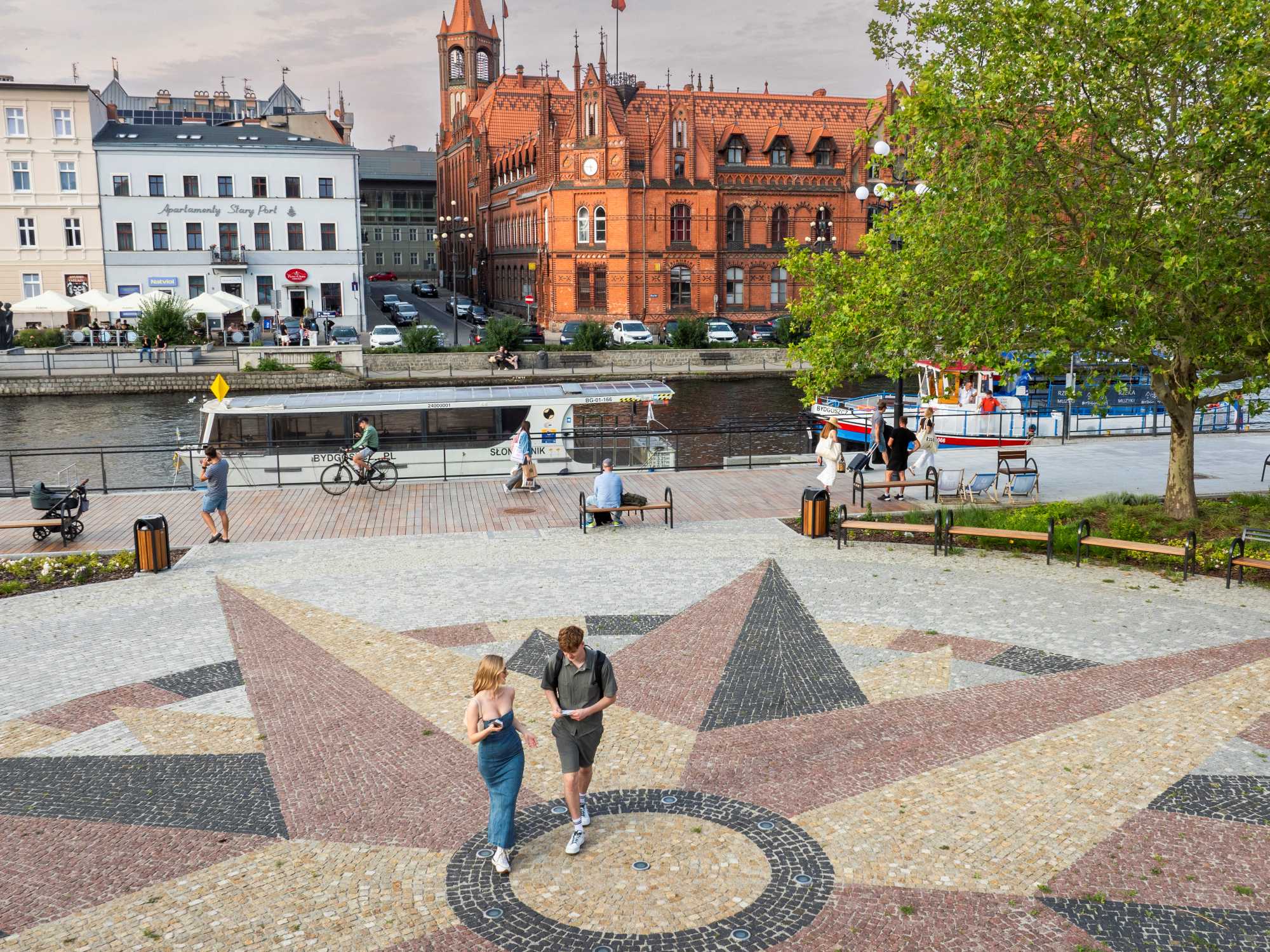
Old Town Route starts at the Fish Market stop. Along the way up the river one will see many monuments and other interesting places, the descriptions of which can be found in the following columns. The greatest attraction of this trip will undoubtedly be the crossing of the City Lock twice, where the ship overcomes the 3-meter difference in water level. After reaching Railway bridges, our Sunflower-boat returns to the Fish Market, where the cruise ends.
Old Granaries
Filip Kowalkowski
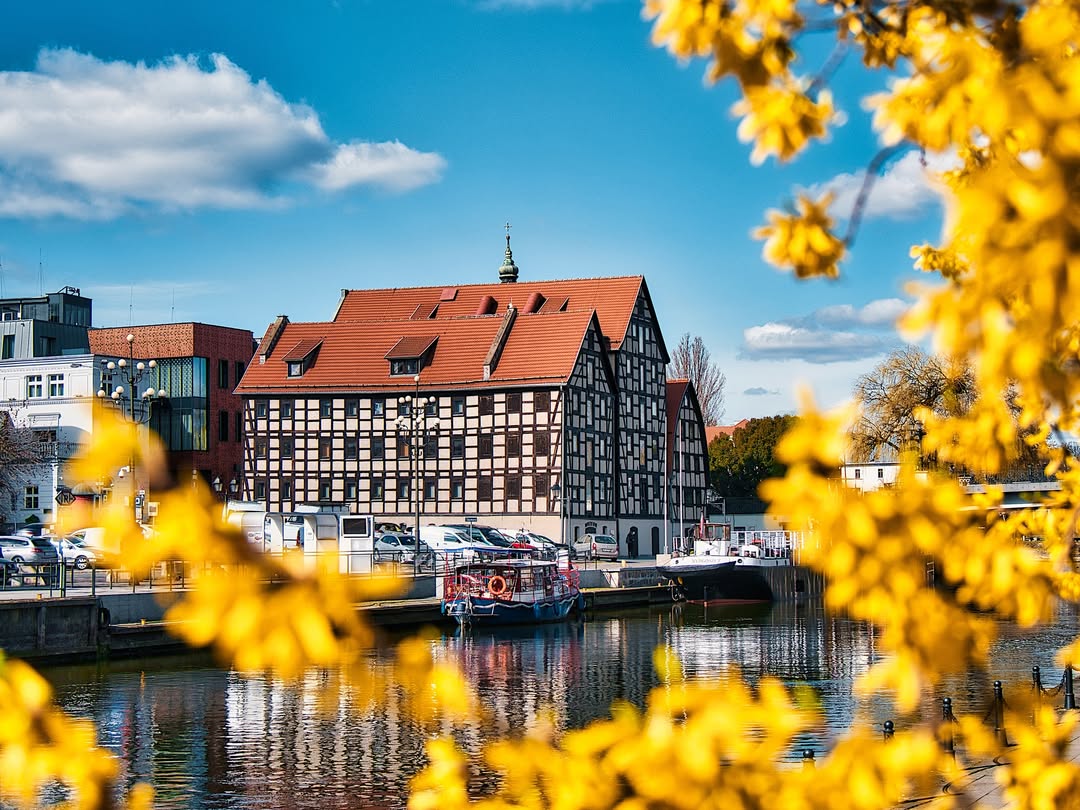
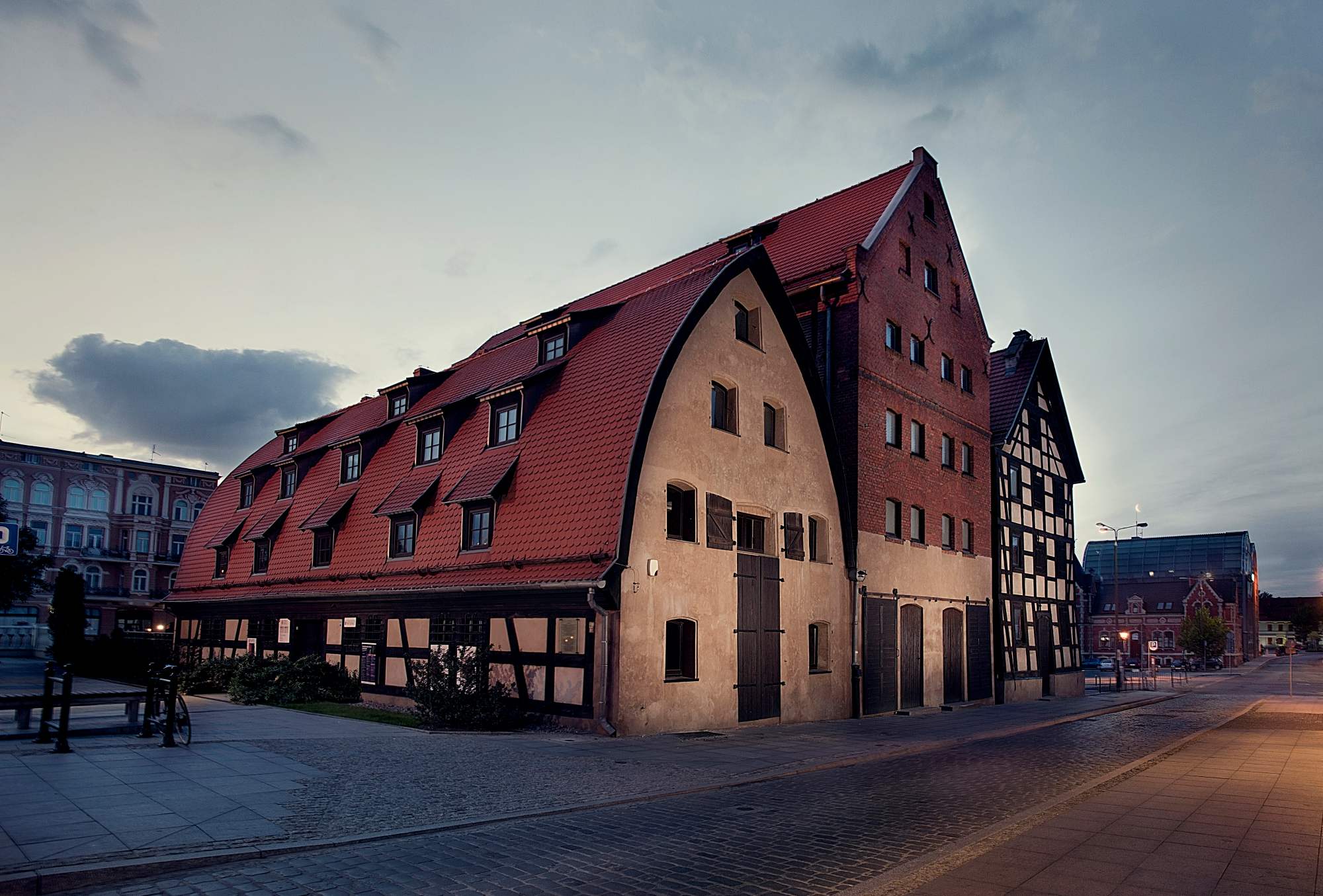
The three granaries, seen on the right side of the river, are the best recognised symbol of the city. The buildings remind the centuriesold tradition of trade in grains, which played an important role in development of the city. Bydgoszcz was buying grains primarily from the region of Kuyavia. They were stored on the riverside, facilitating their fast loading and shipping. The buildings that have survived to this day date back from the late 18th century. The smallest, outermost building, standing nearby the bridge, the so-called Dutch Granary is the oldest of them. The remaining two granaries were once owned by a rich merchant Samuel Engelmann. These days, all of them house numerous studios and exhibition rooms of the District Museum. Visitors can take a look at exhibits related to the history of the city, dating mainly from the twenty-year interwar period.
Man crossing the River
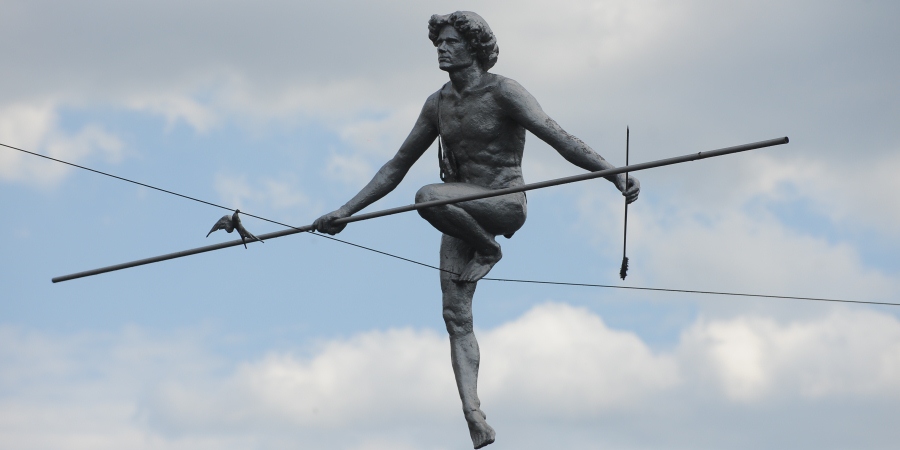
Sculpture of “Man crossing the River”, made by Jerzy Kędziora, is one of the newest symbols of Bydgoszcz. The sculpture appeared here in 2004, when Poland joined the European Union. This brave man is over 2 meters tall and weighs 50 kg. Despite the wind and storms, he never loses his balance. The statue owes it to a perfect weight distribution and placement of the point of gravity in the centre of the rope, on which it stands. When we take a closer look at the statue, we will find references to another symbol of Bydgoszcz – the Archer Lady. In one hand, the “Man crossing the River” holds arrows, and has gladiator sandals hanging over his arm. A swallow is also seen on the rope next to him. In German, swallow is Schwalbe, and Szwalbe was the last name of an artist and long-term director of the Bydgoszcz Philharmonic.
Lemara Barge
Robert Sawicki
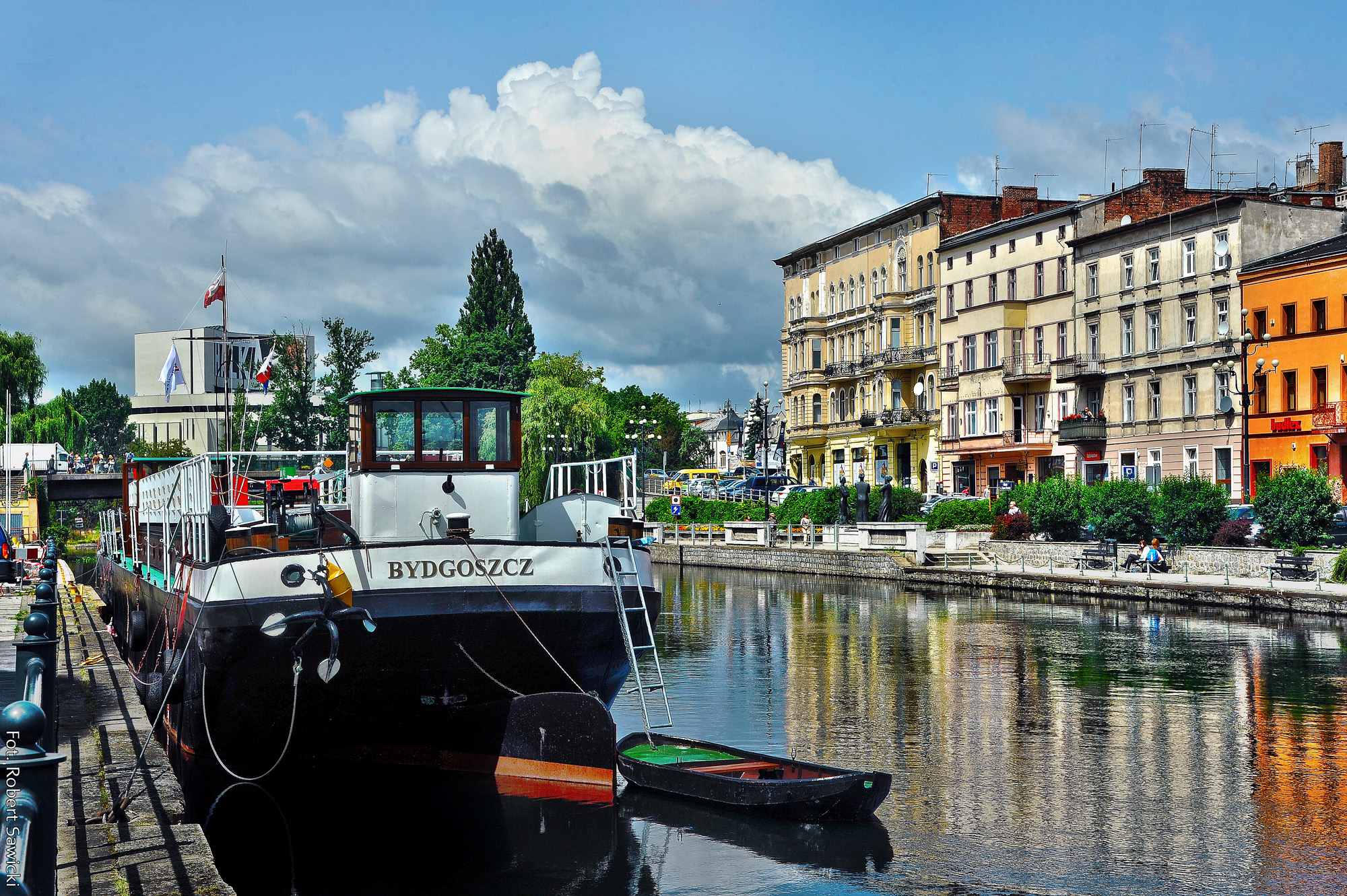
Lemara Barge, moored at the bank of Brda river, right next to the symbolic granaries, is a very unique place. It is both a technology monument and a symbol of a very important part in the history of Bydgoszcz. Because it is thanks to water and sailing that Bydgoszcz flourished so impressively in the 19th century. That growth resulted in the city’s development and erecting buildings that up till today are true gems of the city’s centre. Lemara was built in 1937 in Lloyd’s Shipyard And Workshops Inc. in Bydgoszcz and served as a commercial barge until 2006. After a long overhaul and remodeling Lemara was transformed into a living museum of the water and skipper tradition. The interior was remodeled in order to resemble the living and working quarters of the Bydgoszcz skippers. It hosts monthly gatherings of the skipper families associations. Thanks to all of this a part of the forbidden “water history” of Bydgoszcz has returned to the city
Theatre Square
visitbydgoszcz
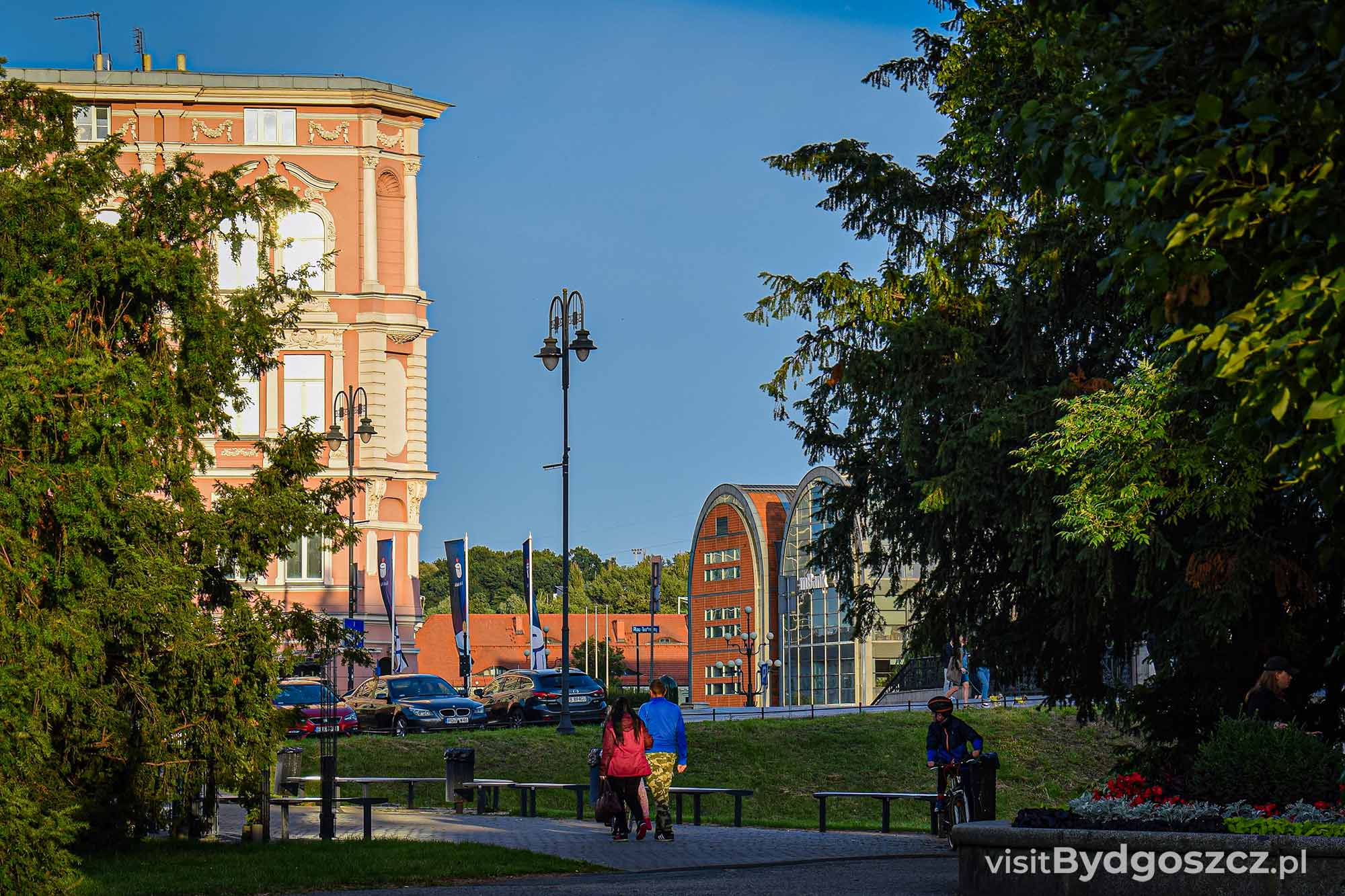
A green area on the left bank of the river is one of the historic squares of the city – the Teatralny (Theatre) Square. The building of the theatre disappeared a long time ago, since it was consumed by fire in 1945. It was erected in 1824 and was rebuilt twice after fires. The theatre received its final, splendid appearance in 1895. Not only architecture, but also its repertoire made that Bydgoszcz was called the Little Berlin, attracting throngs of spectators from all over Germany. In the beginning of the 20th century, a statue of the Archer Lady was installed in close proximity to the building, which became the most popular monument in the city. After the Second World War, the Theatre was rebuilt in another part of the city, in the so-called Music District, where the Archer Lady was also moved. These days, only the name of the square refers to the old times.
Bydgoszcz Cathedral
visitbydgoszcz
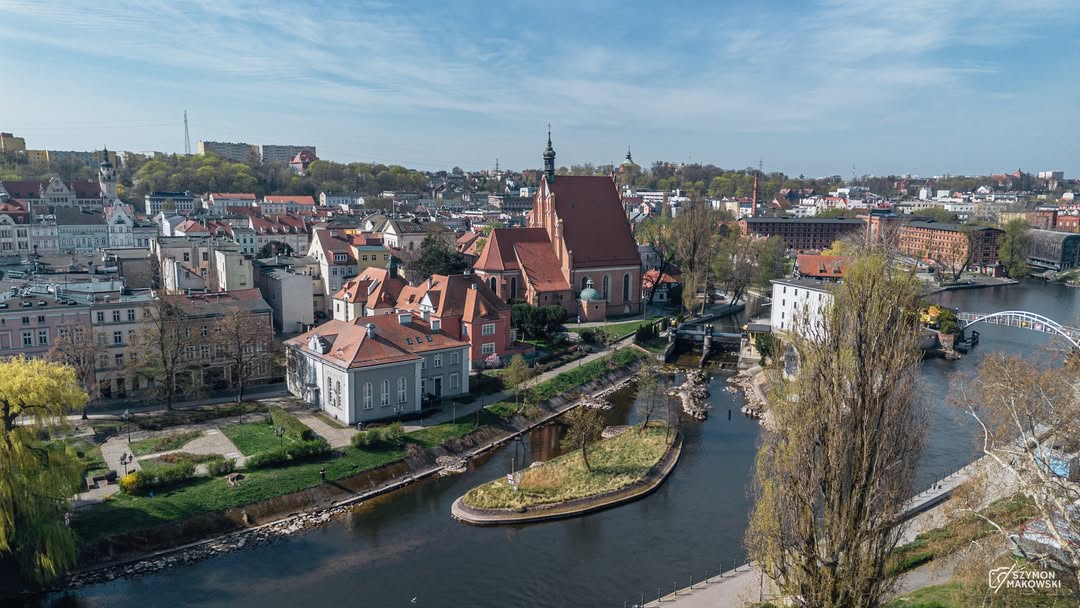
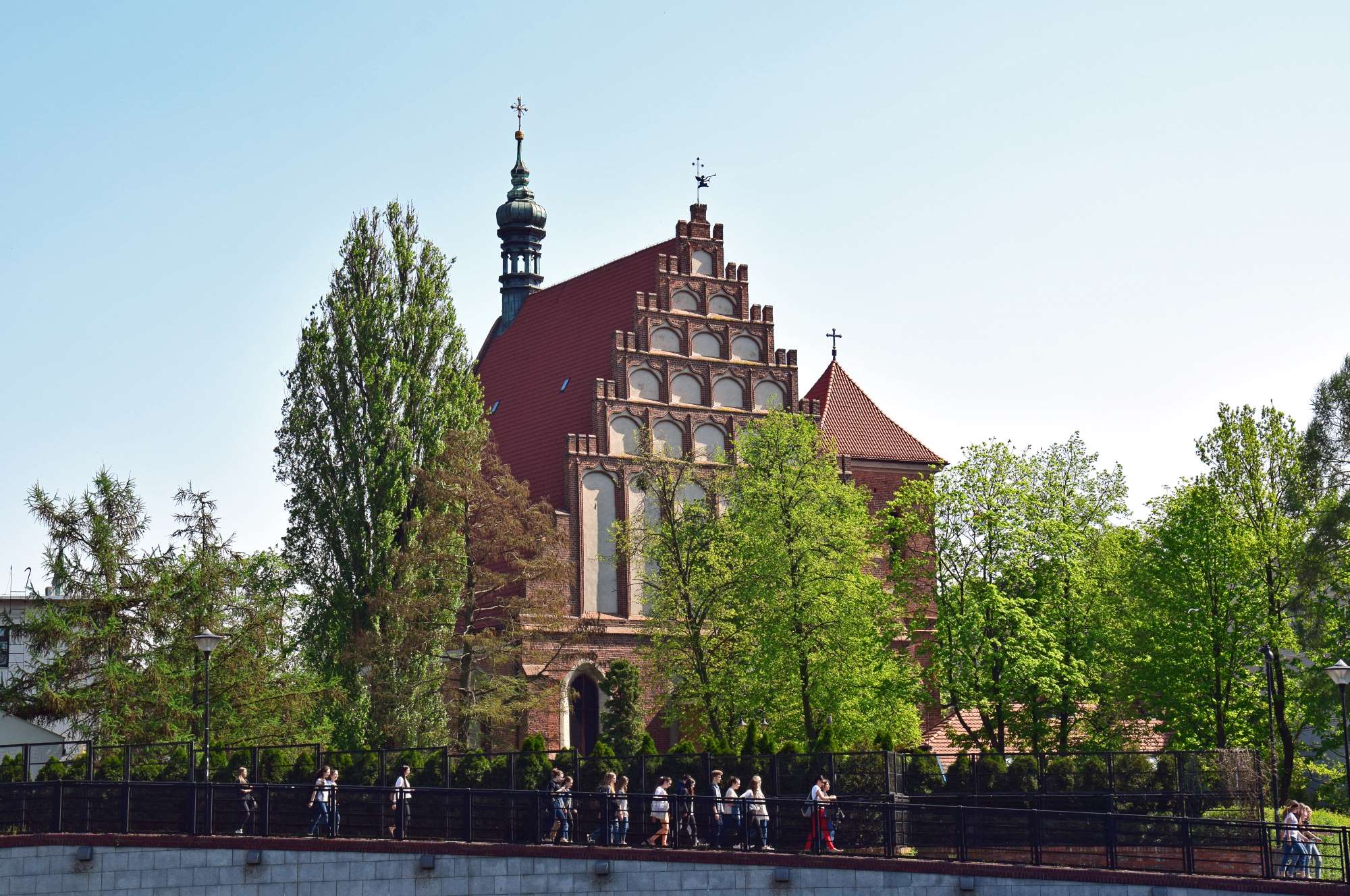
The Bydgoszcz Cathedral is the oldest existing building in Bydgoszcz. The church, dedicated to Saints Martin and Nicholas, was built in 1466- 1502. In 2004, the church was raised to the rank of cathedral and a new diocese was established in Bydgoszcz. The building looks beautiful from the water, but its greatest treasure is inside. The Cathedral is known for its unique colours with walls painted in orange, pink, violet and yellow and its unique stellar vault painted in blue. The high altar features the painting of Our Lady of Beautiful Love, also known as Our Lady with the Rose. There is also an interesting bell in the church, brought from the cathedral of Kamianets-Podilskyi. In 2018, during renovation works in the Cathedral, hundreds of coins dating from the 16th and 17th centuries were found, along with jewellery and amulets. The Bydgoszcz Treasury is displayed in the European Money Centre on the Mill Island.
Lovers’ Bridge
Błażej Witkowski
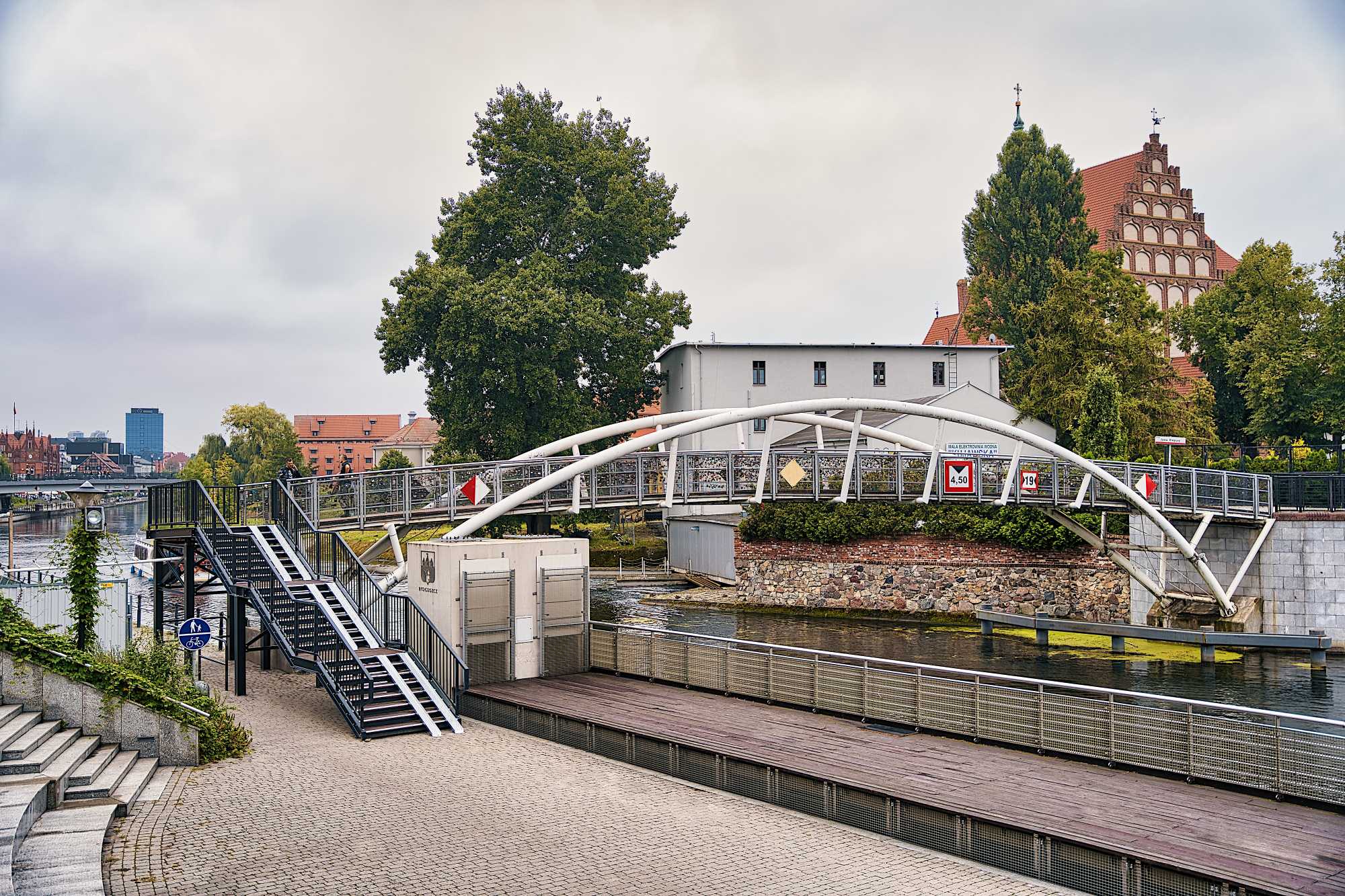
A white footbridge connecting the Opera Nova with the Mill Island was built in 2008, when the Island and Brda riverside were revitalized. It was chosen by lovers from the beginning. Just like in many cities of Europe, sweethearts lock love padlocks to this bridge. After locking the padlock, they throw the key to the river, making sure that no one will unlock it. It symbolizes everlasting, unbreakable love. Due to the growing popularity of this custom, the footbridge is frequently called the Love Bridge. However, its real name is the Jana Kiepury Bridge. The patron should not be surprising to anyone, since the footbridge heads to the Opera Nova, and Kiepura was signing beautifully about love!
Opera Nova
Szymon Makowski
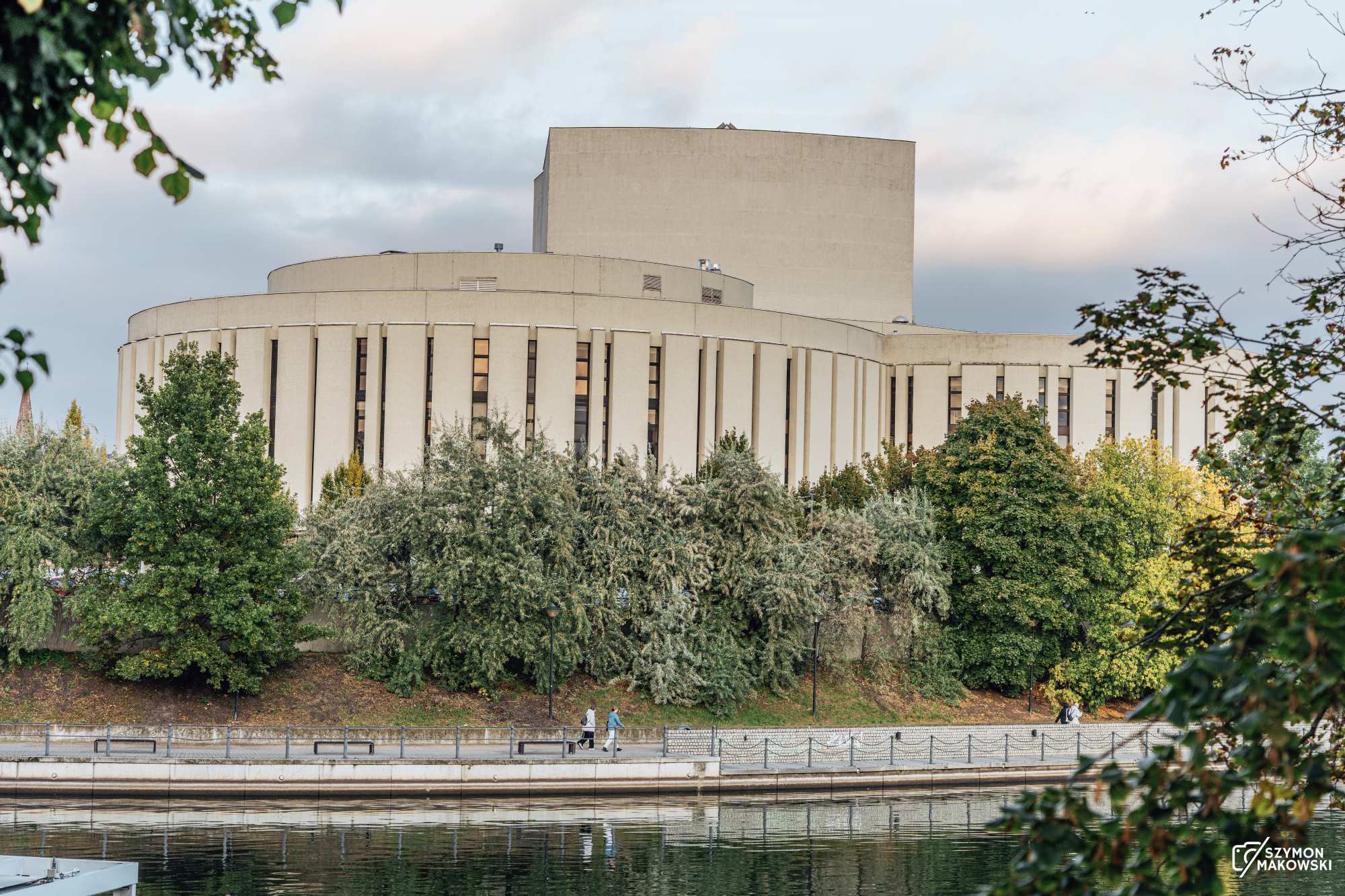
A monumental building of the Opera Nova on the left bank of the river catches ones attention. The building seen from a bird’s eye view has the shape of a three-leafed clover. The fourth leaf is (for now) missing, since the building had no luck for a long time. Its construction started in the beginning of the 1970s and continued for almost thirty years. In 1994, in order to break the run of bad luck, the first Bydgoszcz Opera Festival was organized in the base building. Despite practically field conditions, it is remembered by all participants as a perfect event. The festival continues to attract a big group of opera fans. The stage is regarded as one of the best in Poland, staging almost a hundred performances a year, watched by over 80,000 spectators. It also hosts conferences. Works continue on construction of the fourth round building, which will expand the possibility of organization of various events.
Mill Island
Piotr Bąkiewicz
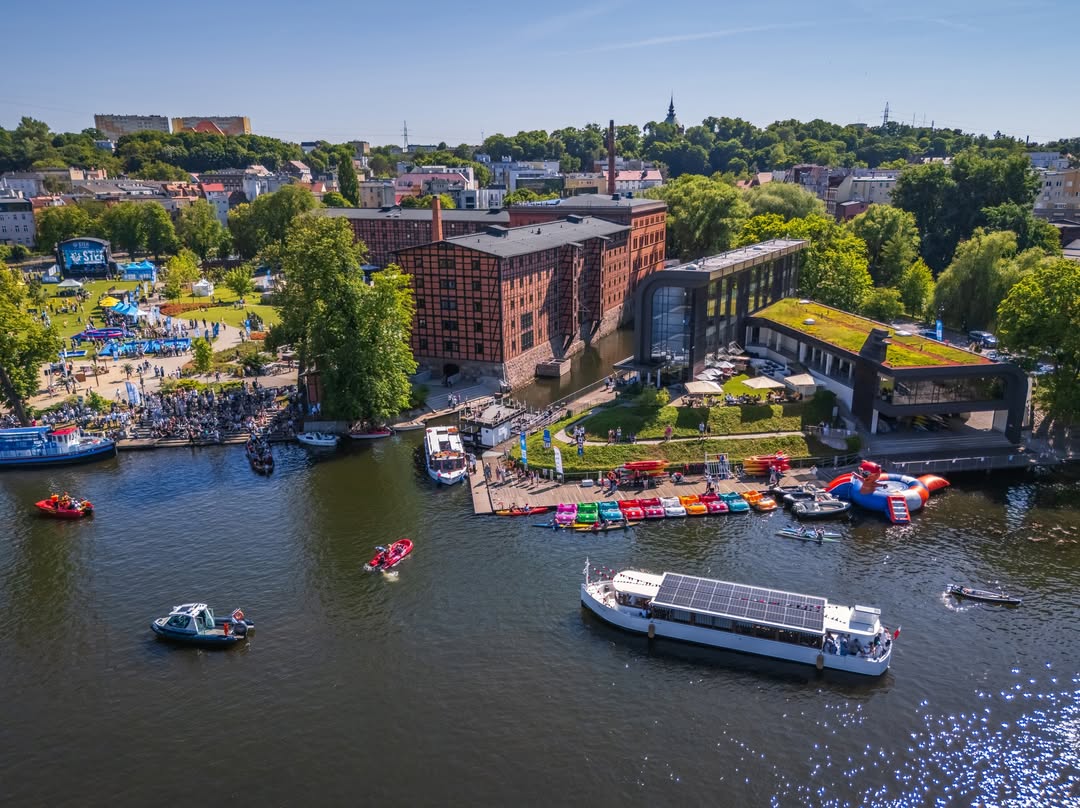
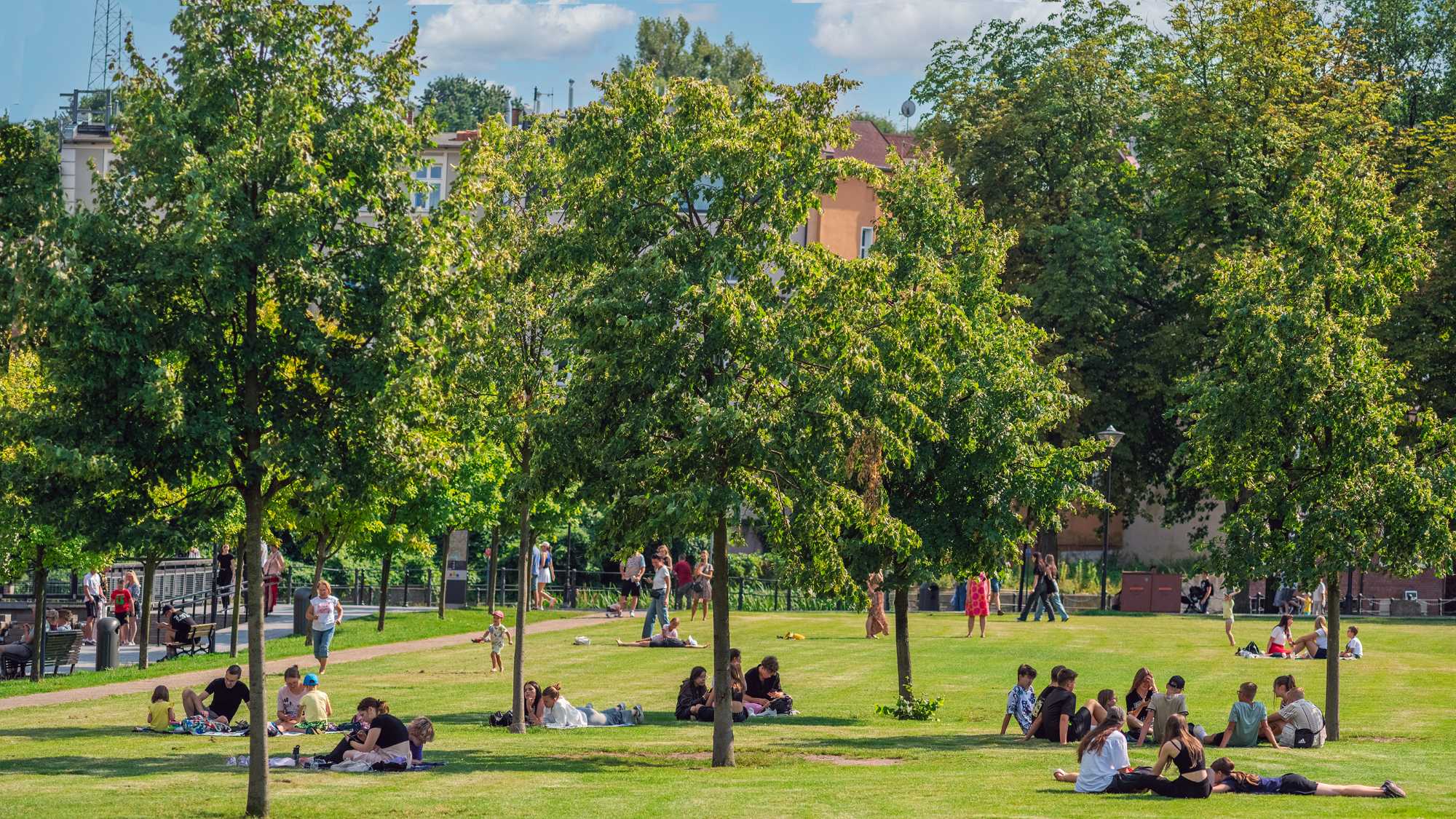
This place attracts throngs of tourists and residents of Bydgoszcz who look for a relaxing break. In recent years, the Island has turned from an ugly duckling – a much neglected part of the city – to a graceful swan, a place with a charming beauty noticed by everyone. The Island has been part of the chartered city since its beginning. In the 16th century, there was a mint (first royal and later a private mint). The 19th century and the industrial revolution changed the image of the Island. Factories, small manufactures, numerous granaries and first of all mills had been built in the area. The building of Rother’s Mills is the biggest on the Island and undergoes reconstruction. These days, the Mill Island is first of all a perfect place to relax, also for active recreation. Some of the renovated buildings on the Island house several departments of the District Museum. In the restored Międzywodzie Canal, one can dip feet or sit on a wooden pier in the summer.
Bydgoszcz Marina
Marcin Hlades
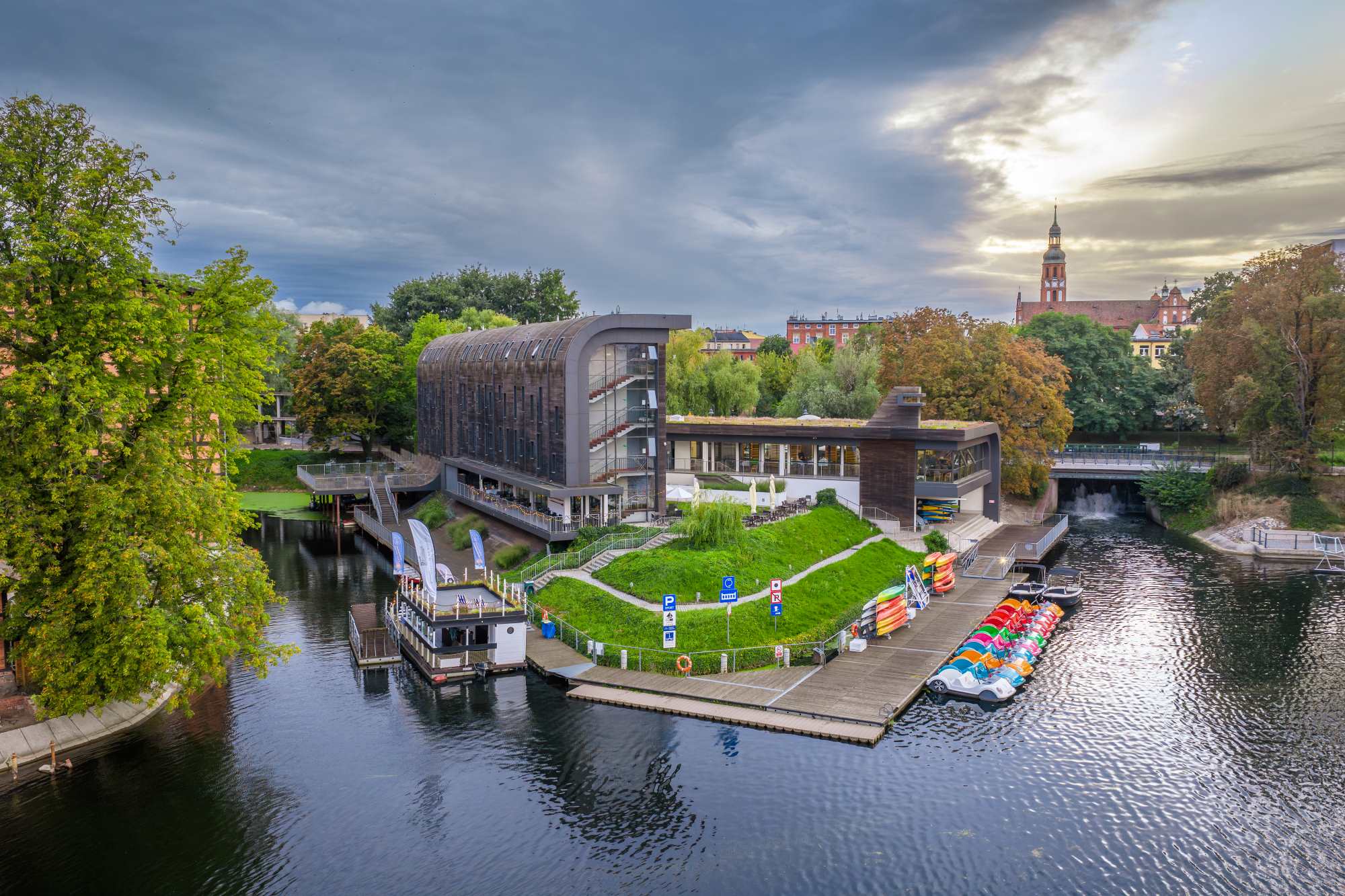
In the bend of the Brda River, on the Mill Island, there is a building which shape resembles a wave. It is the Bydgoszcz Marina – hotel, marina and sports club – all in one. Proclaimed the Structure of the Year 2013, the Marina is a place that blends beautifully in the scenery of the revitalized island. It offers a number of possibilities for active recreation in Bydgoszcz. In the summer season, there is a possibility to rent a kayak or a pedal boat, also motor powered. Rowers and kayakers train on the Brda River almost every day; there are also water polo trainings held on the river. In the proximity to the marina, there are reconstructed waterfronts, which offer mooring facilities for yacht, motorboat and houseboat. Such vessels in great numbers are seen in particular during the annual festival Ster na Bydgoszcz (Set your heading on Bydgoszcz).
Trapezoid Lock
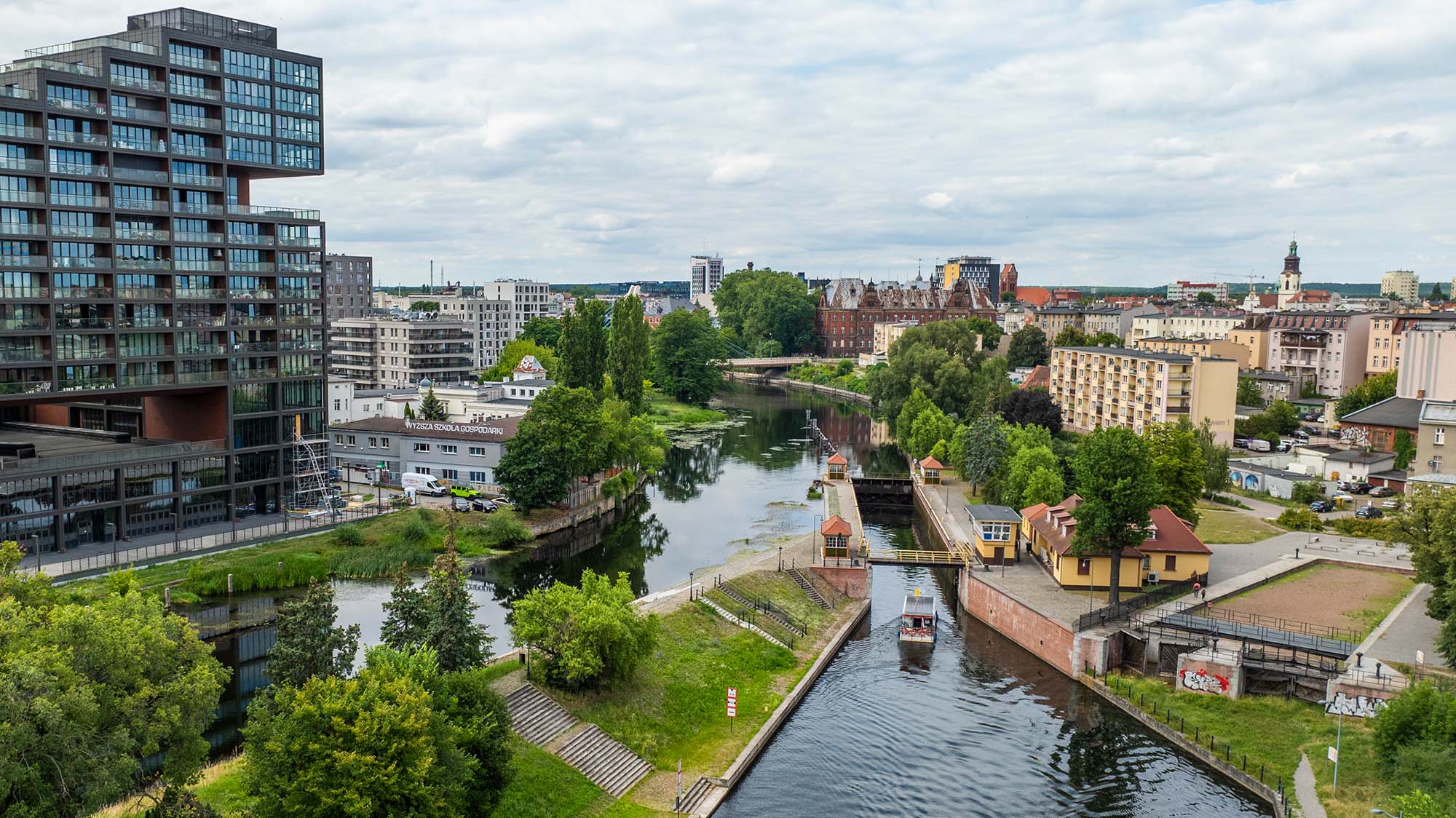
It was the only lock of this type in the world. Its emergence was related to functioning of the Bydgoszcz Canal. The city lock, which was reconstructed many times, received a new, innovative, trapezoid form, which was a very unique solution in the late 19th century. The lock was built directly in the riverbed. The structure had a very original gateway. As you can see, both the lower and upper gateway is placed on one side. It meant that the lock was approached from the back. Barges were reversed in the proximity of the present Bernardyński Bridge, and then pushed in reverse for about one kilometre, all the way to the lock. However, it was not the end of the problems, since after leaving the lock and heading to the then canal branch, sailors encountered a very rapid current, which frequently led to accidents and capsizing. The place became known as the Bydgoszcz Scylla and Charybdis, referring to the mythological creatures known for drowning ships.
City Lock
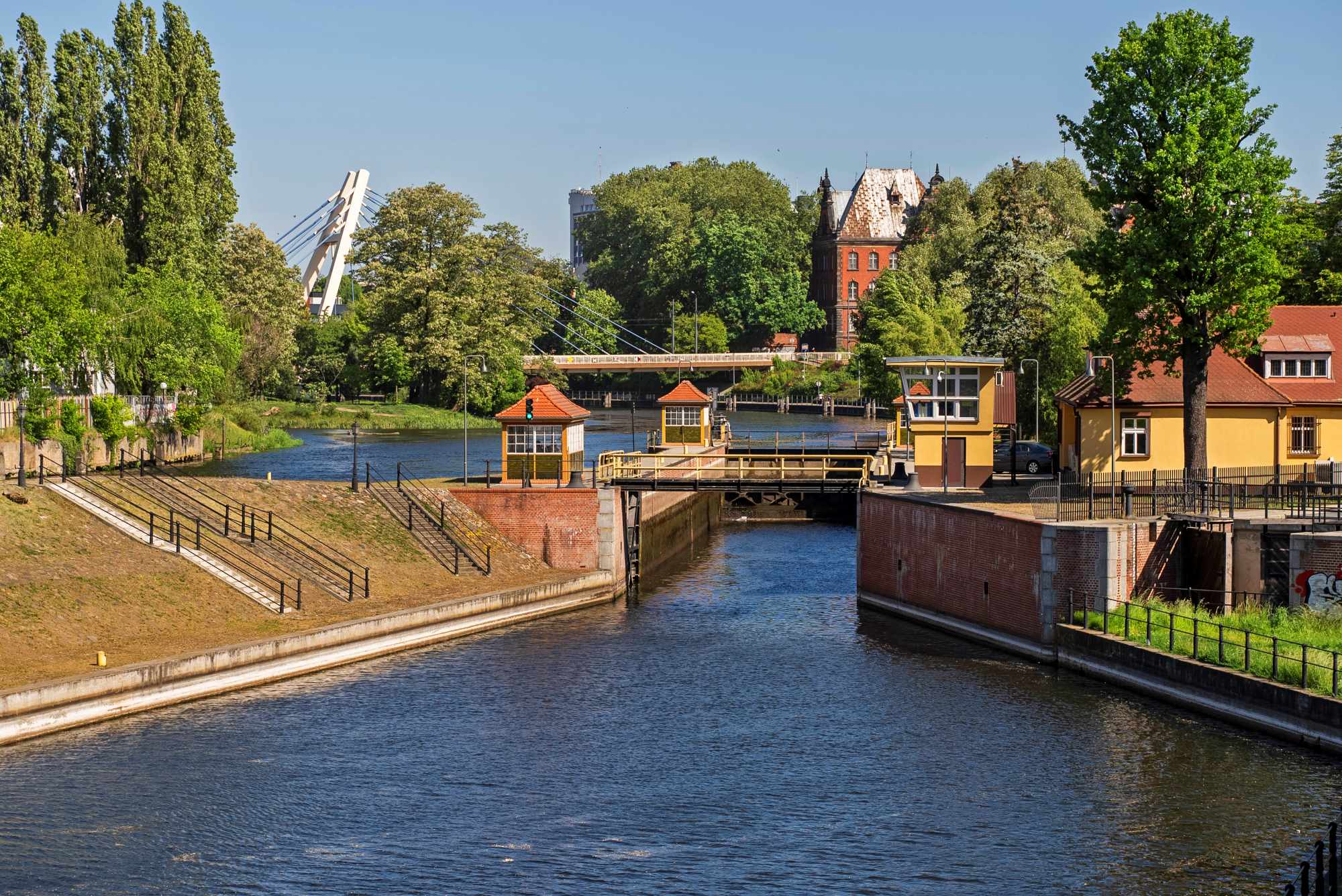
Marcin Zaborowski
The City Lock, which is one of the biggest attractions of cruises on the Brda River. The lock was put into service in 1915, and after reconstructions and remodelling projects (the last one in 2015) it has survived to this day. After entering the lock, the double lower door will close behind us. The chamber, fed by bypass channels, is filled with water, which will raise us above 3 meters high. In this way, the water level will be even with the Młynówka River, which at this height separated from the mainstream of the Brda River.
Passing Through the Lock
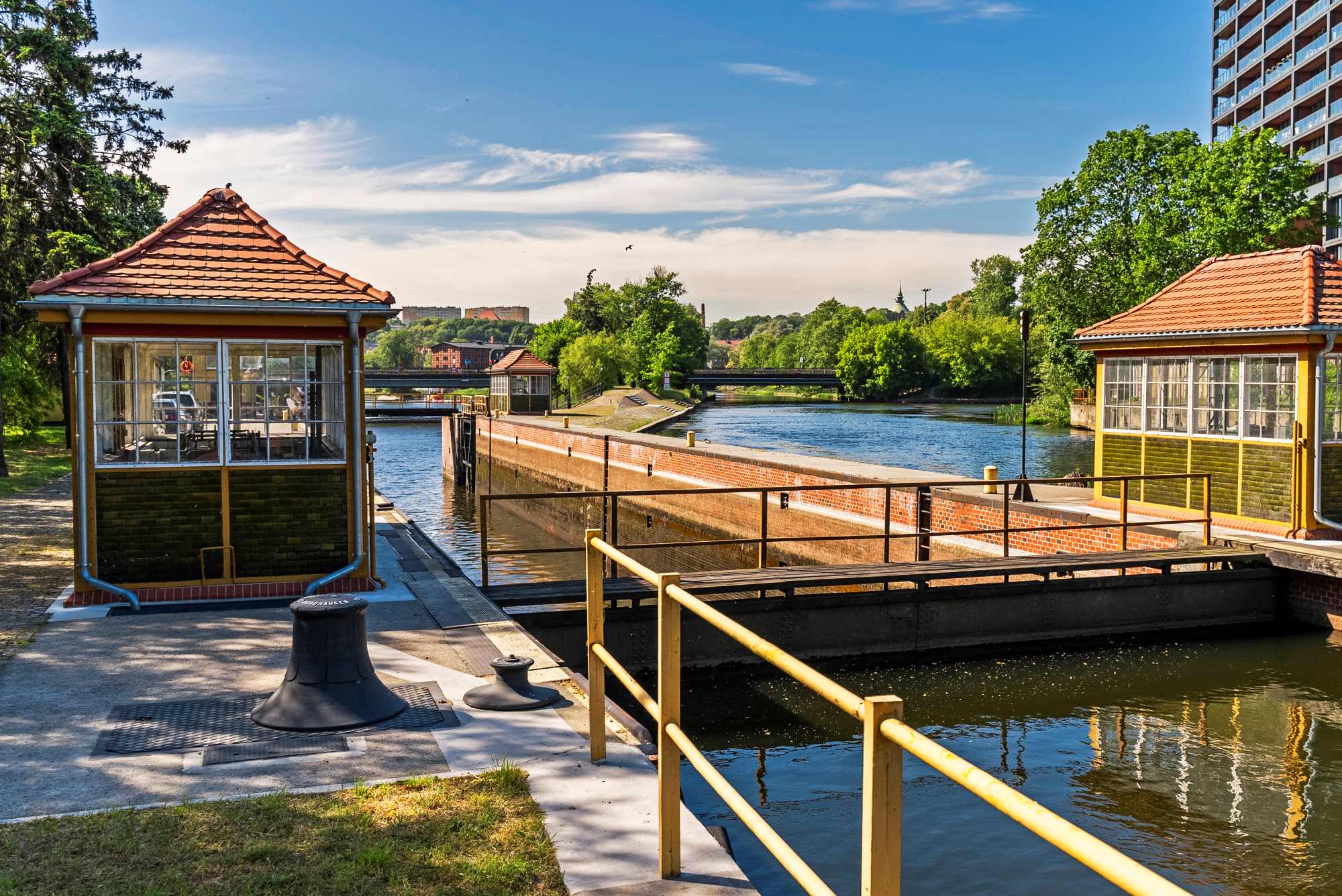
Marcin Zaborowski
The lock was built here alongside the creation of a new section of the Bydgoszcz Canal. The time spent passing through the lock is the perfect moment to learn about this extraordinary waterway. Ideas to connect the Brda River with the Noteć—and consequently, the Vistula with the Oder—emerged as early as the days of the Kingdom of Poland. However, they were only realized (and in a different form than originally planned) after Bydgoszcz fell within Prussian borders following the First Partition of Poland. Measuring over 24 kilometers and overcoming a water level difference of more than 22 meters, this canal was built in just a year and a half. The first vessels sailed through it as early as 1774. The Bydgoszcz Canal guaranteed tremendous development for the city, as it was the first inland waterway connecting Western and Eastern Europe. As water transport developed and heavy, multi-ton barges appeared, the old section of the canal proved too shallow and narrow. A new branch of the canal featuring three new locks was opened in 1915. The old one was rarely used after that, ultimately serving merely as a scenic water feature within the surrounding parklands (Planty). Ultimately, a significant section of the old canal—stretching from the City Lock to the Grunwaldzki Roundabout—was filled in between 1970 and 1972.
Former tannery – premises of the WSG
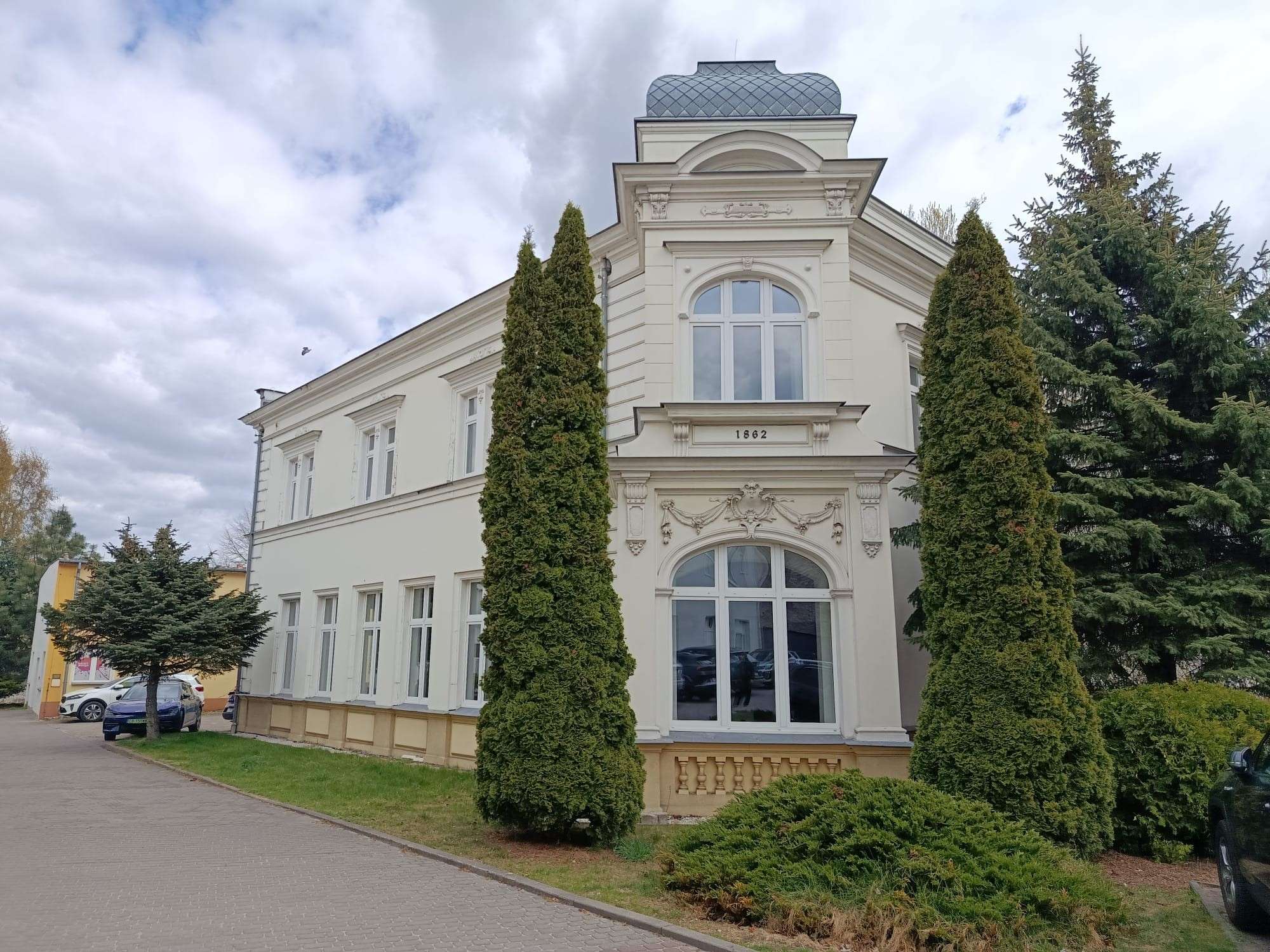
visitbydgoszcz
There is also an interesting area on the right side. In the late 19th century, an industrial plant of Ludwig Buchholz was built in the area. In a period of only several years, the twenty-year-old industrialist turned the small factory into a huge complex, encompassing houses along with a dozen or so factory and warehouse buildings. There was also a sawmill, taking advantage of its convenient location on the waterfront. The factory developed continuously for several decades, winning foreign markets. After the Second World War, the factory was taken over by the Kobra Footwear Enterprise, which continued production until the beginning of the 1990s. These days, the premises are owned by the University of Economy (Wyższa Szkoła Gospodarki), which revitalized the area, replacing the old factory buildings with the new ones. Buchholz’s villa, the only reminder of the former glory of the factory, has remained to this day.
Jagiełły Bridge
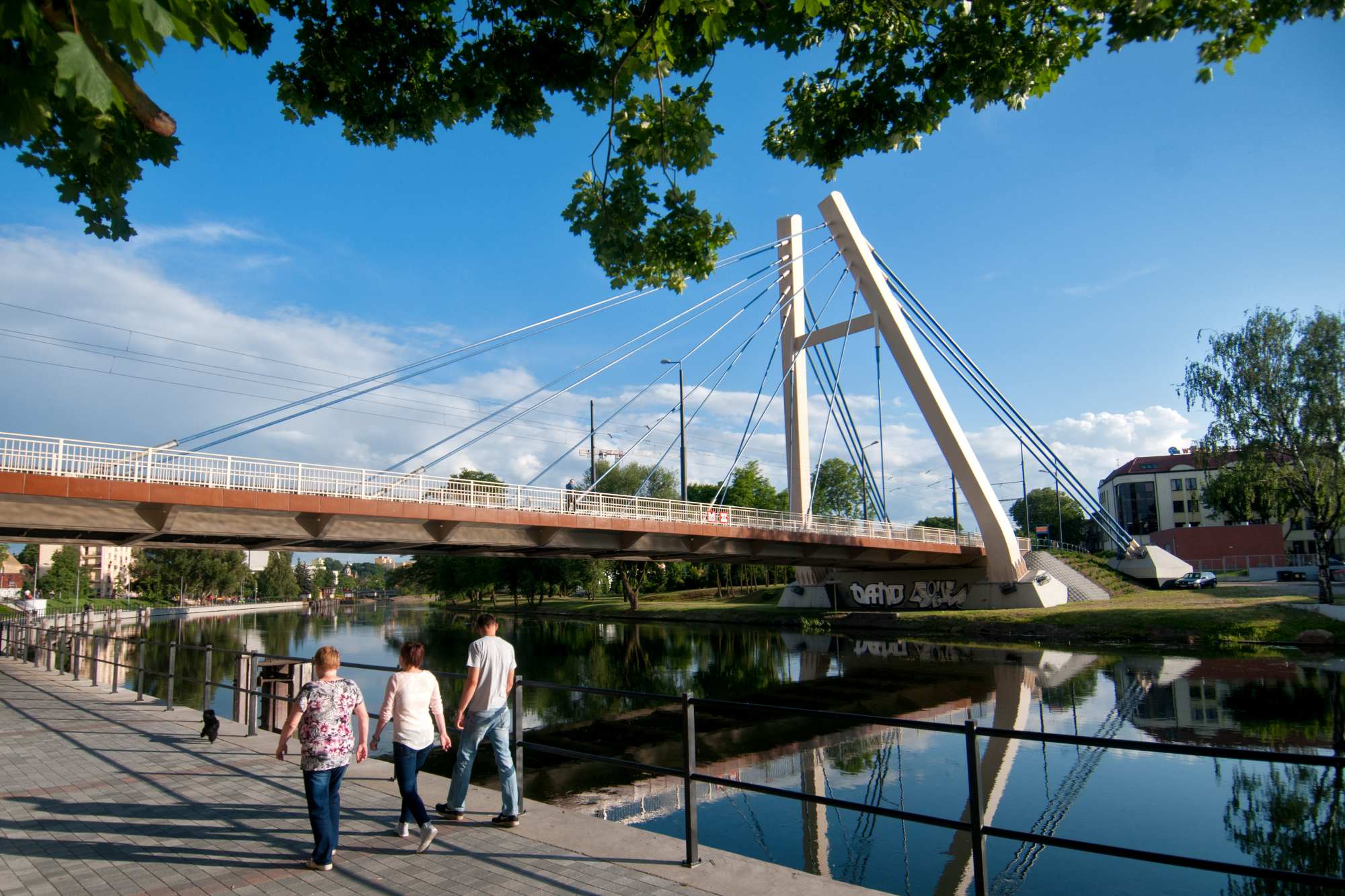
T. Markowski
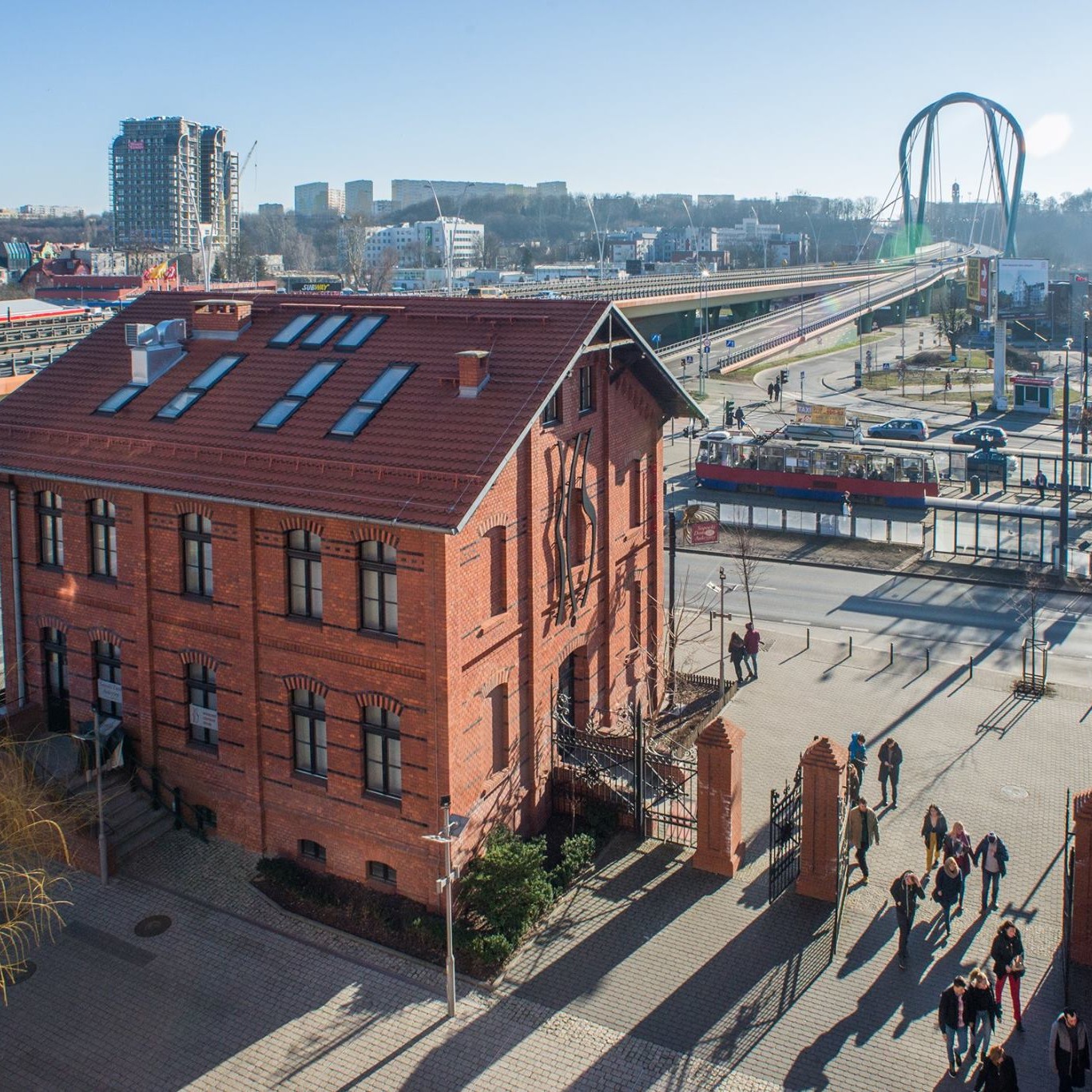
Another bridge on our route is one of the most recent investment projects in the city. It was put into service in 2012. Its construction was related to the restoration of the tram line to the railway station. The first horse-drawn tram, which entered the streets of the city in 1888, started its run at the railway station. A hundred years later, the route was discontinued, but the topic was coming back. It was not possible to install tram tracks throughout Dworcowa Street; therefore, an idea was conceived to build a new bridge nearby the railway authority building and to restore the connection with the railway station. The bridge has also pedestrian and biking paths. It is an interesting example of modern architecture, looking particularly impressive at night with its illumination that changes colours
Building of the former railway authority
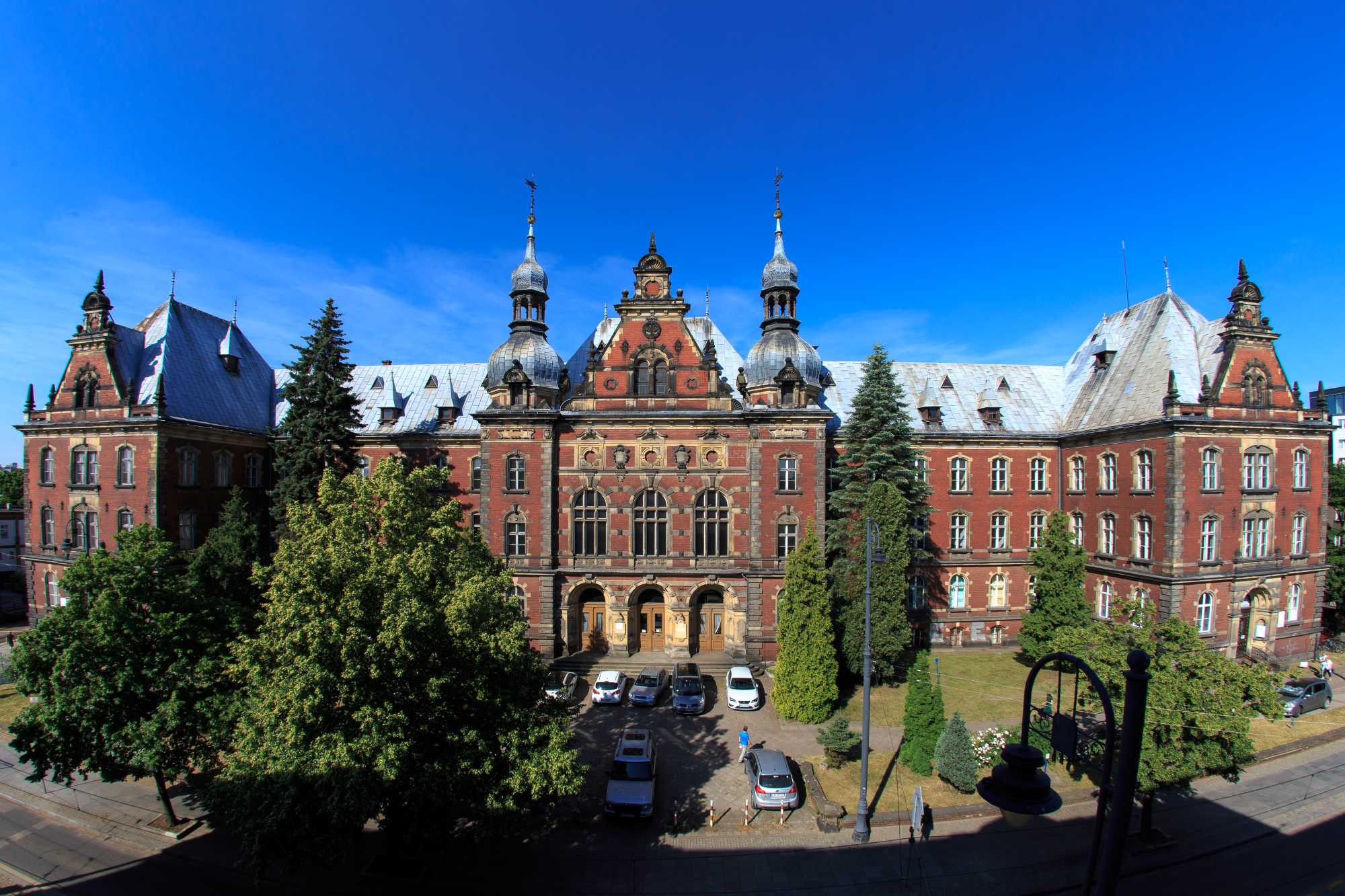
Roman Bosiacki
The period when Bydgoszcz was annexed by Prussia brought first development of river transport, and in the second half of the 19th century – railway transport. The city received railway service to Berlin and a junction of the coal highway running from Silesia to the seaside. The expanding railway administration required construction of a proper office building. The year 1888 marked the opening of one of the most beautiful, stately buildings standing in Dworcowa Street. Prussian municipal buildings were rarely erected in the Mannerism style. But this feature distinguished the Bydgoszcz edifice. The building looks equally interesting from the front and from the back, overlooking water, which we can admire from the other bank.
Królowej Jadwigi Bridge
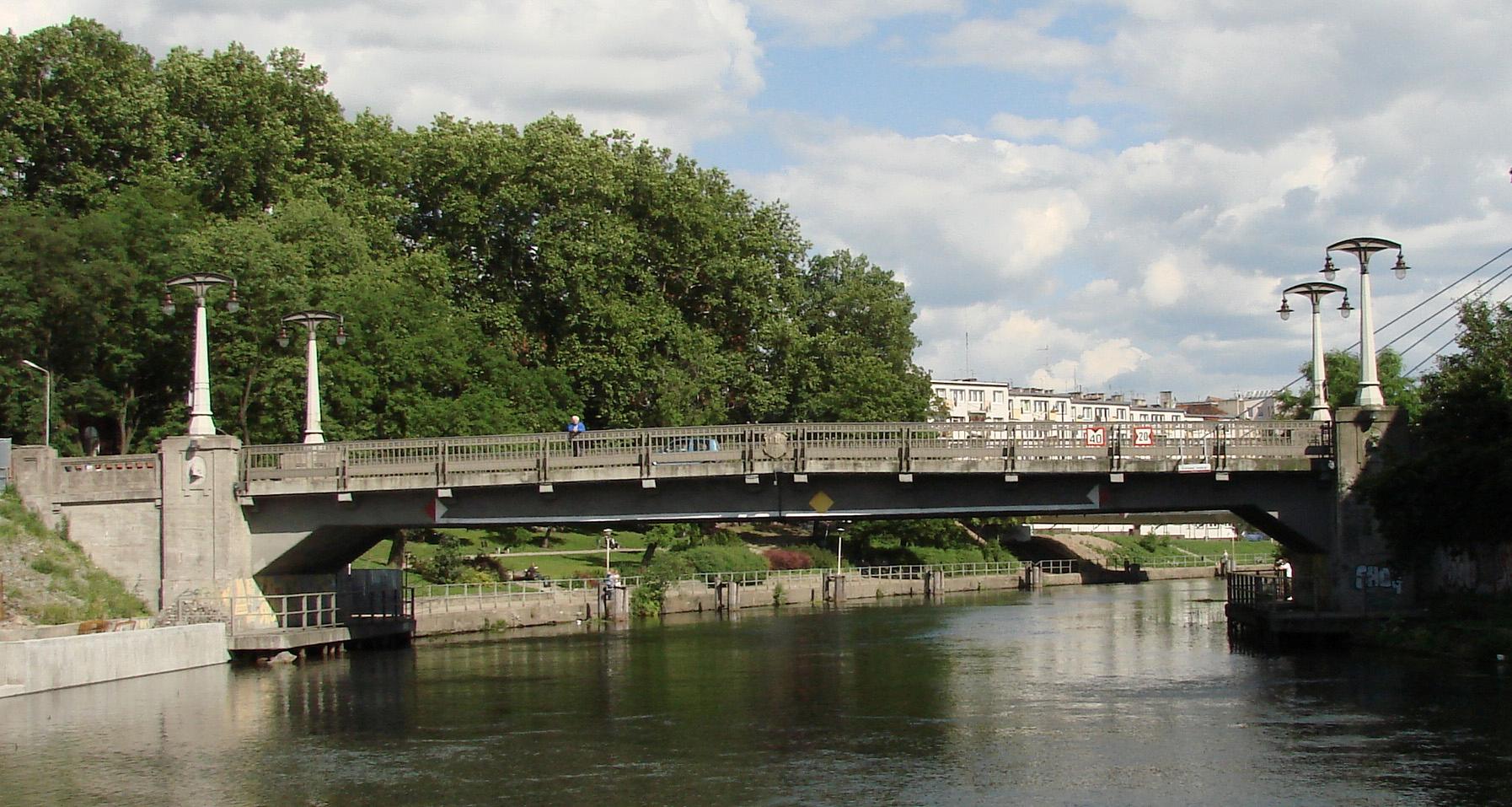
It emerged in its present shape in 1915, when the entire section of the Brda River was rebuilt, adjusting it to the needs of modern navigation. The brick, three-span bridge was replaced with a modern reinforced concrete structure, which was a very innovative solution at that time. Until 1920, the bridge was called Victoriabrücke; after the return of Bydgoszcz to Poland, it was renamed Królowej Jadwigi Bridge (Queen Hedwig Bridge). Its unusual history is related to the period of the Second World War. The crossing survived an attempt at blowing up with dynamite – the only signs of this event were distorted railings. A few days later, the Germans placed several aerial bombs on the bridge. Residents from the nearby district of Okole, called railwaymen due to their professional relations with railway, sneaked up at night and disarmed the bombs. Therefore, the bridge survived the war as the only bridge in the city.
Astoria and waterfronts
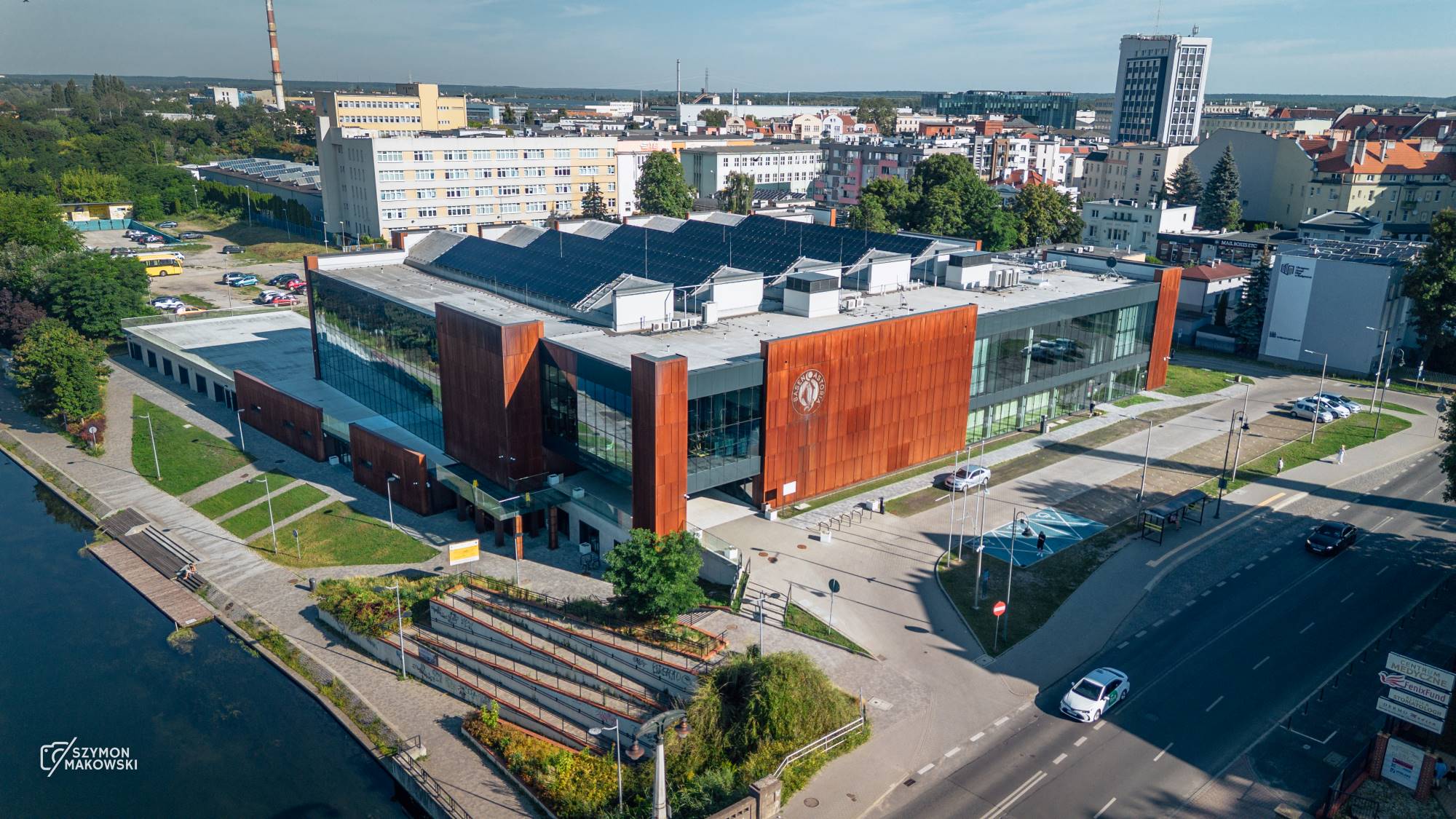
Szymon Makowski
Between the City Centre and the district of Okole is an old neighbourhood of railwaymen. With them in mind, a sports club was established, offering basketball, kayaking, boxing and swimming sections. There were popular swimming pools, which were lately reconstructed into one of the most modern Olympic swimming pools in Poland. In recent years, one of the best investment projects was reconstruction of waterfronts. The period marked the emergence of small architecture, a skatepark for young people, as well as hiking and biking trails. Therefore the place was brought back to life, becoming a popular site among residents, encouraging family walking. Reconstruction and revitalization of waterfronts shows the close ties between the city and water, and the continual focus on water. These days, the river is supposed to be associated with relaxation, greenery and exploration of the beauty of the city.
Railway bridges
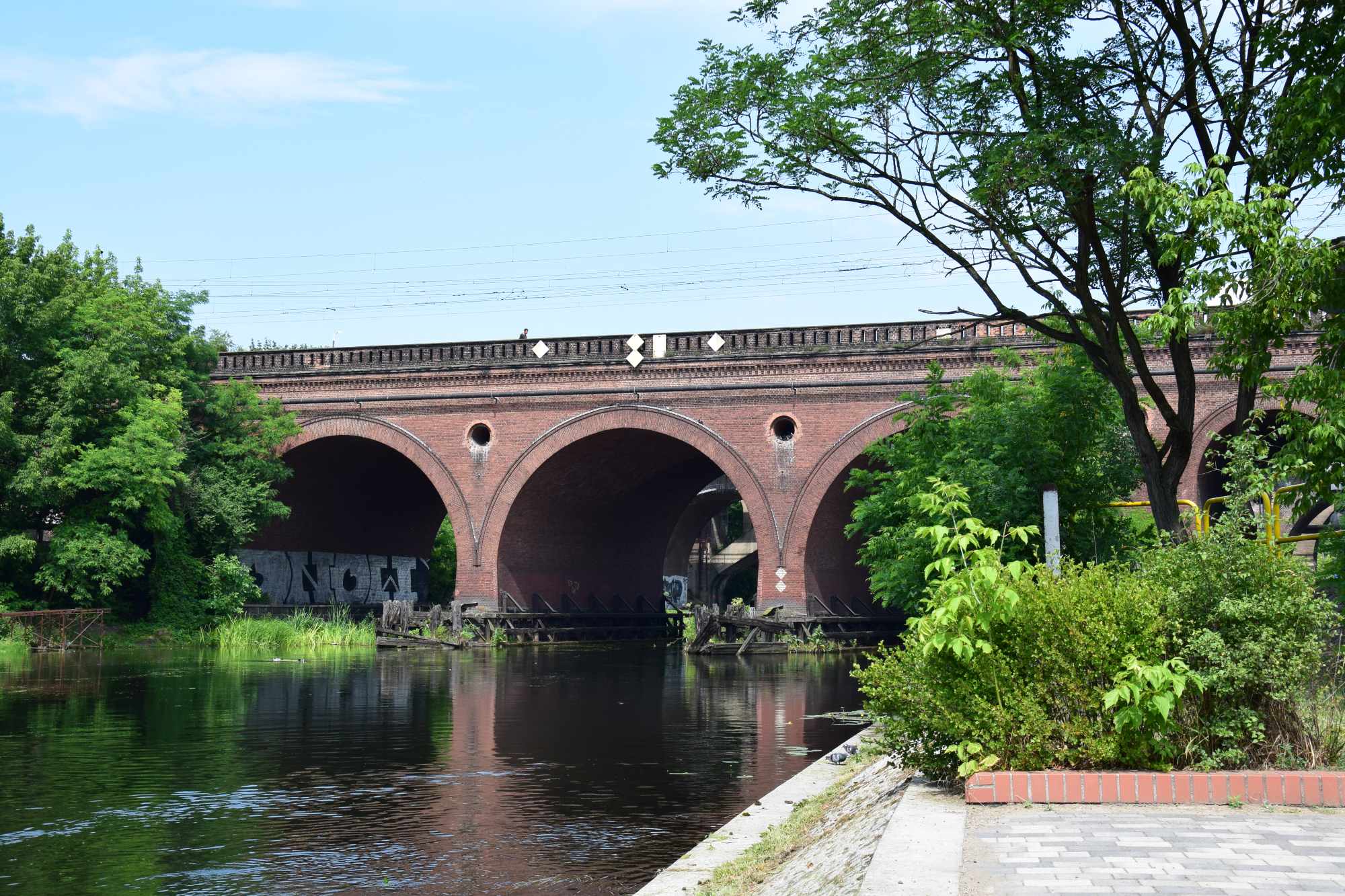
There are three railway bridges seen on the Brda River. The eastern arch bridge, which was put into service in 1851, is the oldest preserved bridge structure in Bydgoszcz and one of the oldest existing railway bridges in Poland. The middle bridge, a brick structure, was built in 1872. Finally, the western, reinforced concrete bridge dates from 1895. The coal trunk line, running from Silesia to the seaside, one of the most important investment projects of the Second Republic of Poland, runs via the middle bridge. The bridges survived the period of the Second World War. Reliable construction of the bridges makes that they have been used to this day, despite the passing of time. Here, by the three bridges, our ship cruising on the Old Town route goes about towards the city centre.