The Old Polish Bydgoszcz
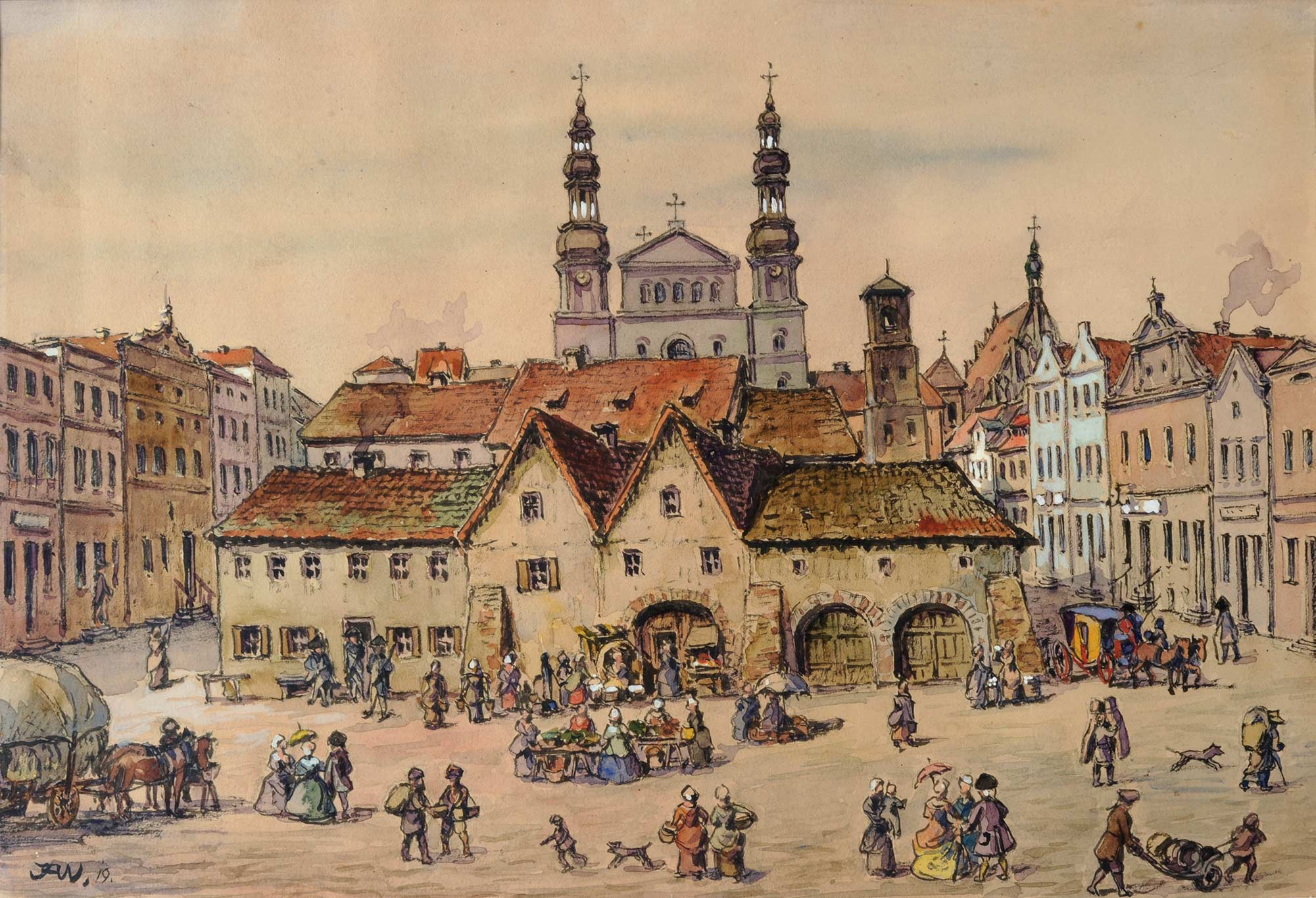
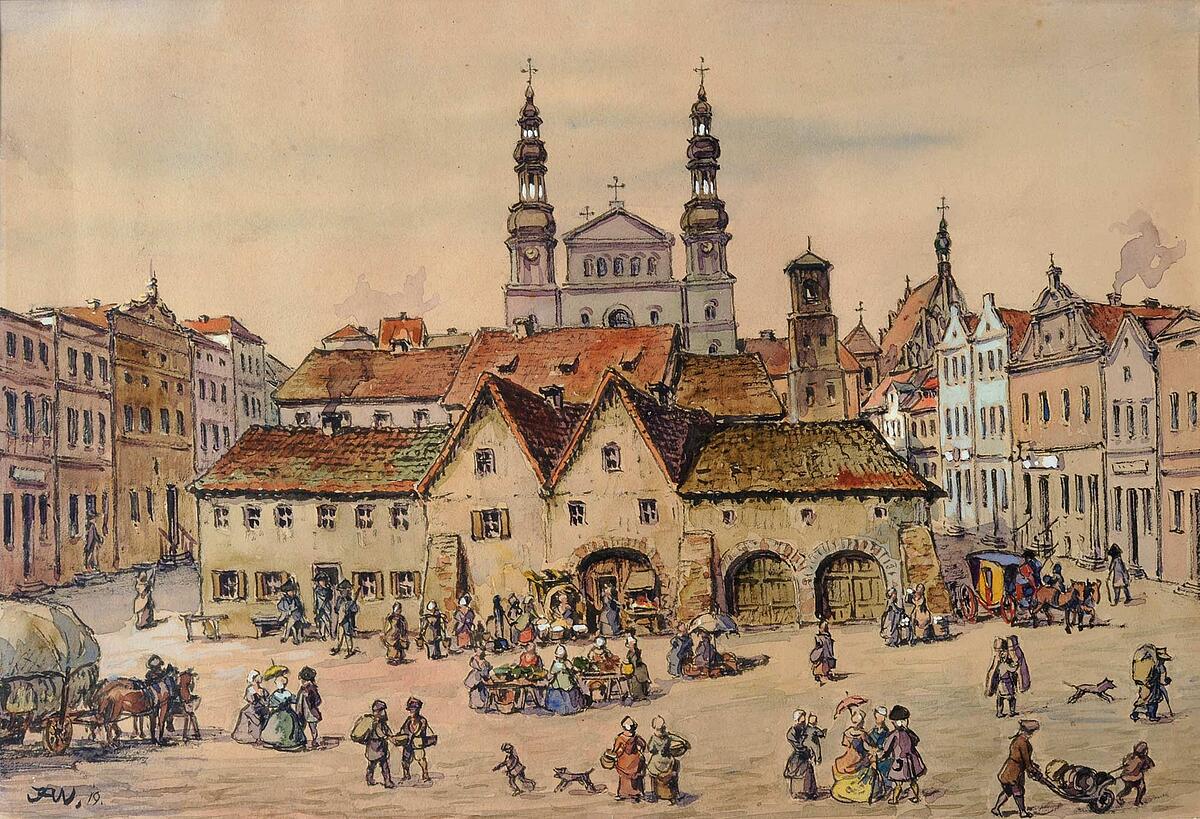
A walk around the Old Polish Bydgoszcz (1346-1772) is a walk around a city that is largely gone. The city was founded on April 19th, 1346 by the famous Polish ruler of the Piast dynasty, Casimir the Great (Kazimierz Wielki). After the initial difficulties related to the presence of the Teutonic Knights in the close vicinity of the city, it quickly became an important trading centre. In the first half of the 17th century Bydgoszcz, with the population of 5,000, reached its peak of development in the Old Polish period.
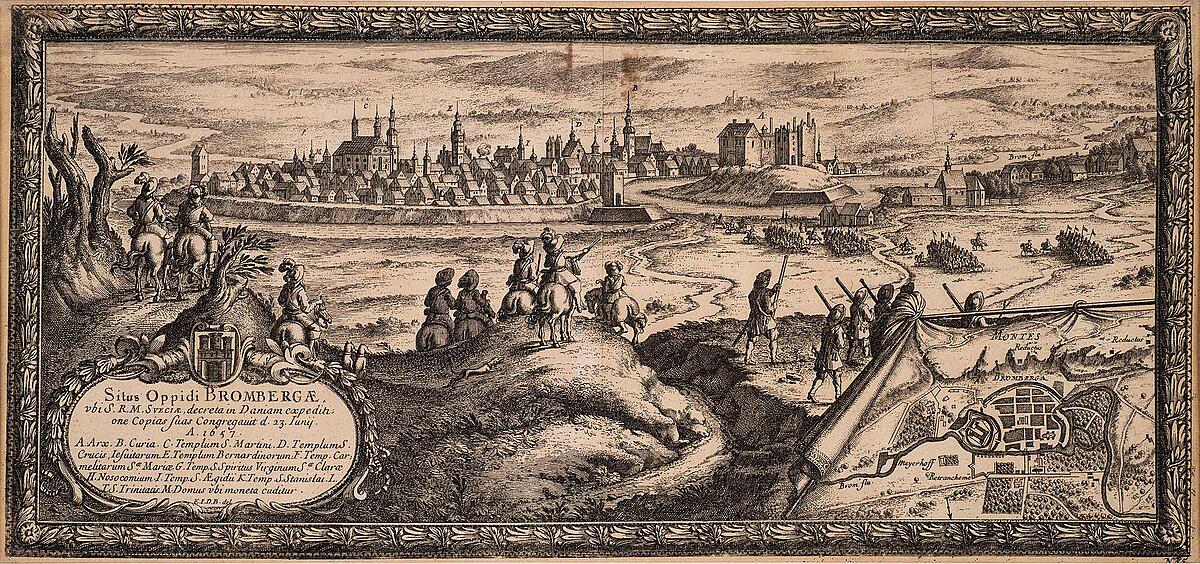
The dynamic growth of the city on the Brda River in the 15th and 17th centuries was the time which can be called the first golden age in the history of the city. Its development was halted in the first half of the 18th century as a result of the wars with Sweden. The sixth consecutive war between the Polish-Lithuanian Commonwealth and Sweden, the so-called Swedish Deluge of 1655-1660, almost ended the history of Bydgoszcz as a city. The real disaster, however, was the third Northern War (1700-1721). The constant marches of foreign troops, subsequent occupations, as well as fires, epidemics and famines were more than the city could bear. It would no longer play a role of an important economic centre. The population dropped dramatically below 1,000 inhabitants. Many fine buildings, which testified to the importance of Bydgoszcz at the time of the Kingdom of Poland, would disappear from the city’s landscape.
Only some of the historic buildings of the Old Polish era have survived to the present day. These structures and the places, where important buildings once stood (now often hidden from sight), are waiting to be discovered. The memory and knowledge about them is passed on by successive generations of Bydgoszcz residents. We hope that this brochure will help to preserve that heritage. That is why, we kindly invite you for a walk around the Old Polish Bydgoszcz.
1. The Old Market Square
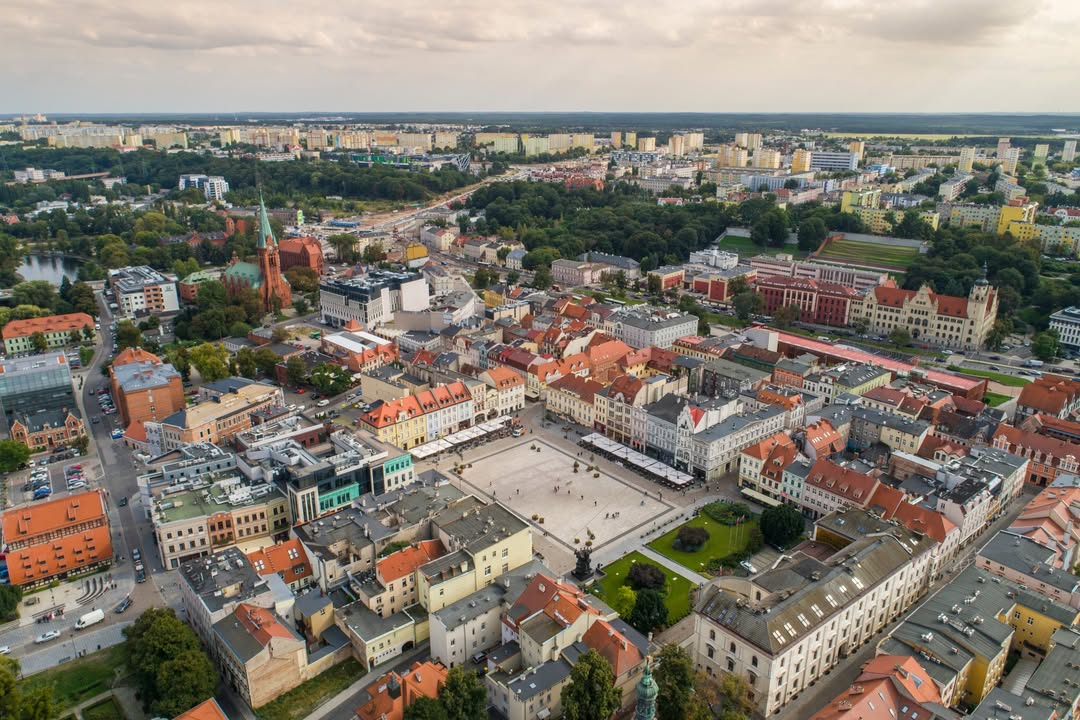
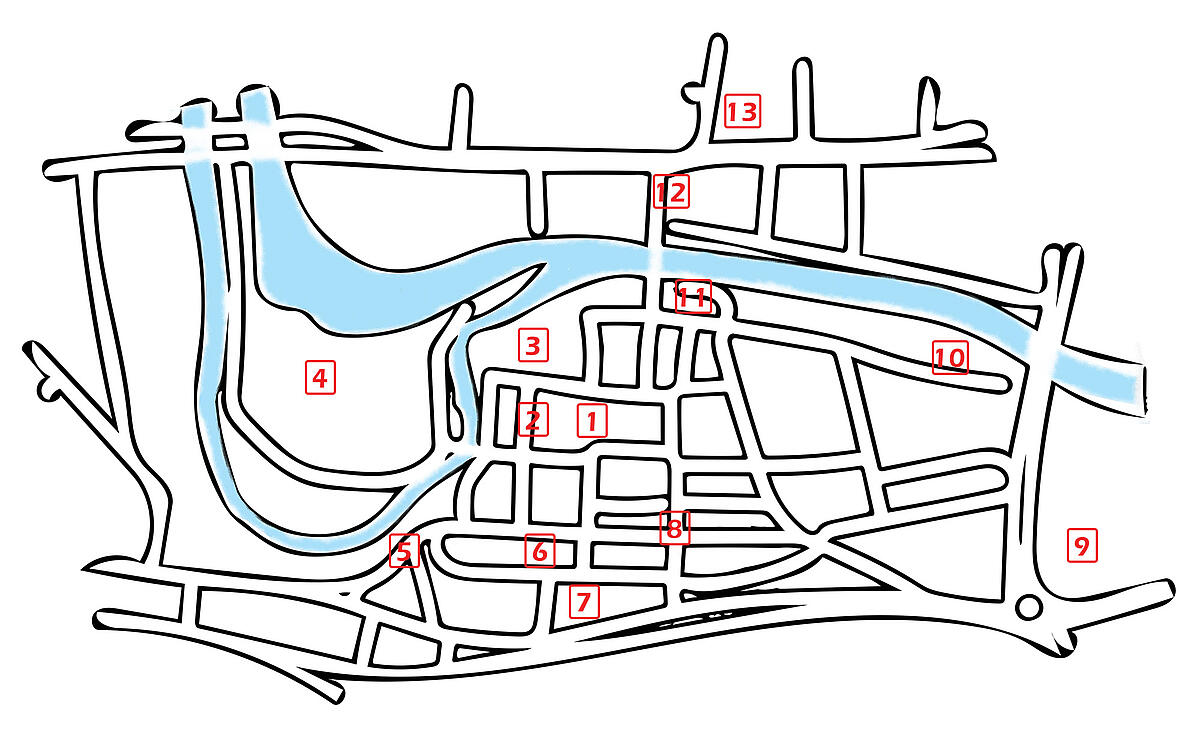
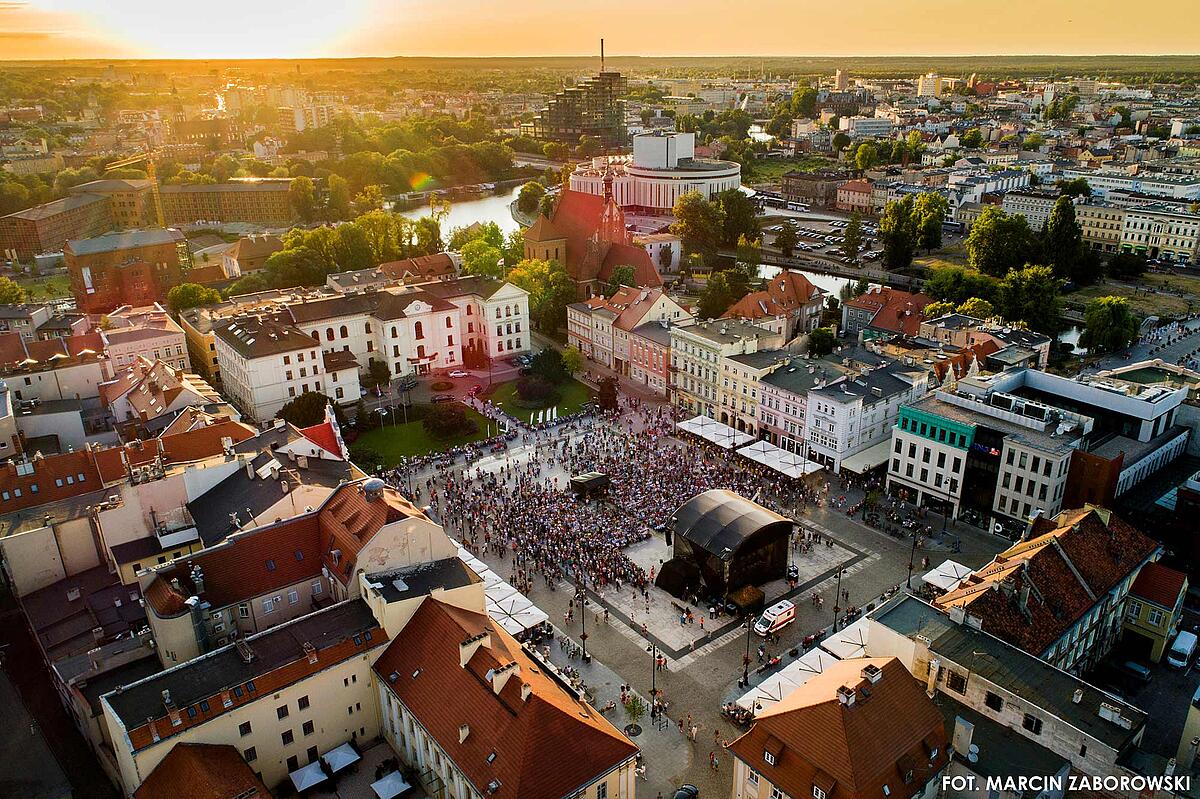
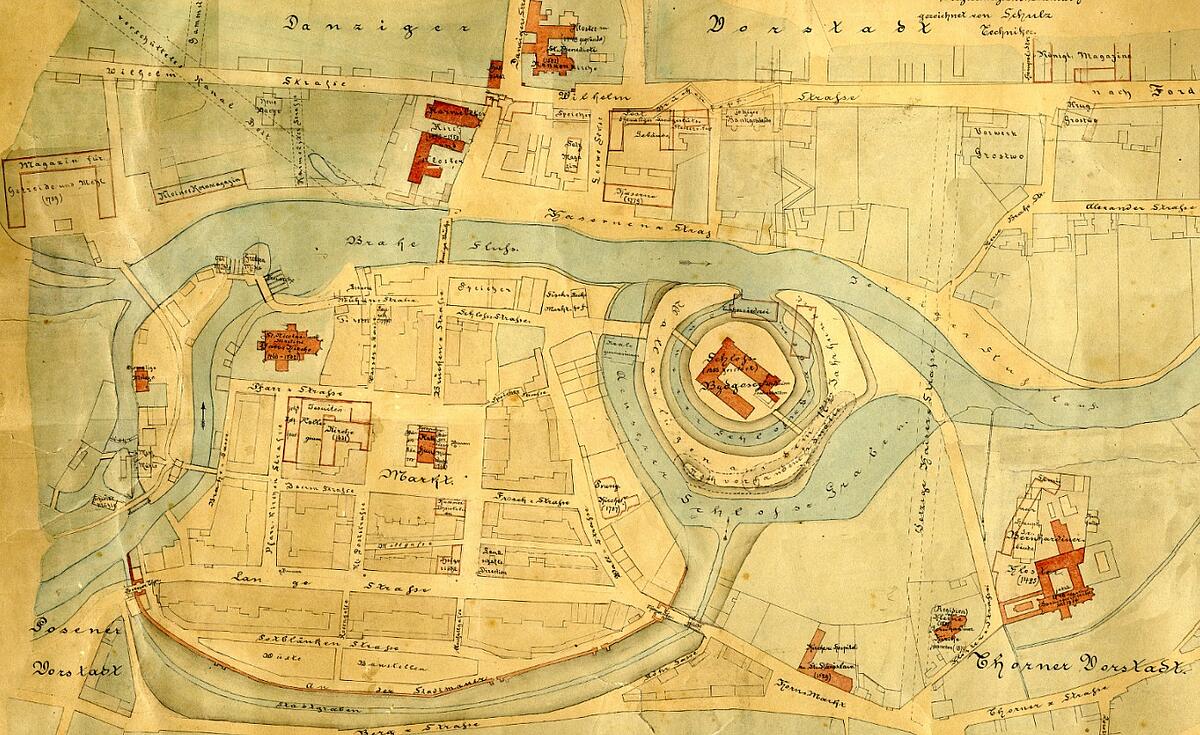
The main square in Bydgoszcz was marked out in 1346 when the city was founded by Casimir III the Great. An uninhabited plain in the close vicinity of the existing stronghold, built probably in the 11th century to guard the crossing over the Brda River, was chosen as the centre of the future city. The town hall was erected in the central part of the square. It has not survived to our times. The representative gothic building, the seat of the city authorities, dating from the 16th century (designed by master Jan of Gdańsk), was demolished in the 19th century. However, its foundations have been preserved, now hidden under the surface of the market square. Their outline, with that of the town hall tower, is marked by the market square granite slabs of a darker, reddish colour.
2. The Town Hall
The building of the present-day town hall was built in the years 1644-1653. The impressive edifice was erected in the baroque style on the initiative of Bishop Kasper Działyński and the Chancellor of Poland, and also the Royal Governor of Bydgoszcz, Jerzy Ossoliński (there is an extraordinary story about gold horseshoes and this dignitary!). The structure was erected for the purposes of the Jesuit College. Both the college and the non-existent Jesuit Church of St. Cross (1649) were undoubtedly amongst the most magnificent buildings in Old Polish Bydgoszcz. It is worth noting that the front elevation of the town hall is located on the side of Jezuicka Street. Looking at the former college from the market square, we must remember that we are looking at the back of the building. It was once hidden behind the Jesuit Church, demolished by the Germans in 1940.
Bydgoszcz, widok na Stare Miasto
3. The Cathedral of Saints Martin and Nicholas
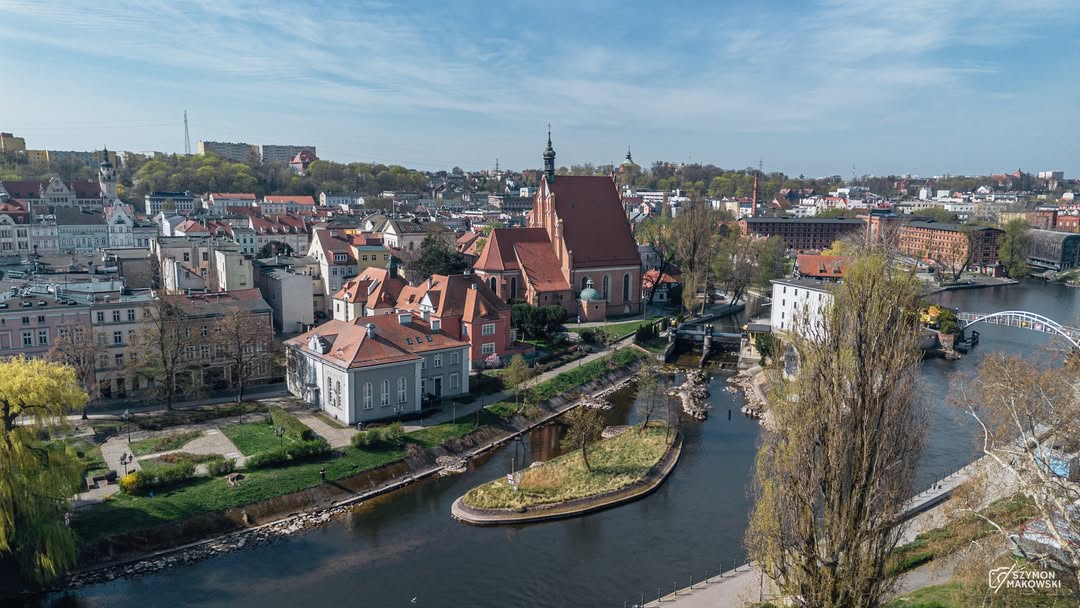
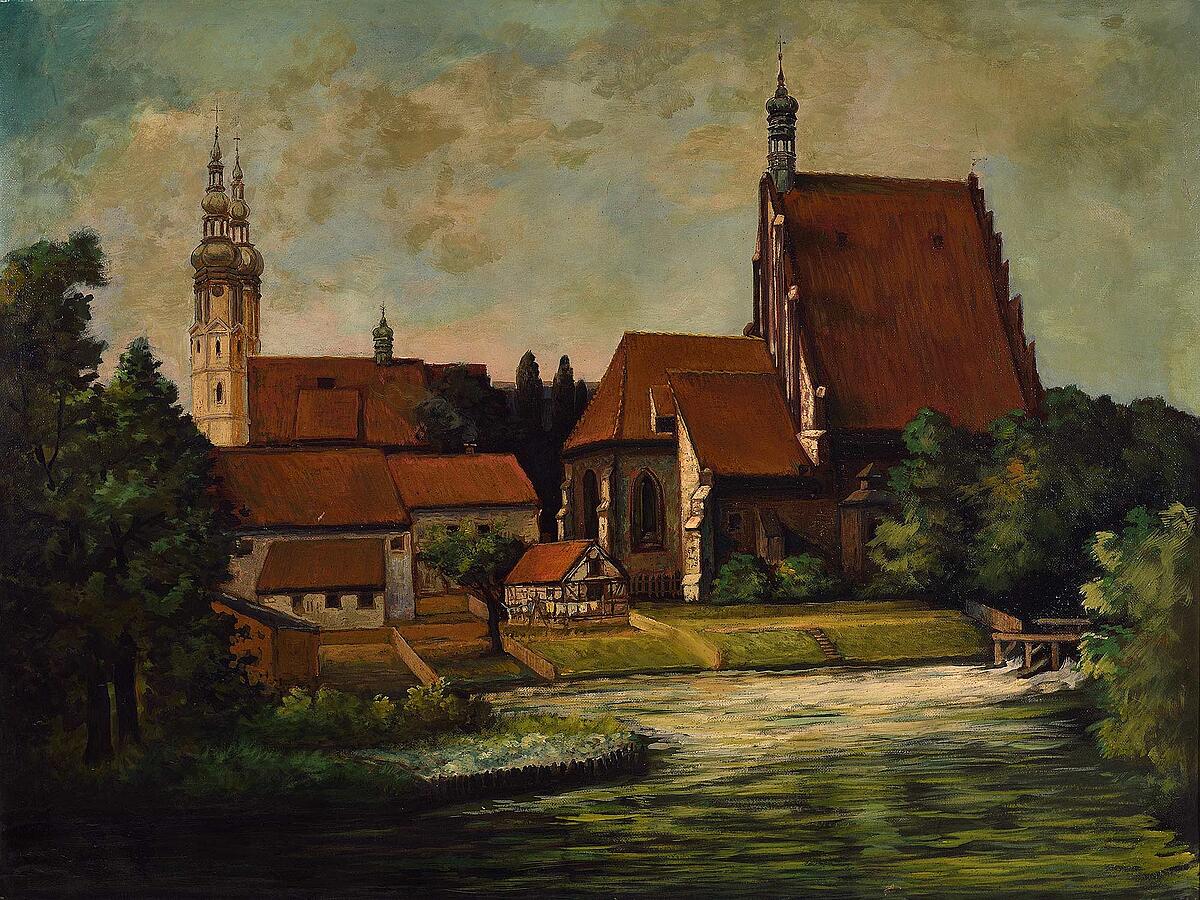
The cathedral, erected between 1425 and 1466, is the oldest preserved building in Bydgoszcz. Originally wooden, then brick, built at the time when the city was founded, it received its present shape during the reconstruction which stared in 1425, after the great fire of the city. At the time of its completion, the cathedral was an impressive structure, but it had already marked its presence in the Polish history. During the Thirteen Years’ War (1454-1466), waged between the Kingdom of Poland and the State of the Teutonic Order, Bydgoszcz, and probably also the unfinished cathedral, often hosted the Polish King Casimir IV Jagiellon and important royal dignitaries. The late-Gothic church, hiding extremely valuable items in its interior, is undoubtedly the most important monument of the Old Polish era in Bydgoszcz. The real gem of the cathedral is the beautiful painting of Our Lady of Beautiful Love in the high altar. This painting, a priceless work of an unknown artist, probably executed in the 15th century, was funded by the Royal Governor of Bydgoszcz (Starosta), Jan Kościelecki. In January 2018, during the archaeological works in the cathedral, a treasure, consisting of over 700 objects, was discovered. It included almost 500 coins, dominated by the ducats minted in the Seventeen Provinces of the Habsburg Netherlands. This treasure, which dates back to the 17th century, now exhibited in the European Money Centre on Mill Island, may prove
Bydgoszcz’s strong position as a commercial centre in the 16th and 17th century.
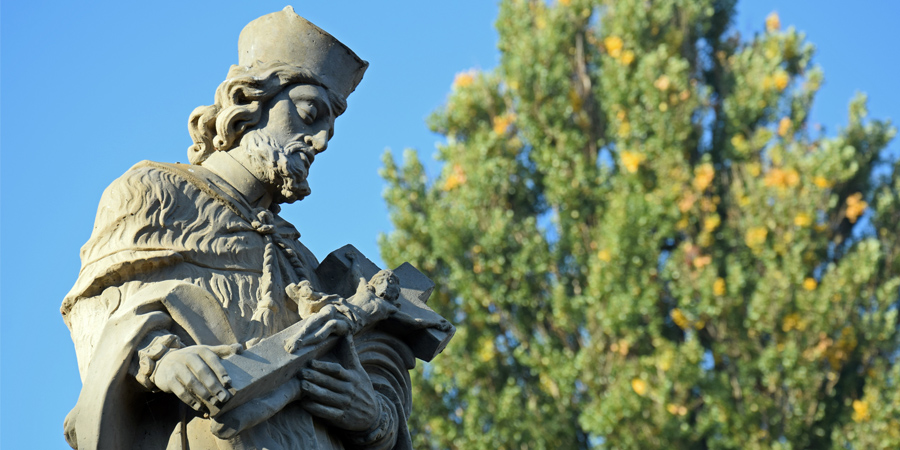
* In the vicinity of the cathedral, there is a statue of St. John of Nepomuk from the 18th century (one of the oldest free-standing sculptures of this type in northern Poland – closely connected to water and bridges).
4. Wyspa Młyńska
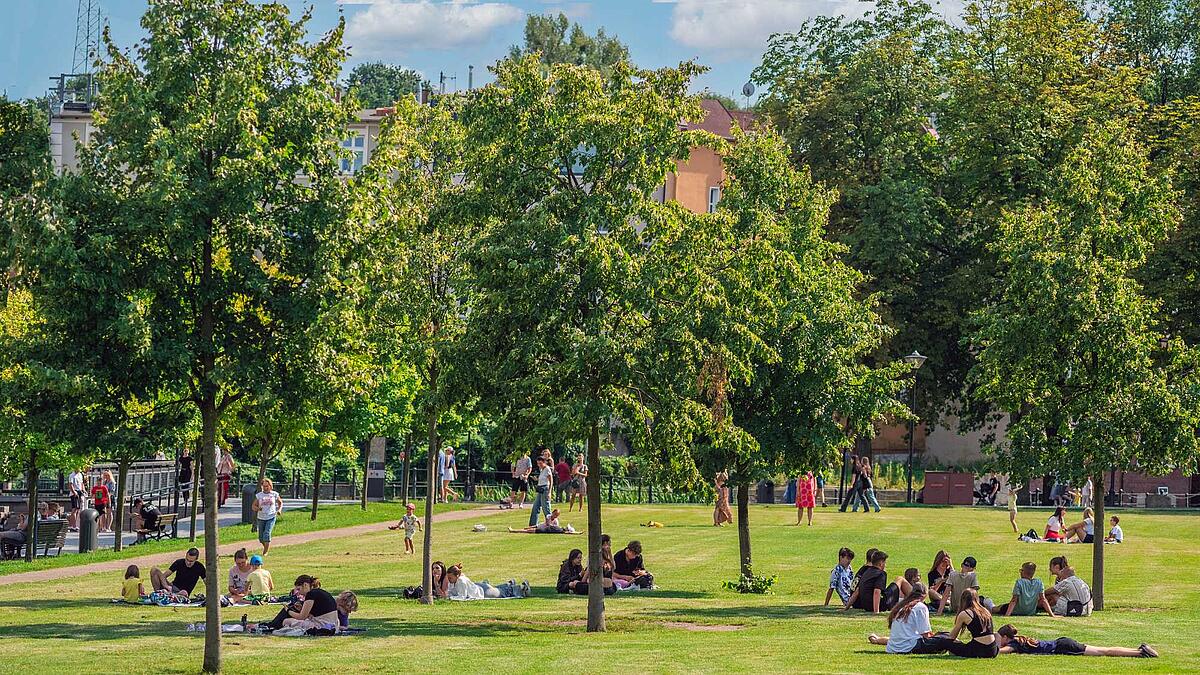
Wyspa Młyńska to 6-hektarowa zielona oaza w samym sercu grodu nad Brdą, miejsce, w którym bydgoszczanie mogą odpocząć od zgiełku miasta. W czasach I Rzeczpospolitej część wschodnią dzisiejszej wyspy zajmowały budynki mennicy. Mennica bydgoska funkcjonowała w latach 1594-1688, choć przywilej bicia monety Bydgoszcz otrzymała już w dokumencie lokacyjnym z 1346 r. Pierwsza połowa XVII w. to okres świetności bydgoskiego zakładu, w pewnym momencie jedynej mennicy koronnej w rozległej wtedy Rzeczpospolitej. To tutaj (w 1621 r.) wybito jedną z największych (7 centymetrów średnicy!), a zarazem najcenniejszych i najdroższych obecnie monet świata. W 2018 r. słynna 100-dukatówka Zygmunta III Wazy z bydgoskiej mennicy została sprzedana na aukcji w Nowym Jorku za ponad 2 miliny dolarów. Warto wspomnieć, że w okresie upadku miasta po potopie szwedzkim, bydgoską mennicę dzierżawili bracia Tymfowie, którzy wybijali złotówki o zaniżonej wartości srebra. Królestwu pozwalało to zaoszczędzić na kruszcu, jednak ówczesnych obywateli bawiła sytuacja, w której władze państwa świadomie zdecydowały się bić monetę o zaniżonej wartości. Monetę od nazwiska pomysłodawcy zaniżenia jej wartości nazwali tymfem, co z czasem przeszło w słowo „tynf” - stąd wzięło początek znane do dziś powiedzenie „dobry żart tynfa wart".
5. Długa Street / Wool Market Square
In the Old Polish era, close to the currently existing tenement houses at Długa 2 and Długa 5, one of the three city gates, the so-called Poznań Gate, was located. It was a 15th century three-story building which guarded Bydgoszcz from the south-west. The city’s executioner may have occupied the rooms of the gatehouse. The information plaque about the building is placed on the house at number 2. Tower 5. In the courtyard of the house at 4 Pod Blankami Street, you can see a well-preserved section of the city’s medieval fortifications. In this place, a fragment of a defensive wall and remains of a tower have survived to our times.
6. Buildings at 17 Pod Blankami / 22 Długa Streets
The structures stretching between two important streets of the medieval city are unique buildings of the Old Town in Bydgoszcz. The part of the complex along Długa Street, where the mead and wine cellar was located, probably dates back to the 17th century. The walls at Pod Blankami Street hide unusual 6-metre-high, two-story cellars and interesting arcaded foundations. The deepest cellars of the old Bydgoszcz and the spacious attic could accommodate an impressive supply of all kinds of drinks. It is worth mentioning that, according to an urban legend, the Polish King Jan III Sobieski stayed in the tenement house at 22 Długa Street in 1676.

7. Casimir the Great Monument
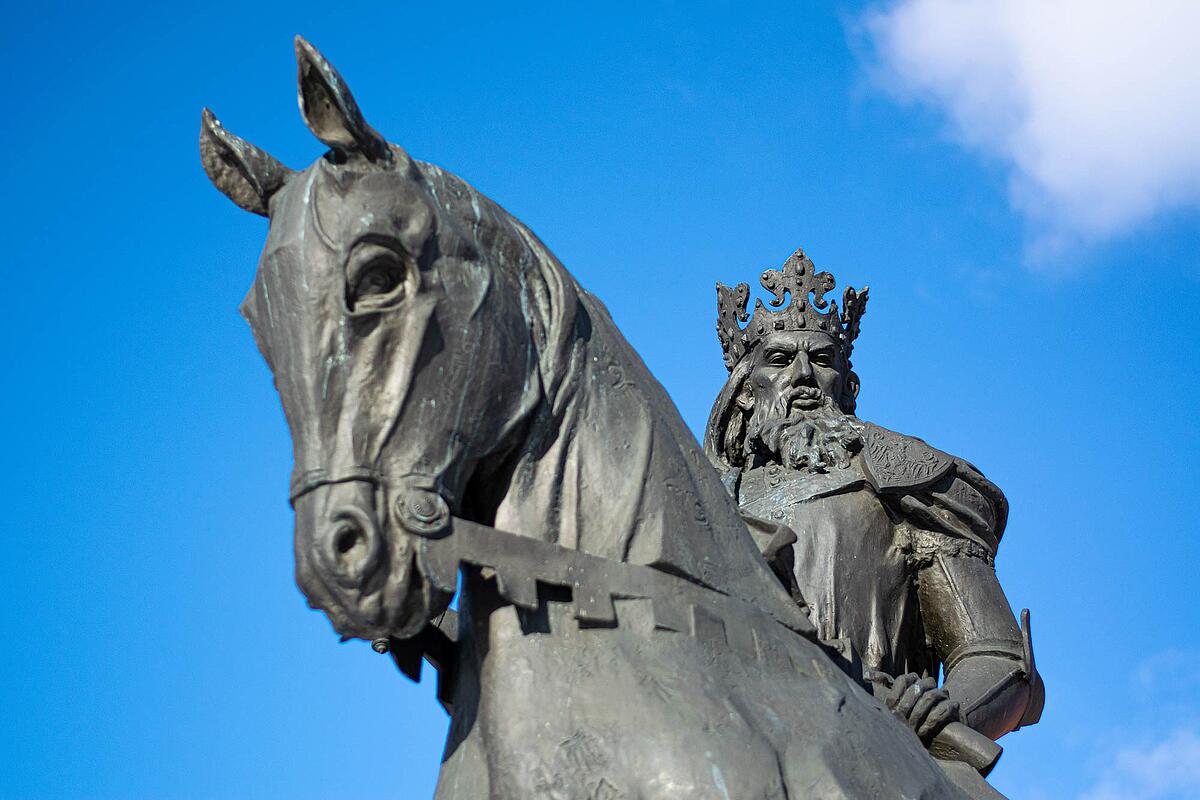
The monument to King Casimir III Great, the founder of the city, was unveiled in 2006. The eminent king and the last Polish ruler from the Piast dynasty was presented on a horse with a sceptre in his right hand and the charter of Bydgoszcz in his left hand. The king seems to be proudly looking at the largest of all the cities he once established.
8. Długa / Jana Kazimierza Street
Długa Street used to be not only the longest street in the medieval city but also the most important communication axis of Bydgoszcz. There were city gates at its both ends – the Poznań Gate in the west and the Kuyavia Gate in the east (located at the intersection of Długa and Podwale Streets). The Kuyavia Gate had a brick foregate and was later surrounded by early modern fortifications. Merchants, craftsmen and noblemen lived in this street. The Provincial and Municipal Public Library, where the Bibliotheca Bernardina is kept, is worth visiting. It is a unique collection of manuscripts and books amassed in the Old Polish period in Bydgoszcz by the Bernardine Order.
9. „The Garrison Church”
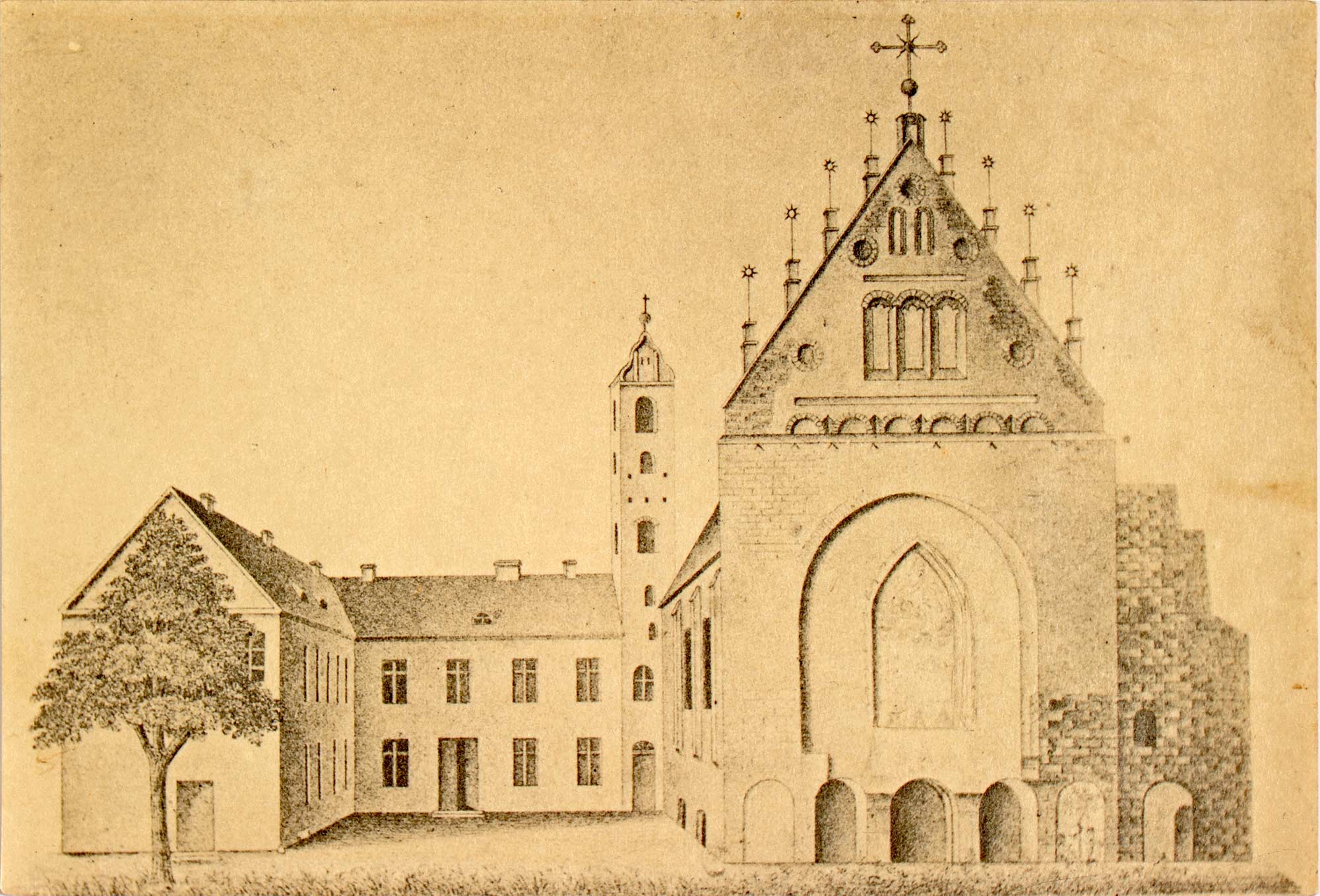
The second oldest temple in Bydgoszcz was erected in the Gothic style between 1552 and 1557. The church with a preserved fragment of the monastery complex remains an extremely important historic building, which reminds us about the presence of the Bernardines in Bydgoszcz. The monks, who came to the city in 1480, were brought here by order of the Polish King Casimir IV Jagiellon. The Bernardines established a library and philosophical school in Bydgoszcz (Bartłomiej from Bydgoszcz, one of the most eminent scholars of the Old Polish period, was one of its lecturers). The Bernardines played a unique role in the history of the city, contributing to its development in many fields. It is worth adding that in the close vicinity of the monastery buildings, the oldest temple of Bydgoszcz, the Church of St. Giles, stood until its demolition in the 19th century.
10. The area on the Brda River – around 36 Grodzka Street
In the early Middle Ages, in the place of present-day Bernardyński Bridge, there was an important crossing over the Brda River, one of only few such places in the area. The crossing was guarded by a stronghold surrounded by a solid rampart made up of wood and earth. This settlement, which gave rise to Bydgoszcz, was located in the place occupied now by a hotel and a green square. In the area of the former stronghold, after the foundation of the city, King Casimir the Great had a large castle built. Almost all Polish kings stayed behind the walls of the Bydgoszcz castle, the site of some fierce battles during the Great War with the Teutonic Order (1409-1410). The Bydgoszcz stronghold was almost completely destroyed during the Swedish Deluge (1655-1660). The model of the castle can be found at the intersection of Grodzka and Przy Zamczysku Streets, next to the mBank office building.
11. Granaries at 9-11 Grodzka Street
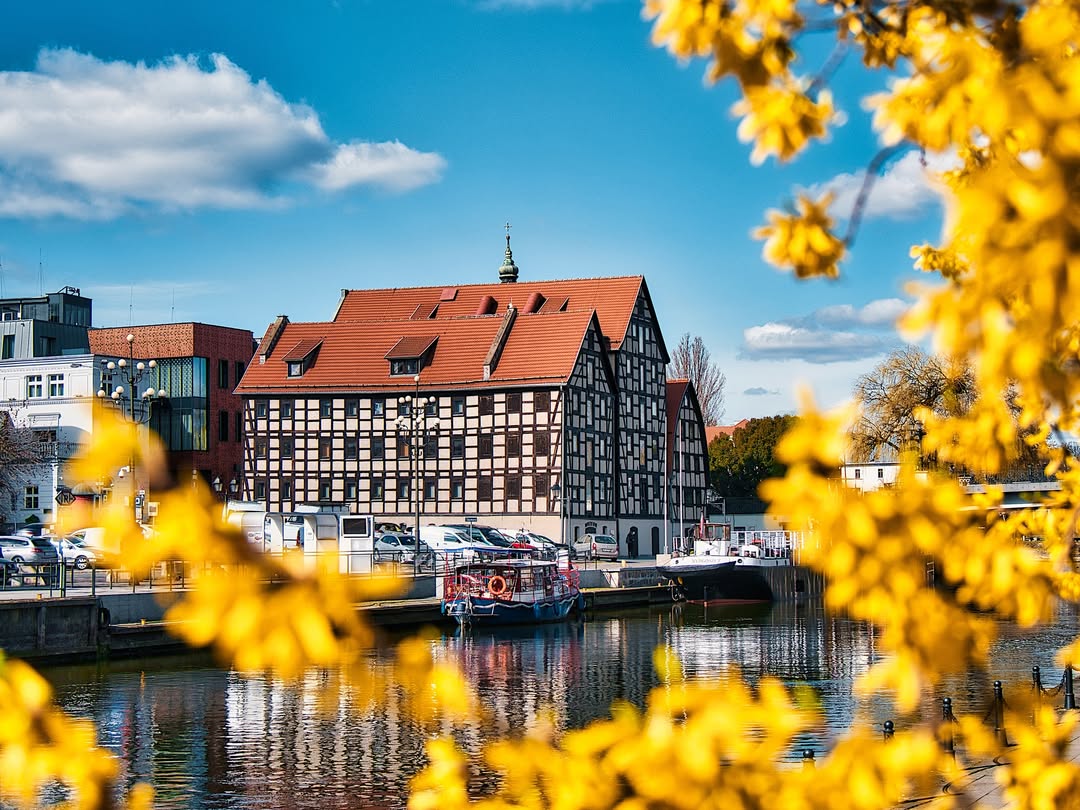
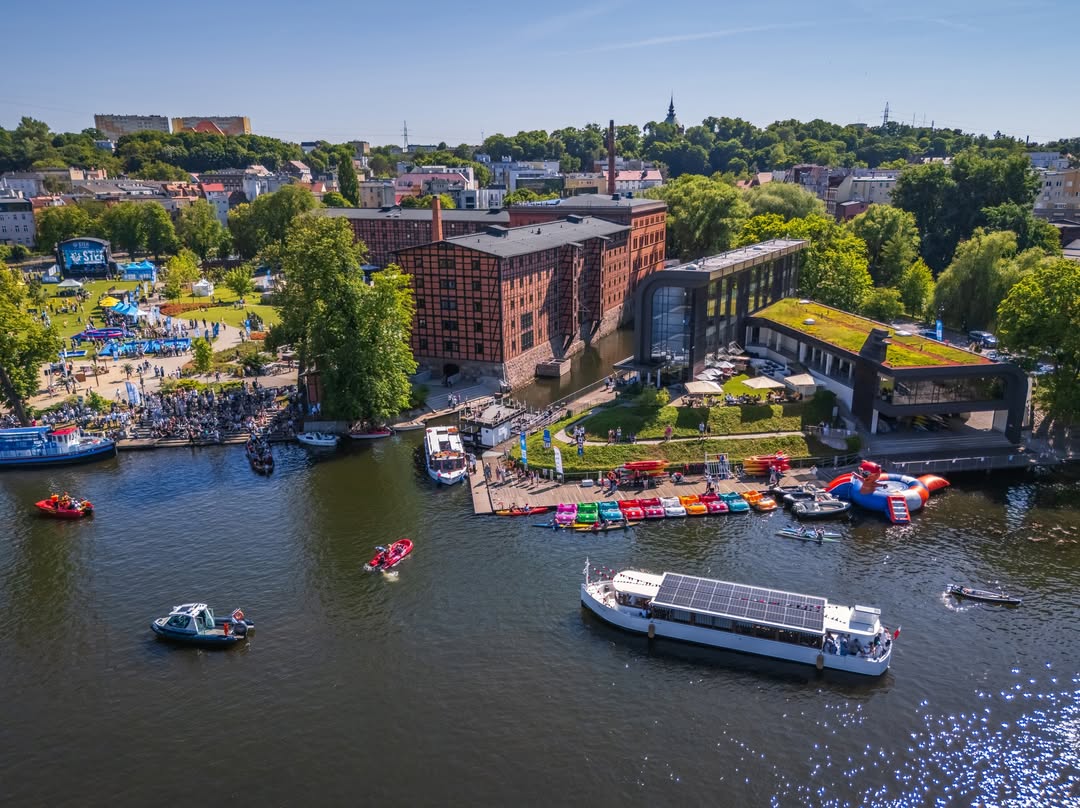
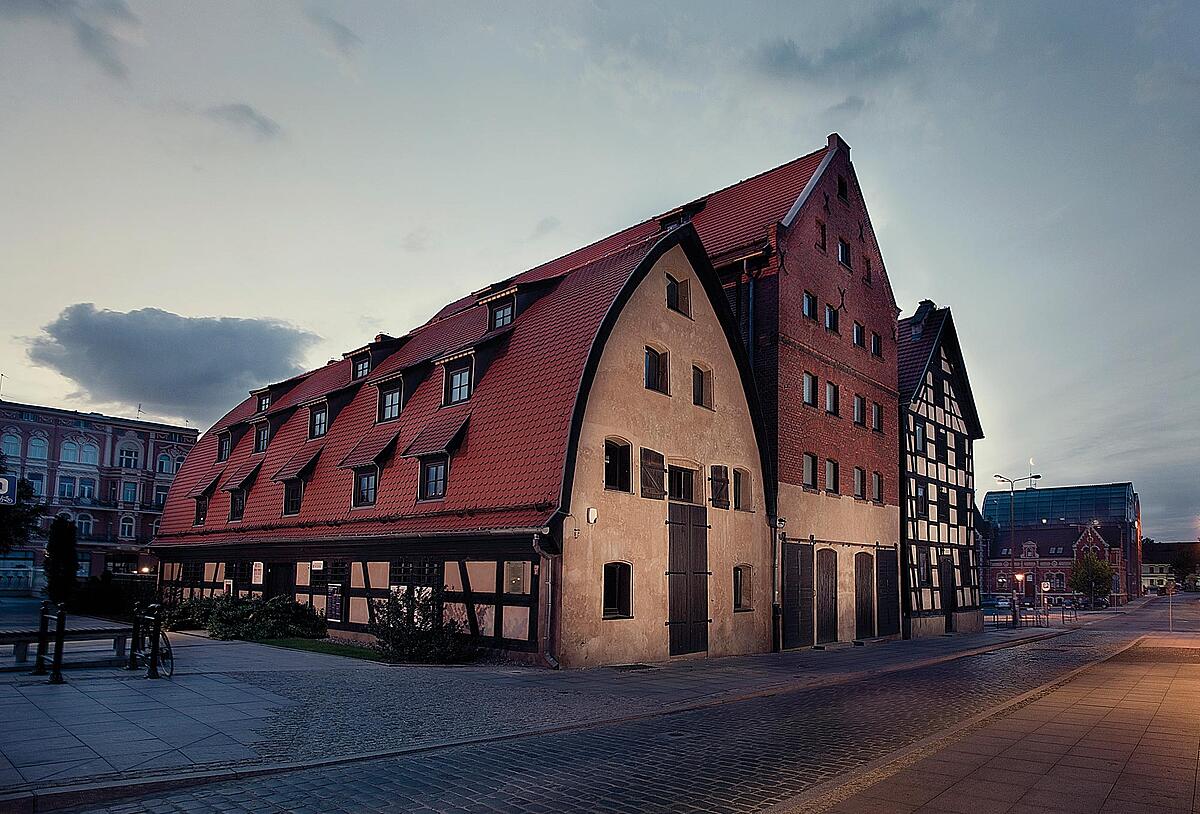
The three characteristic buildings in the close vicinity of the Old Town Bridge are one of the most important symbols of the city. In the Old Polish period, both banks of the Brda near the bridge were full of granaries, warehouses for storing grain and other goods transported by the river. In the 16th century, the river port in Bydgoszcz was one of the busiest in Poland. At that time the city was one of the largest grain trade centres in the country. These banks of the river were the economic heart of the city. It was from this place that ships would depart full of grain, beer (Bydgoszcz was known for good quality beer even before it was chartered), pottery, wood and salt. The model of Bydgoszcz in the Old Polish era is presented on the square in front of the granaries. It should be added that the three granaries which have survived to our times date back
to the end of the 18th century.
12. The present-day Theater Square. Carmelite Monastery in Bydgoszcz
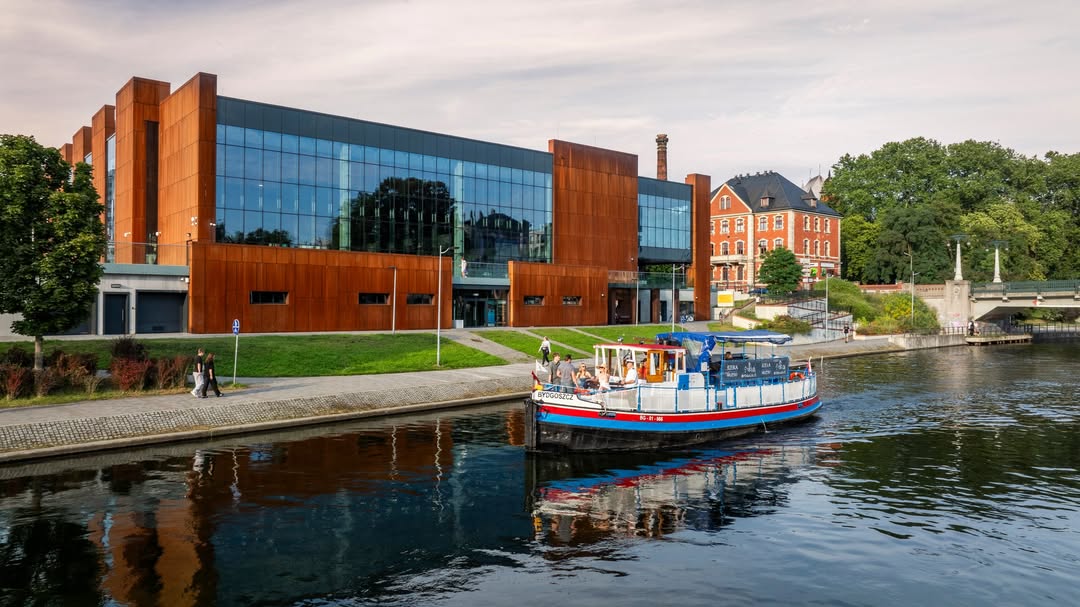
The Carmelites came to the city on the Brda River at the end of the 14th century, probably thanks to the efforts of Queen Jadwiga (1373/4-1399). The monastery complex with the Church of the Blessed Virgin Mary occupied a vast area on the northern bank of the Brda River. It adjoined the Gdańsk Gate, one of the three gates to the city. The Carmelites could perform their ministry, educational and scholarly activities thanks to numerous privileges they were granted, among others, they received part of the fees from the water duty. They also had the right to catch fish in the Brda River. The monastery buildings, together with the characteristic 16th-century belfry, were demolished by the Prussian authorities after the secularization of the order in the 19th century. Near the intersection of the present-day Focha and Mostowa Streets, black basalt setts show the place where the chancel of the Carmelite church was located. It is worth adding that right next to it, there was a paved road which led from the Gdańsk Gate towards the centre of the city.

13. The Church of the Poor Clares dedicated to the Assumption of the Blessed Virgin Mary
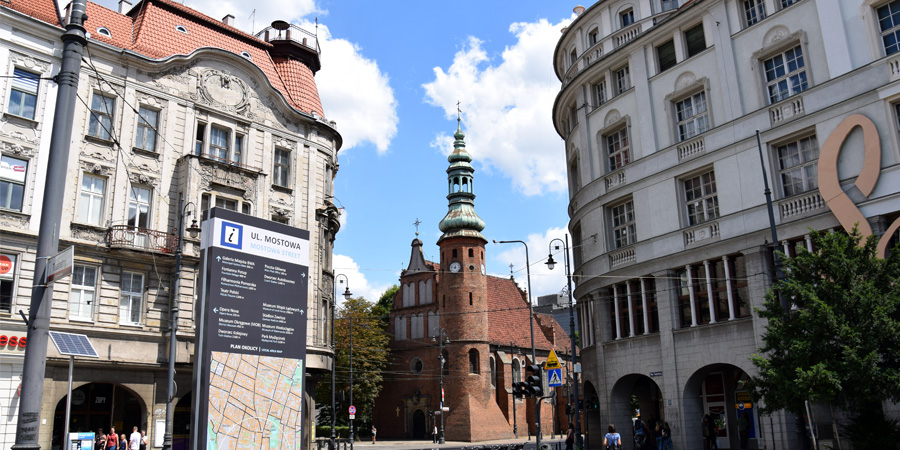
The third oldest church in Bydgoszcz was completed in the 17th century but its history dates back to the 15th century. It was then that a wooden, later brick hospital Church of the Holy Spirit was erected. It was actually a hospital chapel outside the city walls*. The temple, as we know it today, was built in the 16th century and the first half of the 17th century, during the golden age of Bydgoszcz. The expansion of the church was connected with the arrival of the Poor Clares in Bydgoszcz in 1615. It is worth adding that in 2018 extremely valuable wall paintings were discovered in the building of the District Museum at 4 Gdańska Street, which until 1836 were part of the monastery of the Poor Clares. The paintings, including the depiction of the Last Supper, date back to the beginning of the 17th century.
* Other buildings of this type – hospitals, the Church of St. Cross and the Church of St. Stanisław have not survived to the present day.