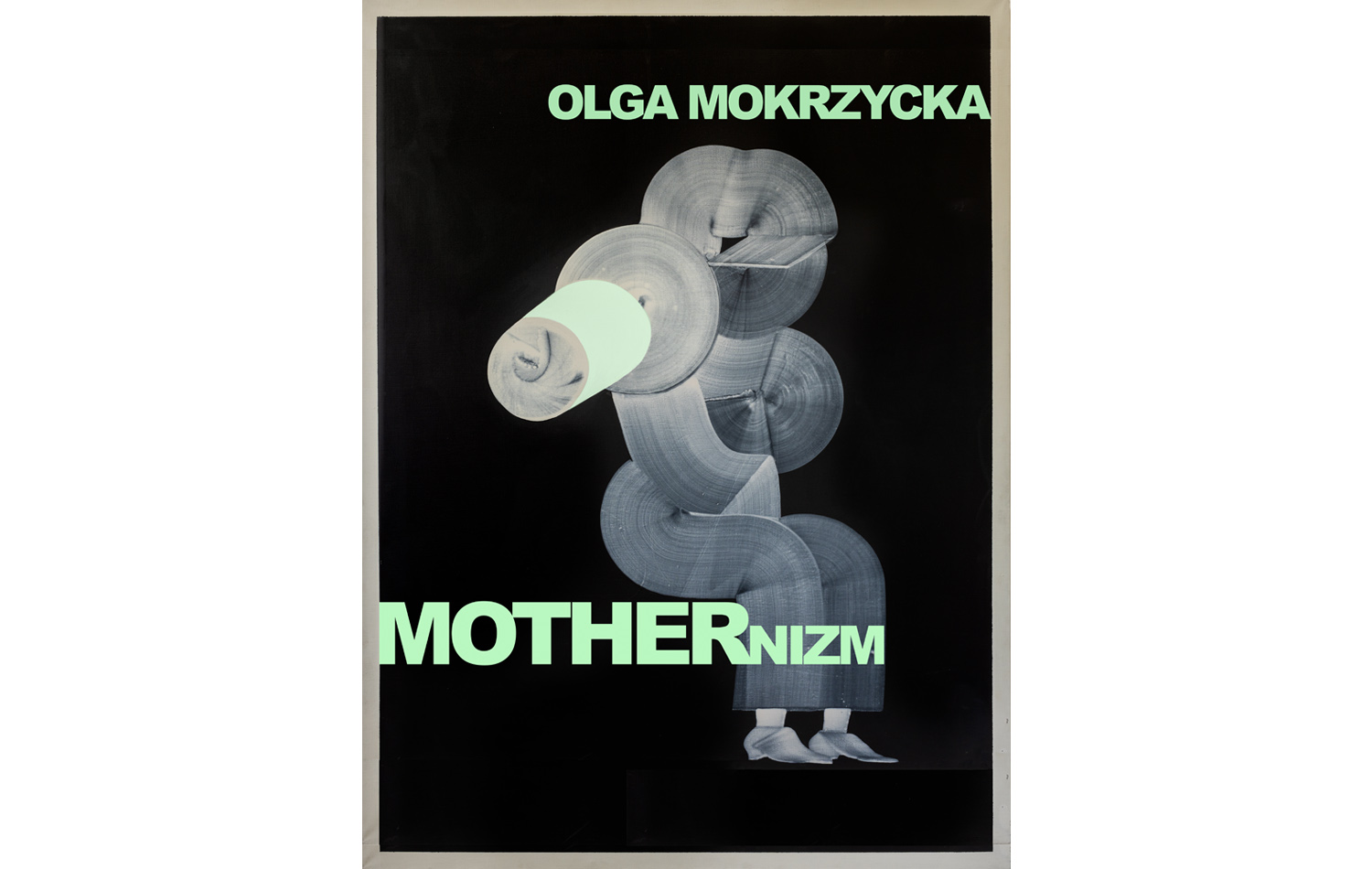
Olga Mokrzycka. MOTHERnism
The bwa Municipal Gallery in Bydgoszcz and the Czarny Karzeł Foundation invite you to Olga Mokrzycka’s exhibition “MOTHERnizm,” which is taking place as part of “The 13th International Festival ‘The Eye Never Sleeps 2026. Bydgoszcz. Kuyavian-Pomeranian Voivodeship.’” This year’s edition of the festival revolves around the theme “Factory and Product”—a metaphor for the contemporary reality in which we navigate between systems, efficiency, control, and that which is non-obvious, incongruous, and original.
About the exhibition:
Olga Mokrzycka’s work occupies a unique space within contemporary reflections on modernism, architecture, the materiality of the image, and the status of female subjectivity in the art world. Her artistic practice—spanning painting, set design, spatial planning, and site-specific interventions—reveals a tension between the desire for aesthetic autonomy and the experience of everyday life, which continuously destabilizes that autonomy. In this sense, Mokrzycka’s work can be interpreted as a distinctive reckoning with the very possibility of creation, and with a longing for art that remains permanently suspended between affirmation and the impossibility of its full realization.
A crucial shift occurs here from the classical modernist model of the female artist toward an experience that can be termed "mother-nism"—a concept describing a situation where creative practice must be constantly negotiated alongside caregiving, social, and emotional responsibilities. For Mokrzycka, however, this is not a narrative based on a simple conflict between domestic motherhood and art. Instead, it is a subtle analysis of how creative subjectivity becomes exhausted within the reality of late capitalism, everyday routines, and the invisible reproductive labor of women. The artist herself notes that while parenthood rarely hinders men's artistic careers, for women it frequently results in the suspension or fragmentation of their creative practice. It is precisely this "fragmentation" that emerges as one of the central themes of her painting. Olga Mokrzycka’s pieces are neither spectacular nor aggressively expressive. Instead, they function as records of a permanent tension between the need to create and the impossibility of achieving the conditions necessary for complete creative concentration. In this sense, her paintings carry an almost existential character, serving as traces of postponing, interrupting, or renewing the act of creation.
Particularly compelling is her series of works executed on black canvases using ordinary wall paint. This gesture can be interpreted as radically conceptual and deeply political. The artist consciously abandons traditional, "noble" painting mediums in favor of a material associated with everyday routines, renovations, housework, and the invisible maintenance of living spaces. Wall paint, as a utilitarian material stripped of artistic prestige, becomes a tool of painterly contestation. The painting ceases to be an autonomous aesthetic object; instead, it functions as a field of tension between art and reproductive or "matro-graphic" labor—between aesthetics and obligation.
In this context, juxtaposing her practice with the work of Roman Opałka is highly precise. Opałka began his lifelong project with pale numbers applied to a darker background, gradually leading to a near-total loss of contrast—a moment where it is no longer clear whether the background absorbs the sign or the sign illuminates the background. In Mokrzycka’s case, however, this relationship gains an additional existential and gendered dimension. Her paintings also operate in a space of disappearance, yet it is not merely a question of time or infinity as seen in Opałka’s work. Rather, it asks: what remains of the artist's subjectivity amidst the continuous bearing, enduring, and sustaining of everyday life? The blackness of the canvas in her work can be read as a space of potentiality, but also one of exhaustion. The bright matter of the wall paint resembles traces of daily repairs, cover-ups, corrections, and invisible actions performed simply to keep the world functioning. Thus, the painting is not a triumph of the painterly gesture, but its muted echo. It is precisely this reduction of means that makes her work so significant. Mokrzycka does not produce the spectacle of creation; she analyzes the conditions of its impossibility.
At the same time, her practice remains deeply rooted in the modernist tradition. This is evident both in her interest in geometry, architecture, and spatial structure, and in her conception of the painting as an autonomous field of visual construction. Collaborative projects with Nicolas Grospierre focusing on modernist architecture, spatial illusions, and the utopia of vision reveal a fascination with the rational order of modernism and, simultaneously, its crisis. Yet modernism in her interpretation is no longer a project of progress; it is the ruin of a past promise, an aesthetic system that has lost its capacity to organize reality. In this sense, Mokrzycka’s "mother-nism" can be understood as a phase occurring after modernism—the moment when the modernist ideal of the autonomous creator crumbles under the weight of everyday life, caregiving, and physicality. Her art does not negate the need to create, but shows that the contemporary female artist operates in a state of permanent division between aesthetic production and social reproduction (i.e., the repro-dementia of life).
The most intriguing question, however, is what comes next. In Olga Mokrzycka’s work, there is a clear temptation to move beyond intimacy and the reduction of means toward more expansive spatial and total interventions. Her experience in set design, interest in architecture, and installation practice point to a potential for creating complex, immersive environments. One can assume that if given the necessary time and space to intensify her creative practice, her art could evolve toward more monumental forms, where the tension between private experience and spatial structure becomes even more pronounced. Perhaps, then, Olga’s path leads from modernism to mother-nism, and subsequently toward a stance that could be described as "post-domestic abstraction"—an art born from the experience of everyday life, yet transcending it through a subtle, conceptual analysis of visibility, labor, and presence. Her work appears to be a narrative not so much about the crisis of art, but about the crisis of the conditions that allow it to exist.
Exhibition Curator: Robert Kuśmirowski
When?
5.07-30.08.2026
Where?
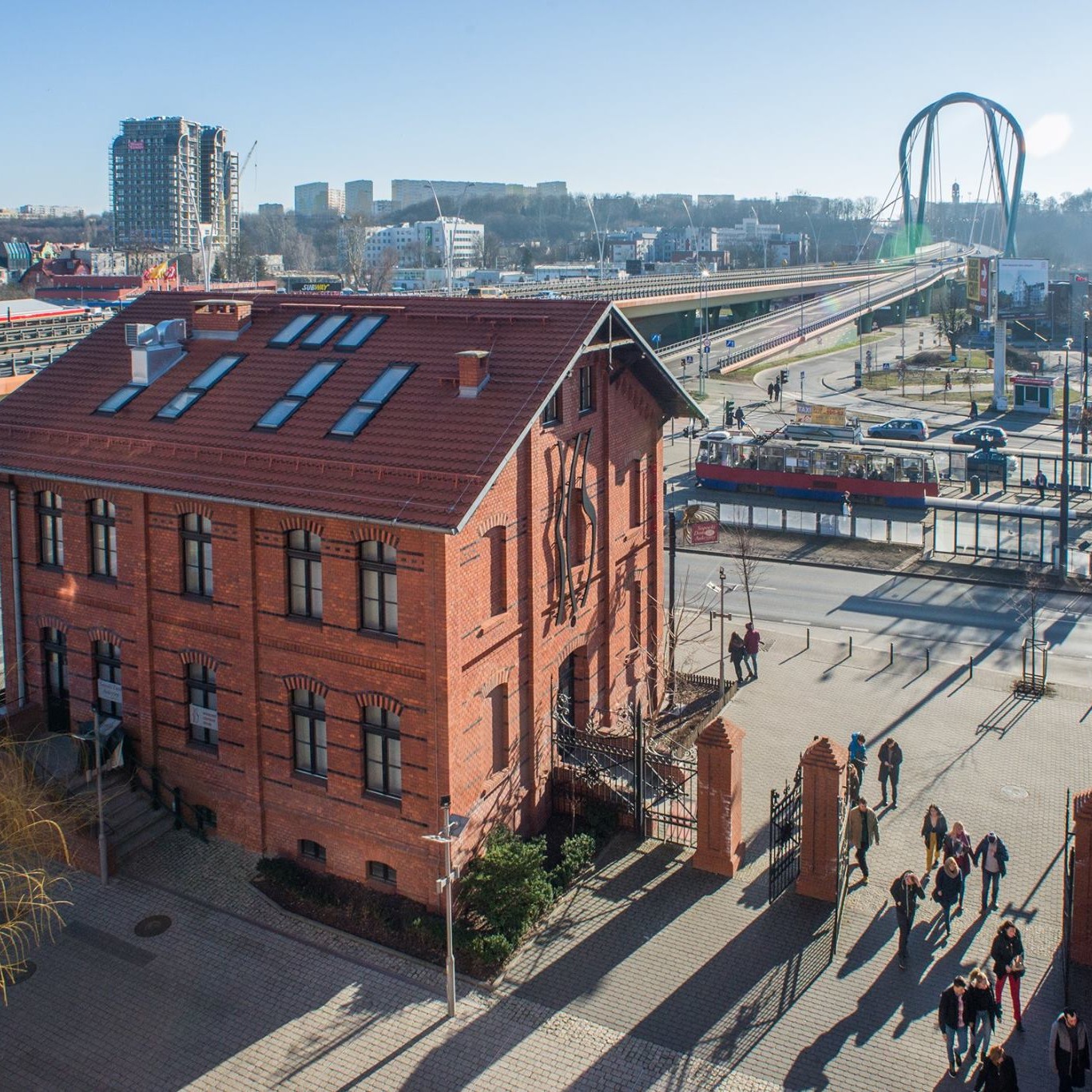
Municipal Art Gallery bwa | 20 Gdańska Street