See the Old Town
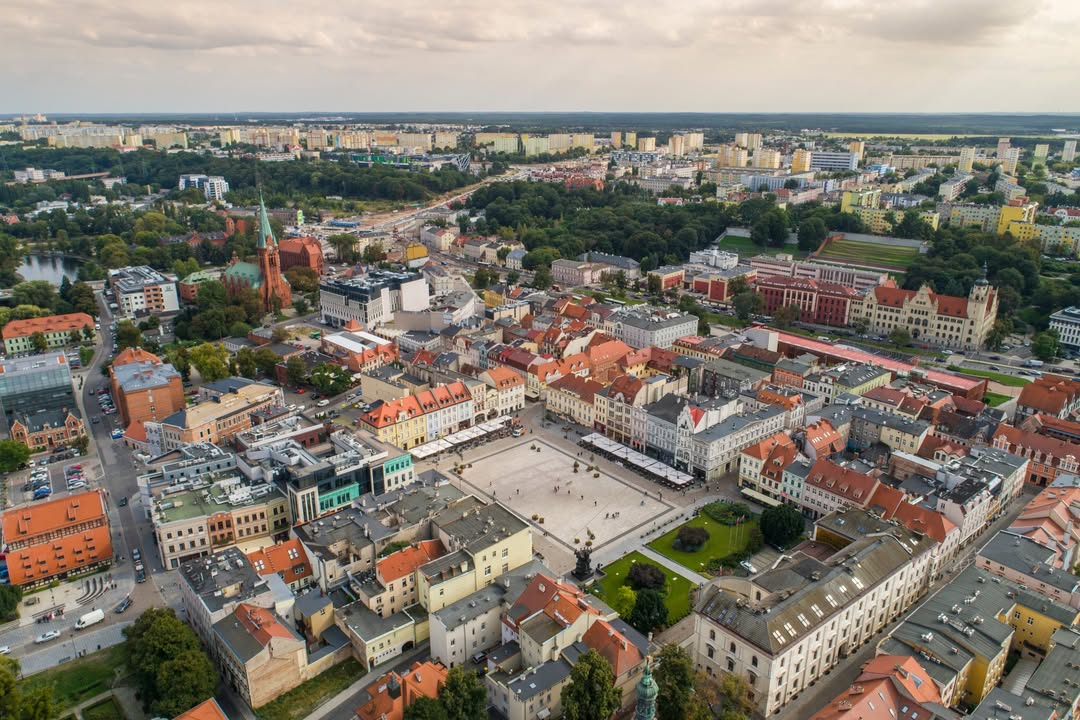
We encourage you to take a walk along the oldest part of the city, founded on the Brda River in the 14th century. During the walk of about 2 hours you will get to know the oldest monuments in Bydgoszcz as well as completely new tourist attractions of the city.
See the Old Town - Time: about 2 hours
Marcin Zaborowski
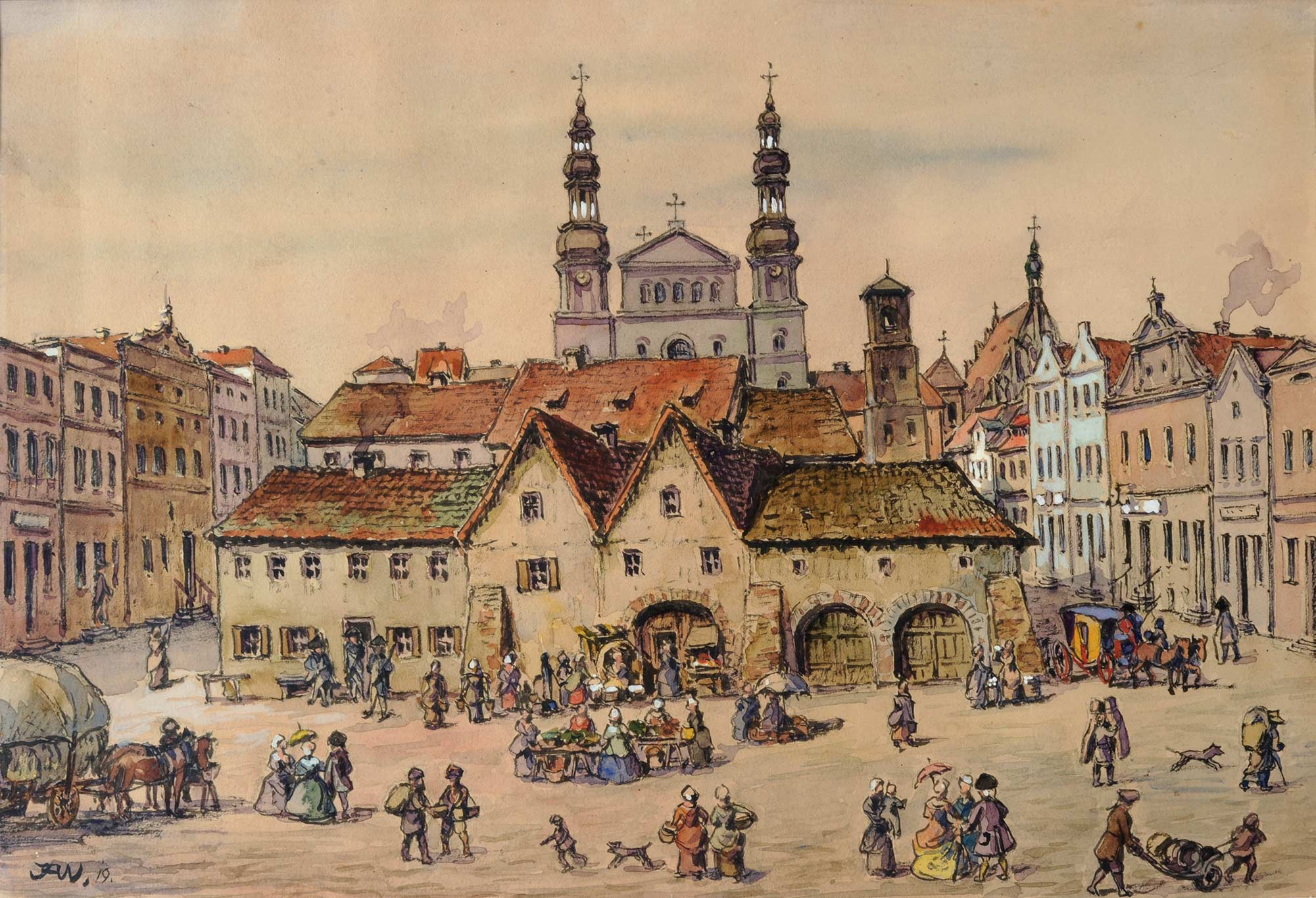
We start sightseeing of the Old Town in the Old Market Square in front of the Bydgoszcz Land Fight and Martyrdom Monument (1) placed here in 1969 (designed by Franciszek Masiak). The monument commemorates the casualties of the Nazi terror, especially the residents of Bydgoszcz who were executed in this place by firing squad on the first days of the Second World War.
Did you know that....
At the beginning of the Second World War, the old Jesuit Church of St Ignatius of Loyola still stood in the Old Market Square. Legend has it that one of the victims of the Nazi terror, while dying, leaned against one of the church walls. The trace of the hand remained and it could not be removed, that’s why the German occupants decided to demolish the church..
Old Market Square
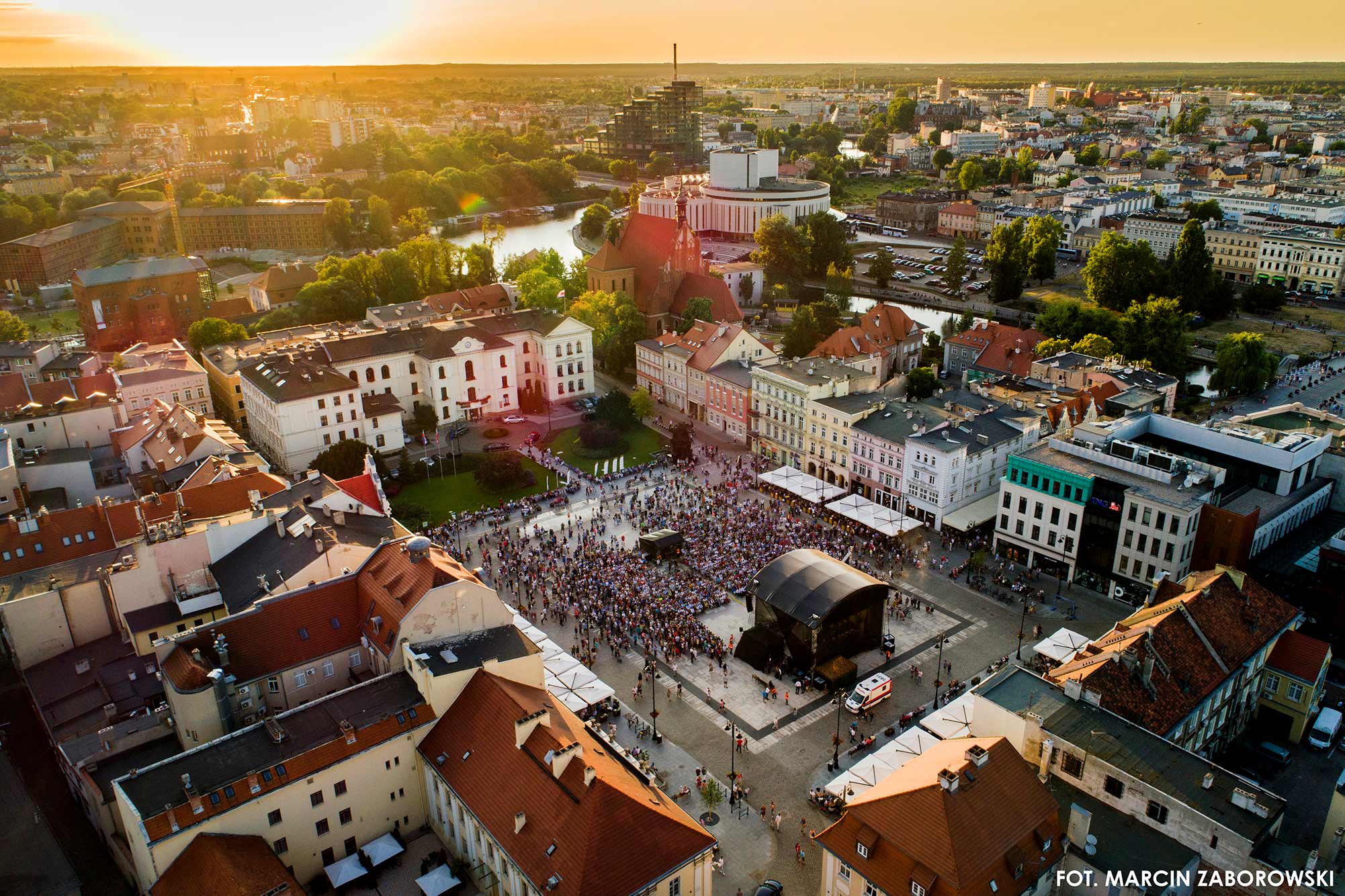
The city’s central square was marked out in the year 1346, when the city was founded by King Casimir the Great, and its present-day buildings date back mainly to the 20th century.
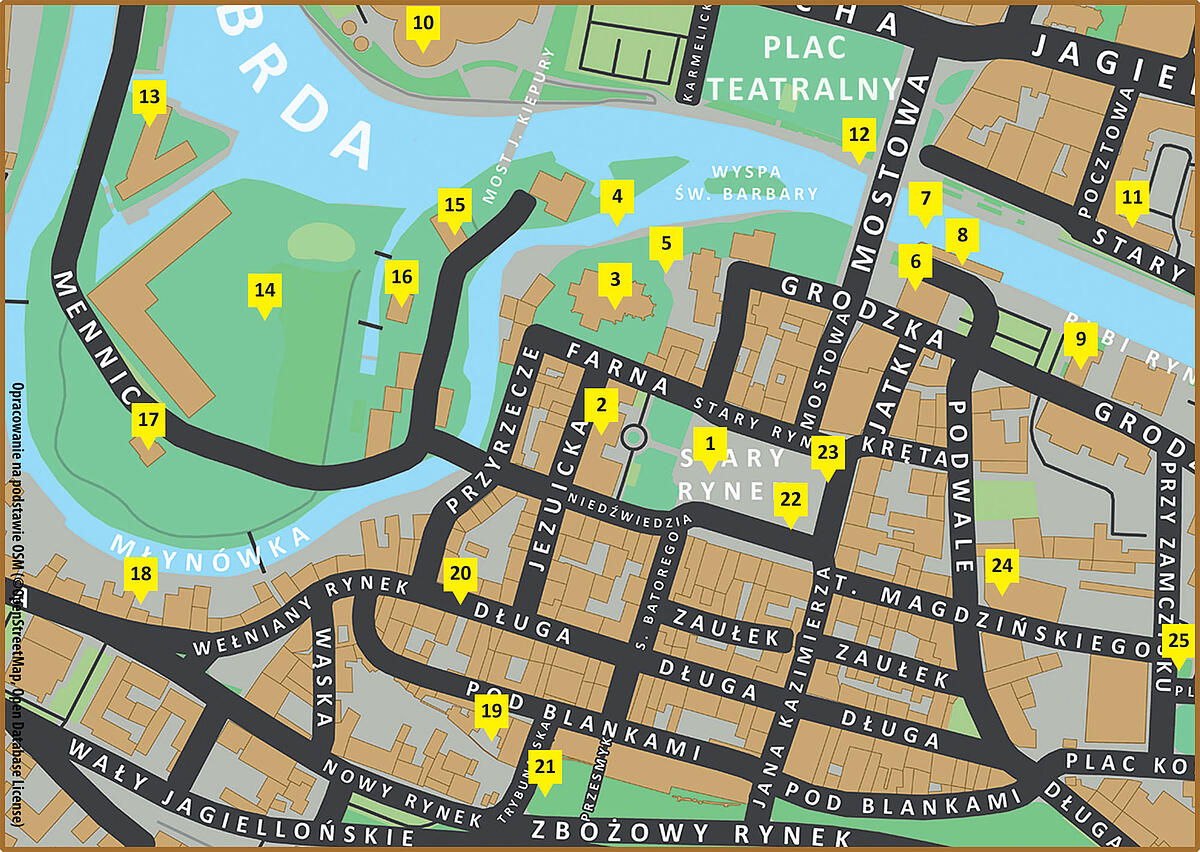
From in front of the monument we go along Farna Street towards the oldest church in Bydgoszcz, the Cathedral of Saints Martin and Nicholas (3). En route we pass the oldest pharmacy in Bydgoszcz – ”Under the Golden Eagle” at 1 Stary Rynek Street – and a grand edifice of the old Jesuit college from the 17th century, presently the City Hall (2). We enter the cathedral through 500-kg bronze doors on the ground floor of the church basement.
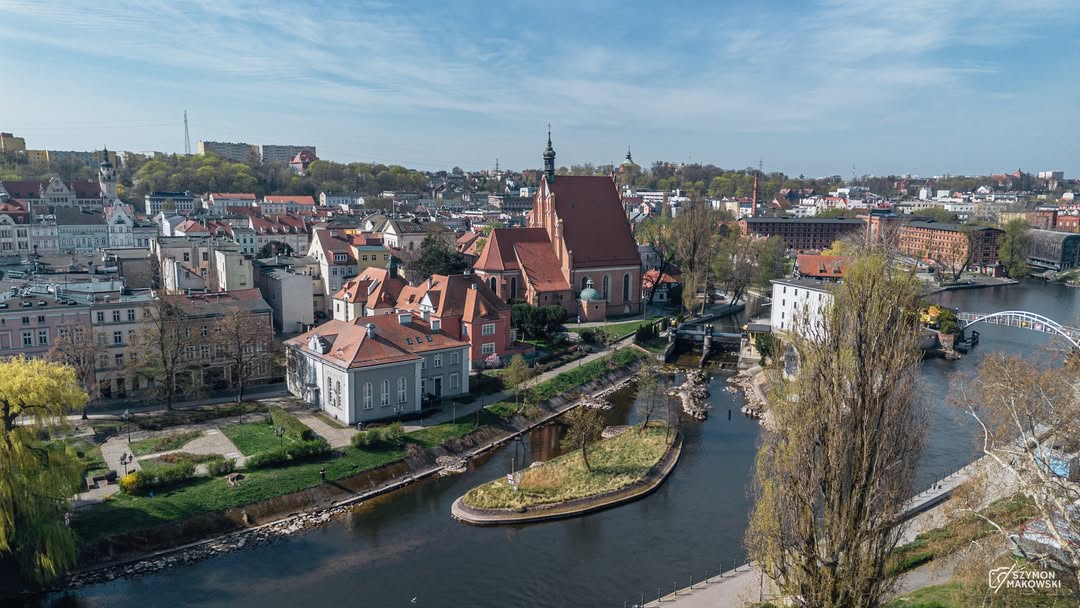
Going around the cathedral, it is worthwhile paying attention to the Farny Weir (4), i.e. the place where the River Młynówka, flowing around Mill Island (14), falls into the River Brda. The present-day building of the Small Hydroelectric Power Plant, standing by the weir, is an old groat mill. In the vicinity, between yews, a bright observer will notice the freestanding sculpture of St John Nepomucene (5) from the 18th century, a saint who was to protect against flood.
Did you know that...
The sculpture of St John Nepomucene, located by the cathedral, is the oldest sculpture in Bydgoszcz, and one of the oldest freestanding sculptures of the saint.
Old Granaries
Filip Kowalkowski
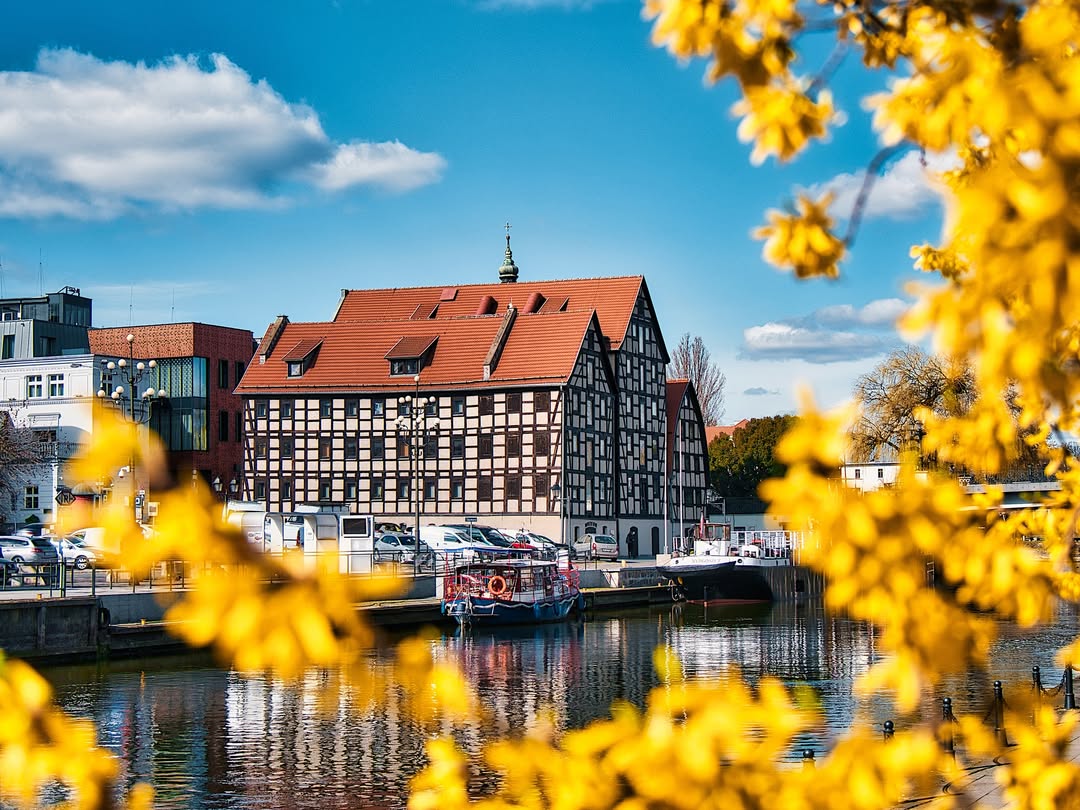
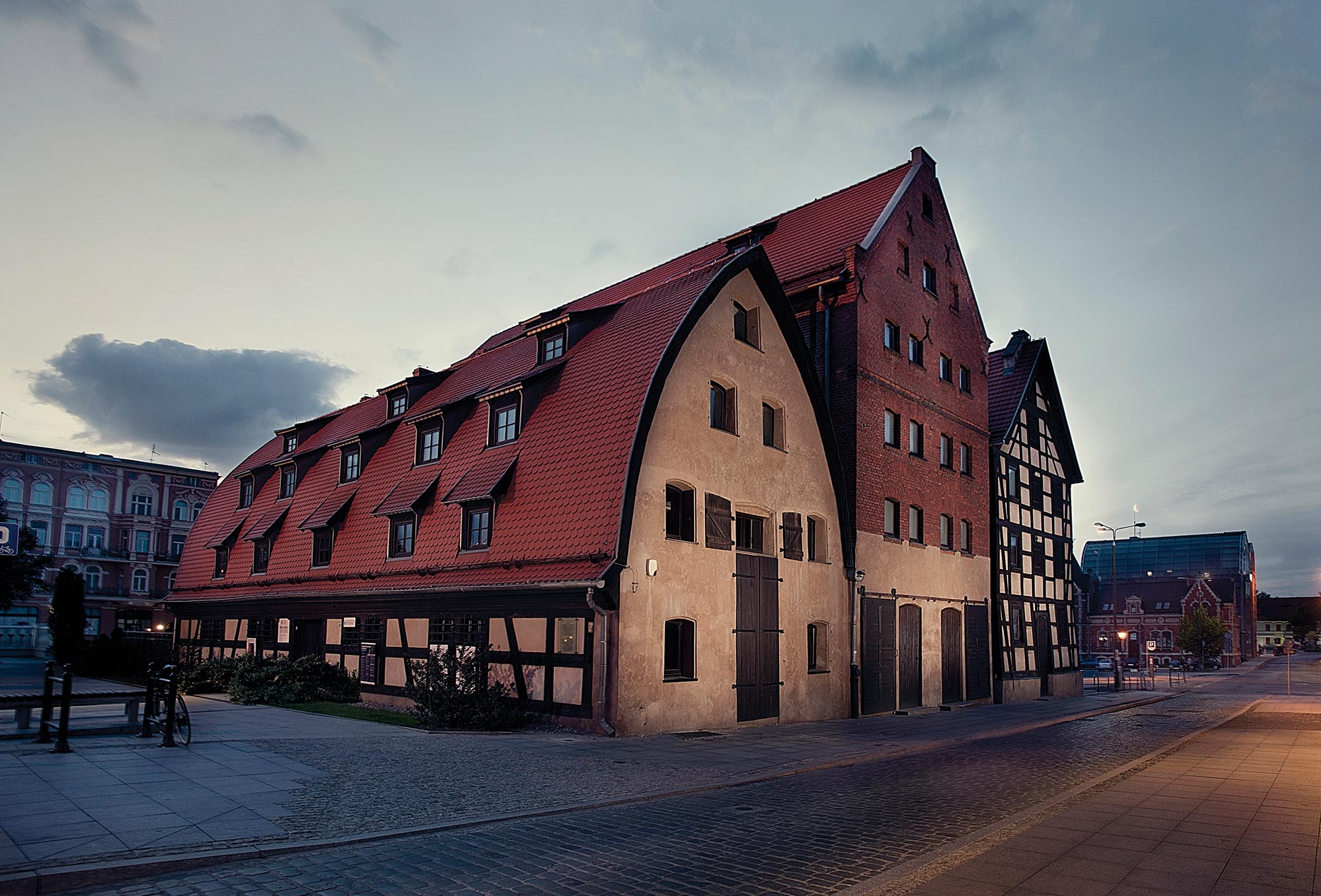
Going along the river, we reach Mostowa Street. After a few moments, we will be able to see the city’s official symbol, i.e. three half-timbered granaries (6) from the turn of the 19th century, scenically located on the River Brda. In the past, these were among many grain storehouses in the city; nowadays they belong to the Leon Wyczółkowski District Museum. In front of the main entrance to the building is a model of old Bydgoszcz. Looking at it, we can see several now non-existent buildings, including the City Hall and Jesuit Church in the Old Market Square, the little Romanesque Church of St Giles, city gateways, and Bydgoszcz castle, which was destroyed during the Swedish Deluge. Now we go towards the Jerzy Sulima-Kamiński Bridge, where we stop for a while to look at the eagerly photographed panorama of Bydgoszcz.
The sculpture floating above the River Brda is the “Man Crossing the River” (7), a tightrope walker smoothly balancing on the rope, who commemorates the day Poland joined the European Union in 2004 (designed by Jerzy Kędziora). Lemara Barge, constructed in 1937 in Bydgoszcz, is moored near the bridge (8).
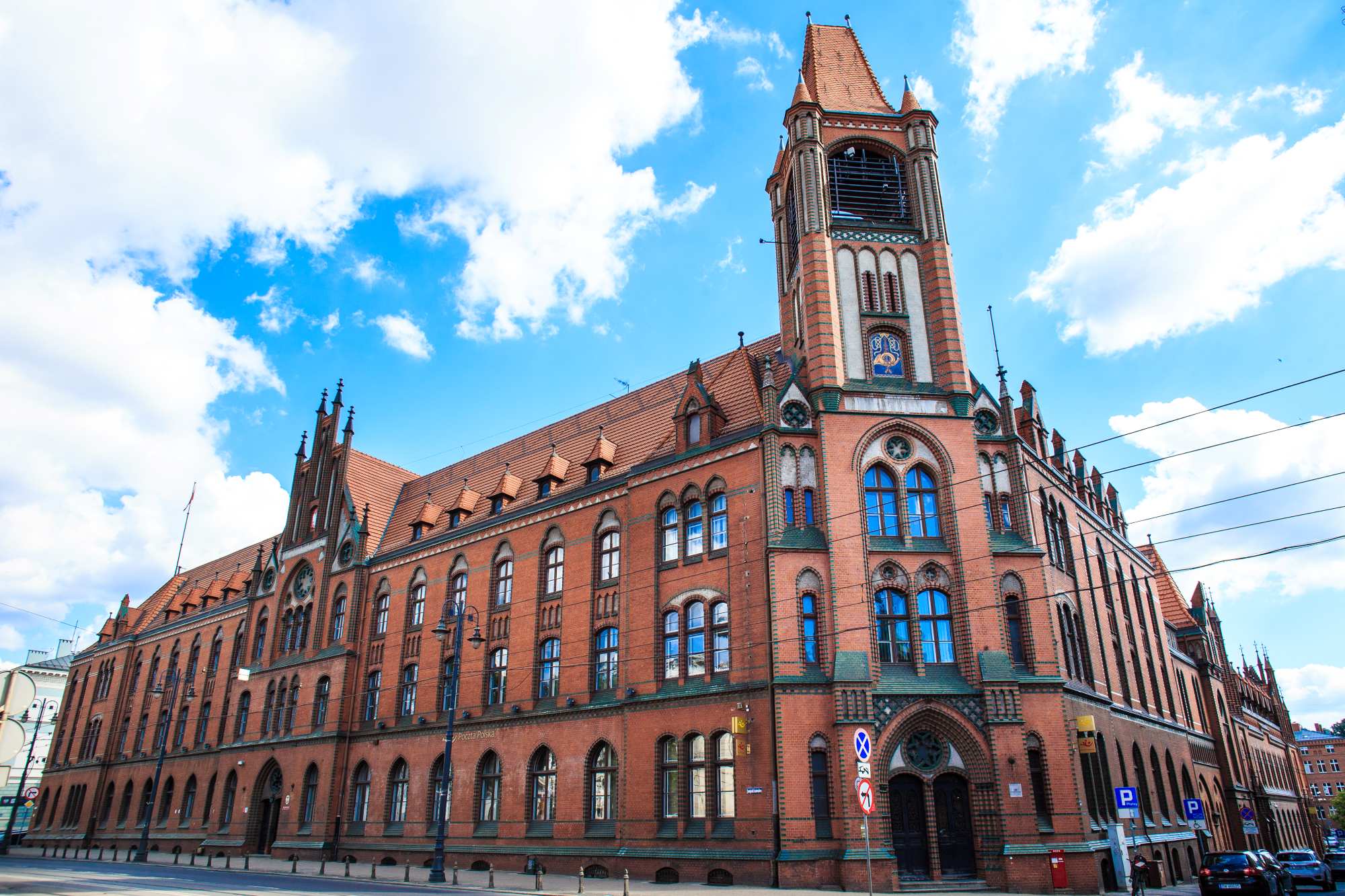
The “little palace” (9) in the Dutch mannerist style on the right bank of the River Brda, built in 1885-1886 (designed by Waldemar Jenisch), was the old head office of, among others, Lloyd of Bydgoszcz, one of the biggest shipping companies in the Second Republic of Poland. On the other side of the river, one can see the Main Post Office (11), which is housed in a complex of historic buildings from the 18th century.
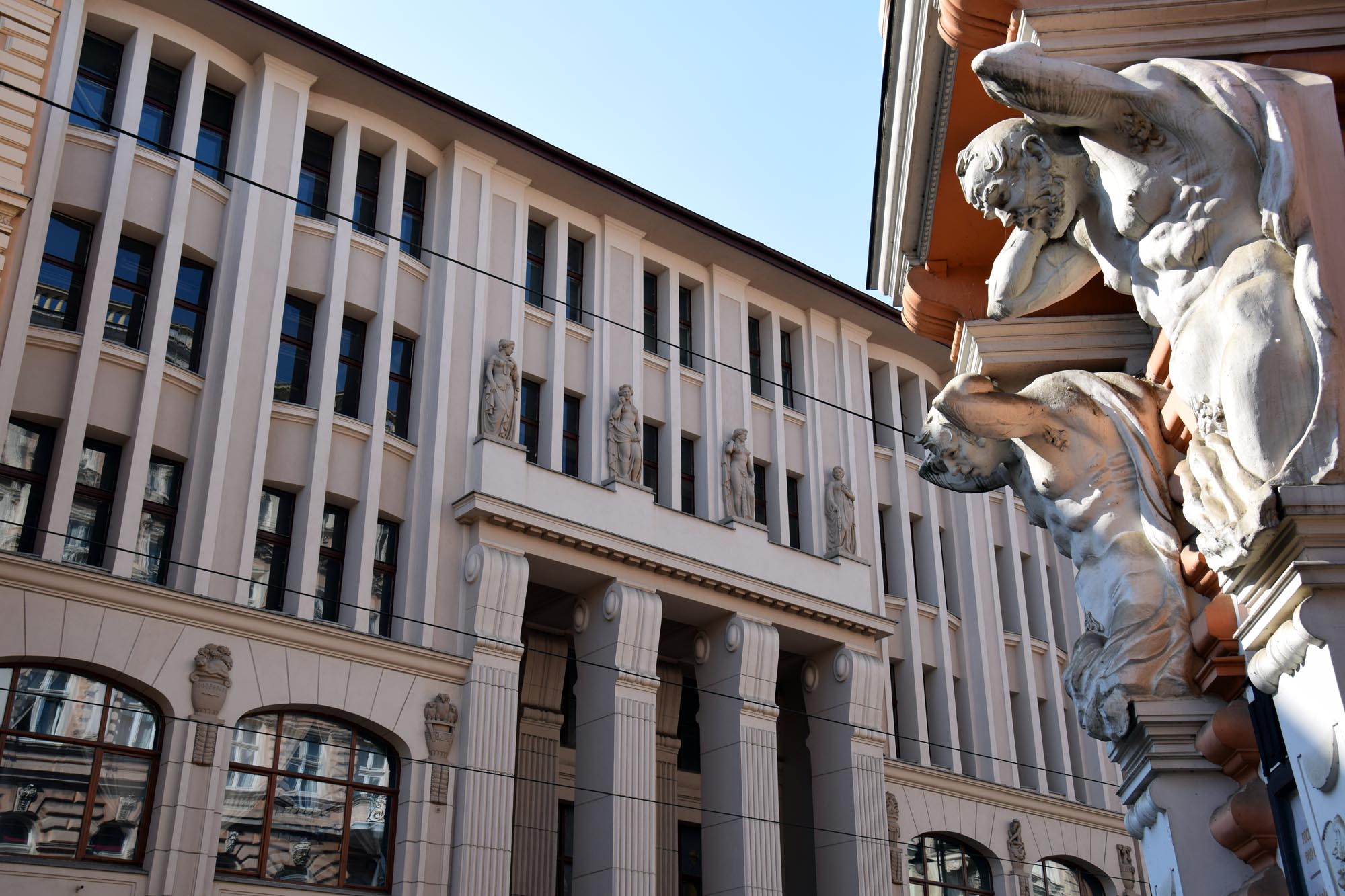
Going down the bridge stairs to the boulevard, it is worthwhile looking at the richness of neo-baroque forms on the corner tenement house at 1-3 Stary Port Street – the work of the famous builder of Bydgoszcz, Józef Święcicki. On the boulevard we turn right and go along the River Brda towards the monumental edifice of the Opera Nova (10).
Did you know that…
On the boulevard on the Brda River, we can admire the Rafter sculpture (12) (designed by Michat Kubiak), which refers to the city’s water traditions.
Along the boulevards
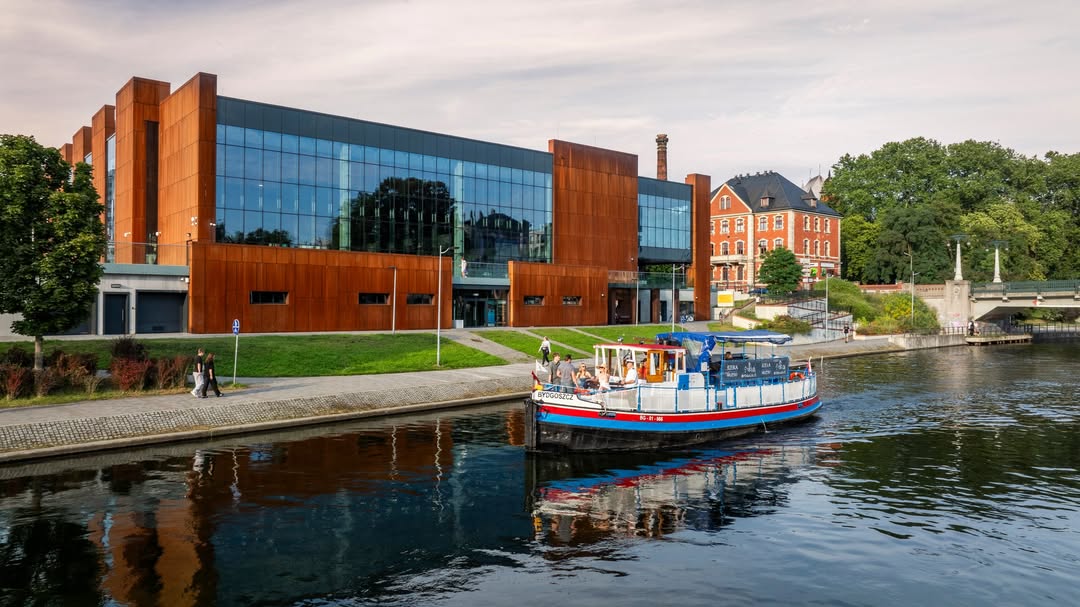
On the left-hand side we pass St Barbara’s Island, from behind which the slender structure of the cathedral emerges. Next, we enter the footbridge connecting the boulevard and Mill Island. We can take a look at the modernist opera building, scenically located in a bend of the River Brda. The building was designed in 1961 (by Józef Chmiel and Andrzej Prusiewicz), and it took over thirty years to construct (1973-2006). This is not only a music stage, but also an important conference centre.
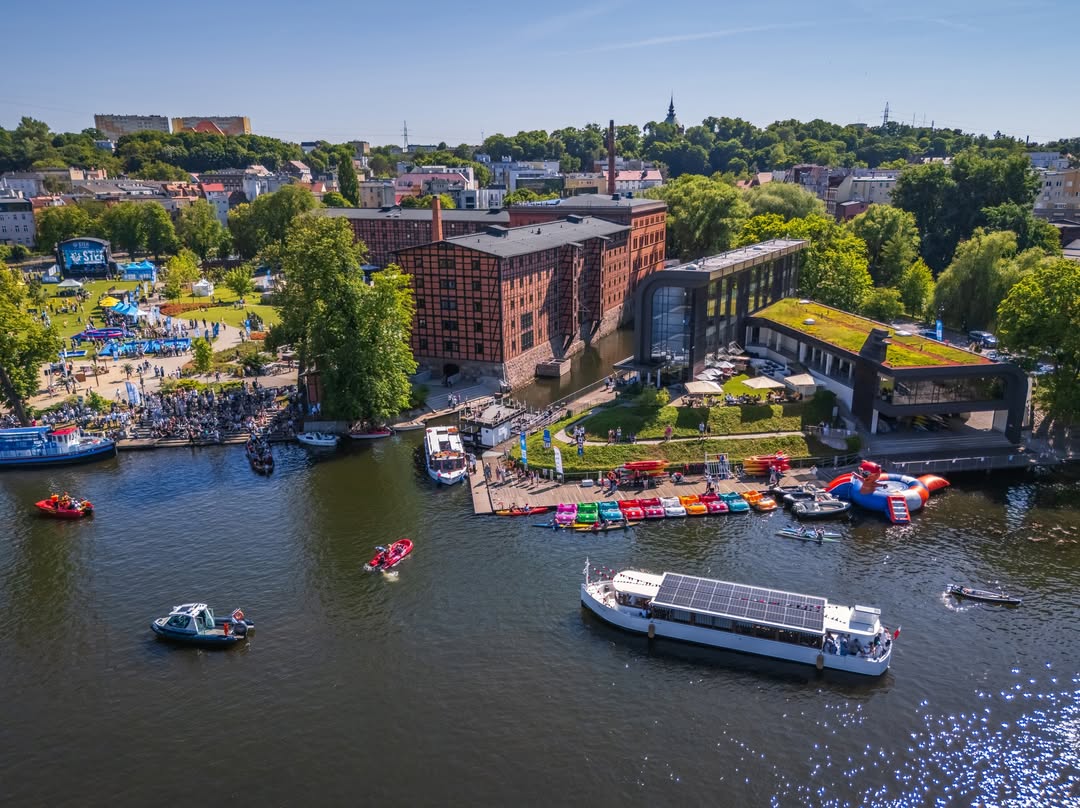
On the other side of the river, in the western part of Mill Island (14), one can see well the modern building of Bydgoszcz Marina (13), designed by the office APA Rokiccy, excellently blending with its surroundings. The marina, completed in 2012, has won not only the hearts of Bydgoszcz residents but also many prestigious awards owing to its unique architecture.
Mill Island - a green enclave in the heart of a vibrant city
Marcin Zaborowski
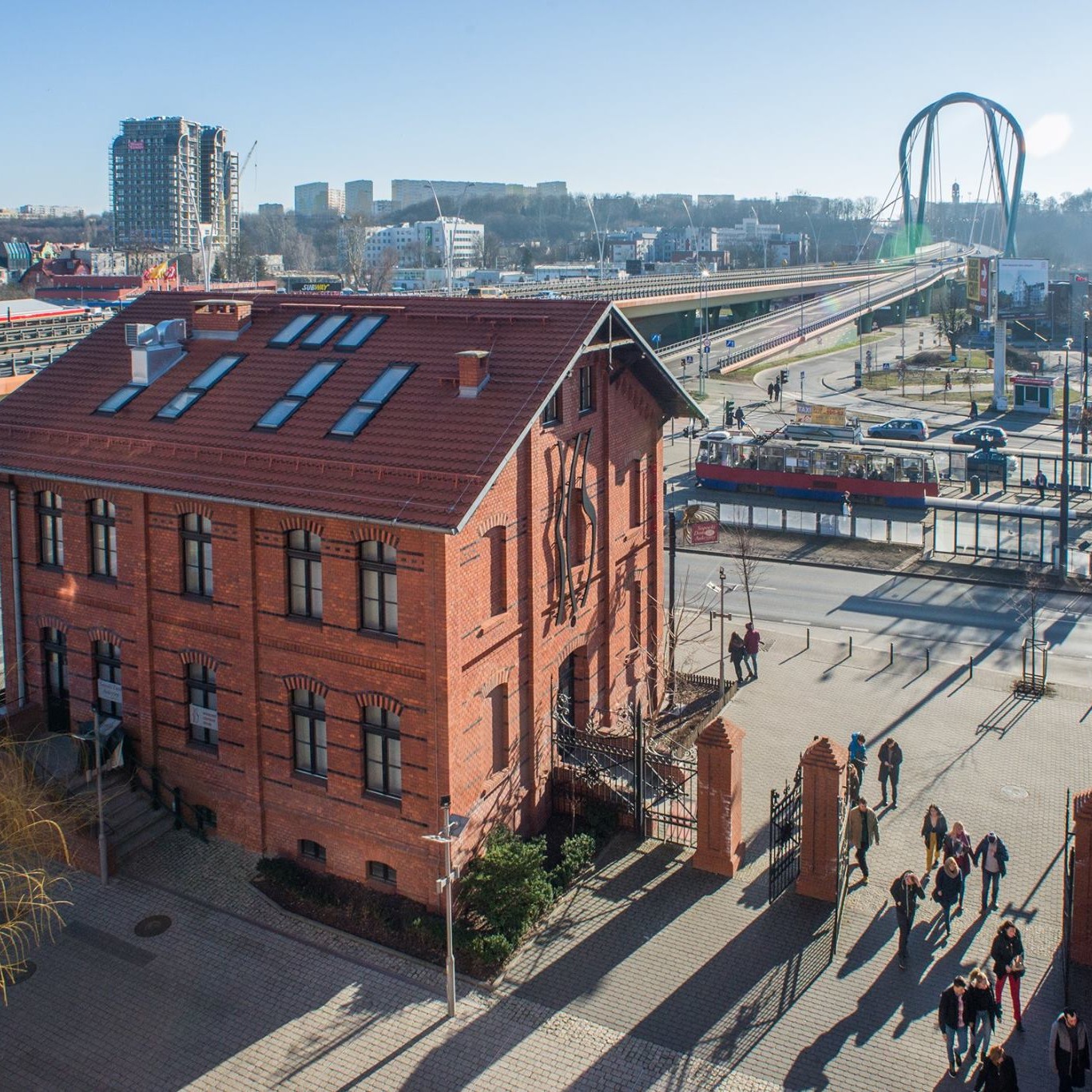
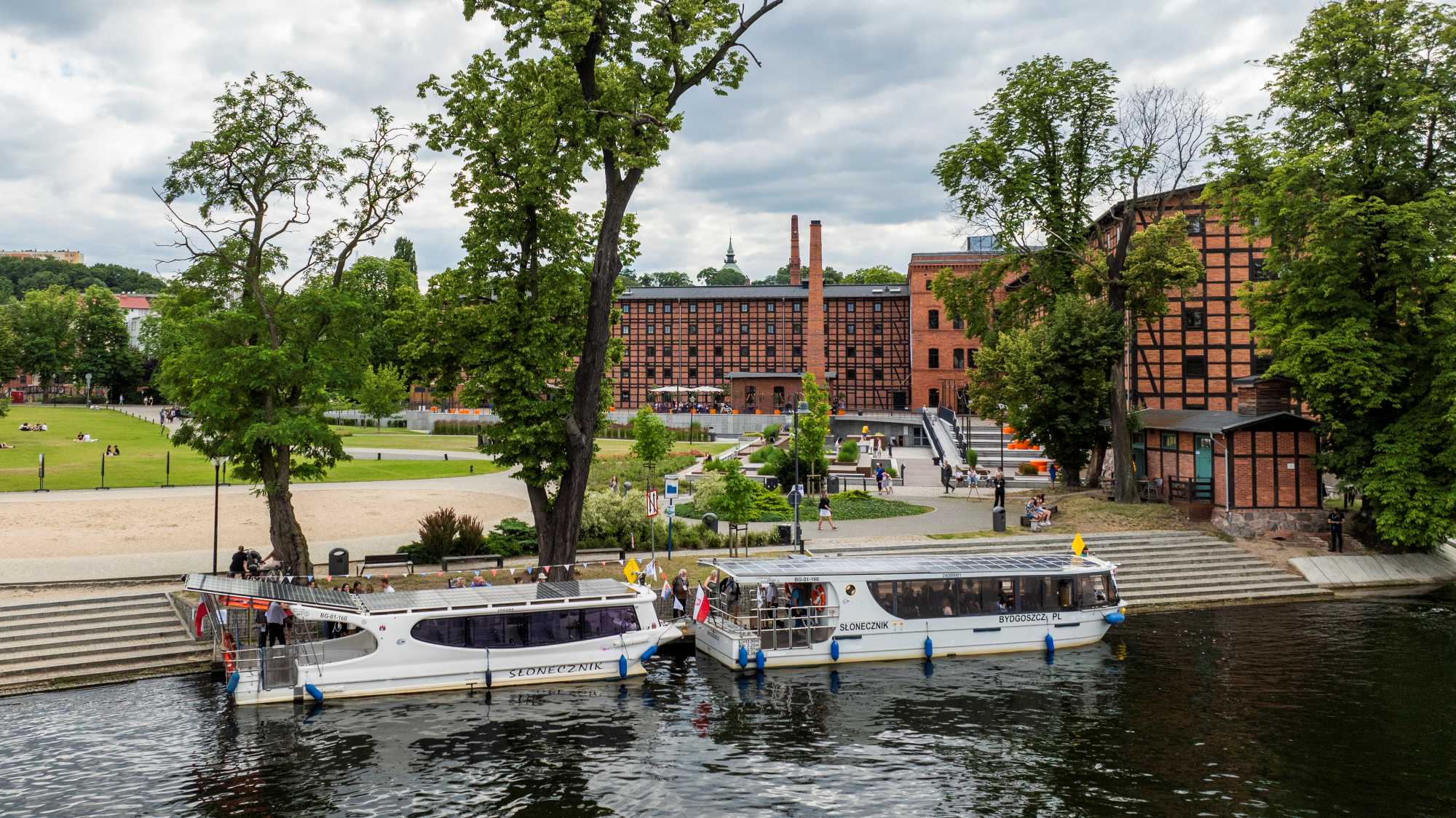
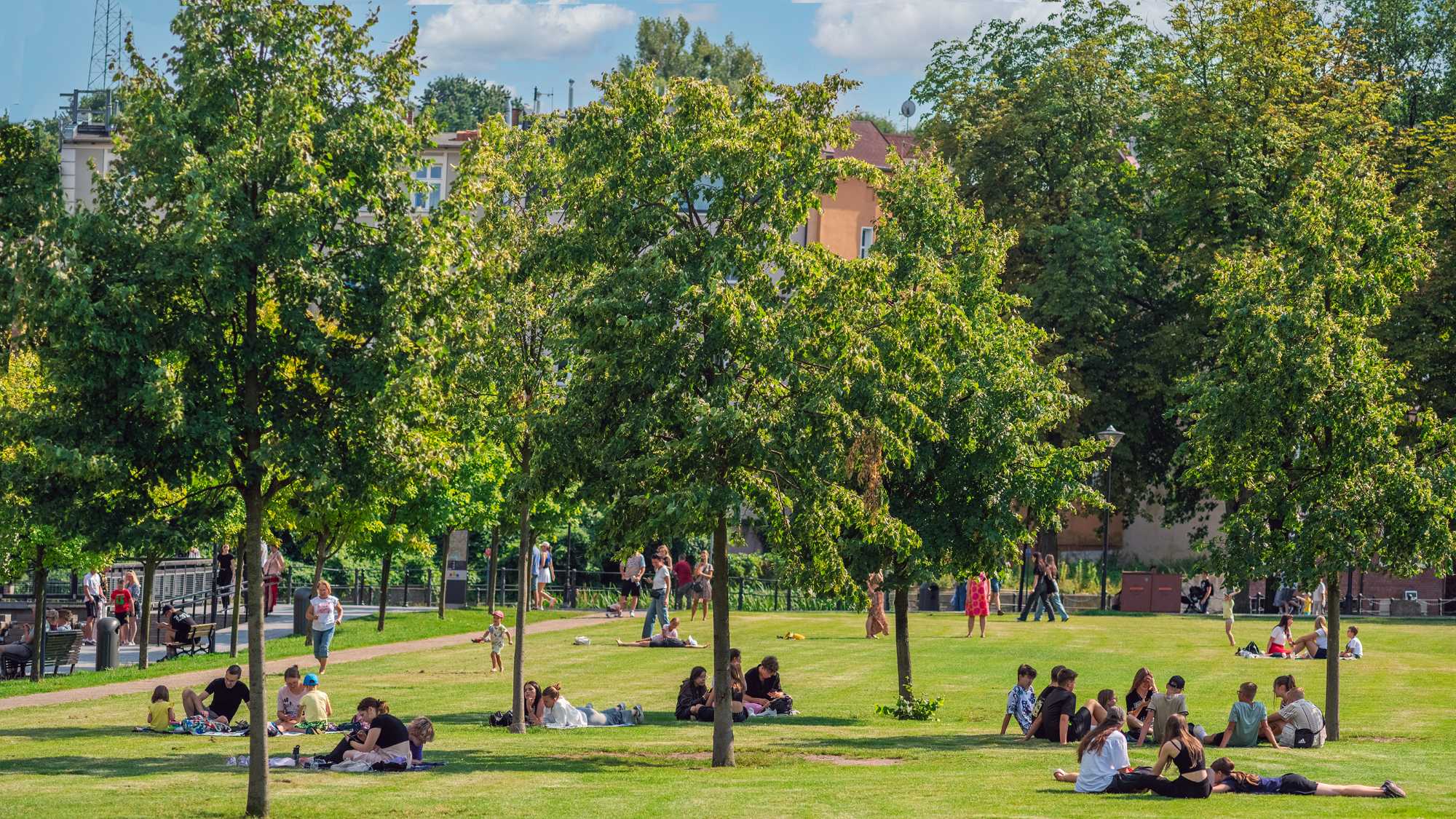
Across the footbridge we enter Mill Island, a 6-hectare green oasis in the very centre of the city. We go past the oldest building on the island, the so-called White Granary (15) dating back to the late 18th century, which is now occupied by archaeological collections of the District Museum. Walking along Międzywodzie, an artificial canal crossing the island, on the left-hand side we go past the building of the European Money Centre (16), erected on the site of the buildings of the Bydgoszcz Mint (operating 1594-1688), and the old steam mill from 1861, the so-called Red Granary, now the Modern Art Gallery.
The central part of the Bydgoszcz island is occupied by a complex of mills dating back from 1848-1849, i.e. the huge Rother’s Mills.
eXbee
The scenic yellow building, located opposite them, is nowadays the House of Leon Wyczółkowski (17), where one can admire paintings, graphics, and the studio of the patron of the museum in Bydgoszcz. Now, we go to the other side of the street called Mennica (Mint), towards the tenement houses on the swift current of the River Młynówka. These buildings, once showing up almost straight from the water, are called the Bydgoszcz Venice (18). In the past, rich burghers used to build their workshops and plants here, e.g. dye-houses, distilleries, sawmill, and a bathhouse operated here.
Długa street - autographs and a unique museum
First across the footbridge over the River Młynówka, and then along the corridor between tenement houses we reach Długa Street (the former Platea Longa), the most important track of medieval Bydgoszcz, which now is 640 metres long.
We turn right and after several steps we reach Wełniany Market Square. Here we see the monument to Leon Barciszewski (designed by Sławoj Ostrowski), the last pre-war mayor of the city, who along with his 18-year-old son was murdered in an unknown place by the Nazis in November 1939.
Let’s look now at the tenement house in 4 Wełniany Rynek – watchful onlookers will see a cannonball between the windows of the second floor; most probably this is a reminder of the Kościuszko Insurrection in 1794.
Muzeum Mydła
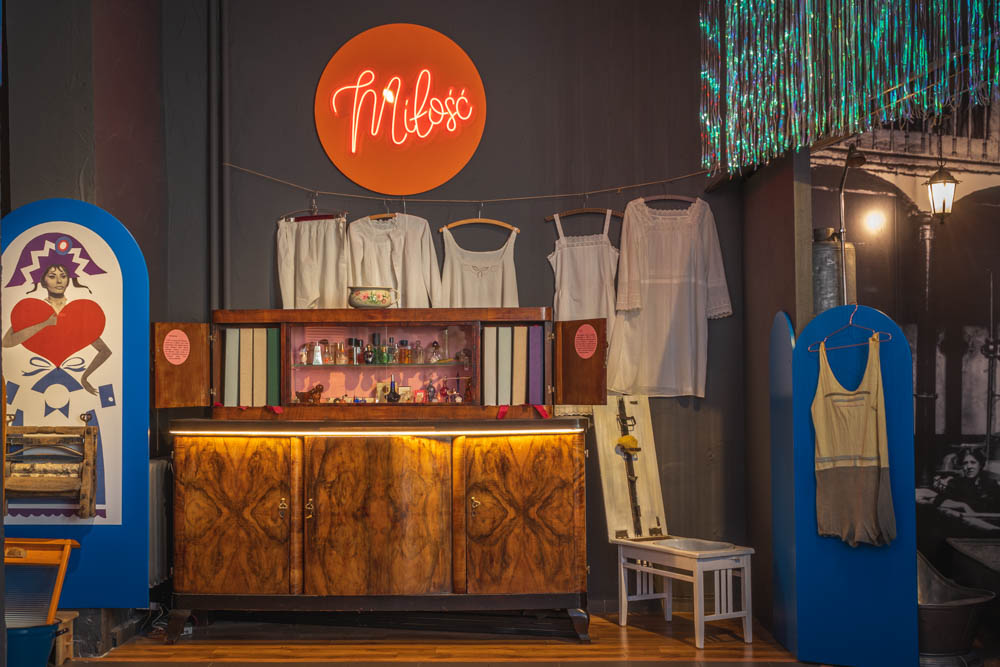
We go back to Długa Street. Walking amidst stylish tenement houses, mainly from the late 18th and early 19th centuries, one can feel the atmosphere of old Bydgoszcz, though the merchant’s major road had lost its position as the city’s trade centre. It is worthwhile visiting the exceptional Museum of Soap and History of Dirt (20) at number 13-17, and stopping by the 18th-century tenement house at number 22, the birthplace of painter Maksymilian Piotrowski (1813-1875), professor of the Academy of Fine Arts in Królewiec (Konigsberg). In the same building, as legend has it, King John III Sobieski stayed in 1676 during his journey by the River Vistula to Gdańsk. From the side of its backyard, the tenement house has extremely interesting two-storey cellars.
In the area of Batorego Street, we turn right, going towards the monument to Casimir the Great (21).
One of the most eminent monarchs in the history of Poland looks at us with authority, holding in his left hand a scroll – the foundation charter of Bydgoszcz. The monument was placed here in 2006 (designed by Mariusz Białecki). The monumental edifice of the District Court built in 1906 soars behind our backs. On the right-hand side of the monument, between the tenement houses, is a bewitching half-timbered granary from the 19th century, which is occupied by the Orthodox Church of St Nicholas. It is worthwhile going in this direction to see the remains of walls surrounding the city from the south in the past. There is also the only partially preserved tower (19) of the old fortifications.
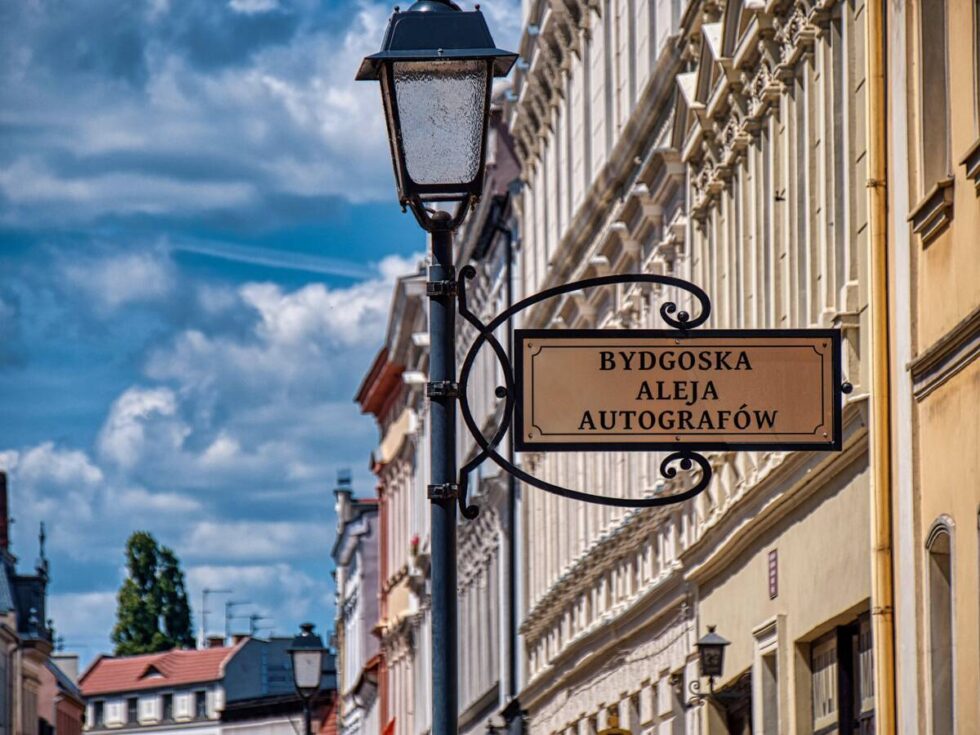
We return again to Długa Street, turn left and go towards the intersection with Jana Kazimierza Street. In the area of the seat of the authorities of Bydgoszcz, located on the left-hand side, it is worthwhile looking down. Under our feet we see the Bydgoszcz Autographs, i.e. signatures of people, who have made a special contribution to the city. Such famous people as Zbigniew Boniek, Irena Santor and Jan Kulczyk have their plaques here.
Looking at the next autographs, we reach the intersection with Jana Kazimierza Street, where we see an old orange tram from 1955, now a seasonal tourist information centre. It is hard to believe now that in the past trams used to run along Długa Street: “red” and “green” line trams. On the southern end of Jana Kazimierza Street, there is a boulder commemorating the Bydgoszcz Jews. The boulder is located right on the site of a monumental synagogue from 1882 (designed by Albert Muttray), dismantled by the Nazis in 1939.
Around Old Market Square
Szymon Makowski
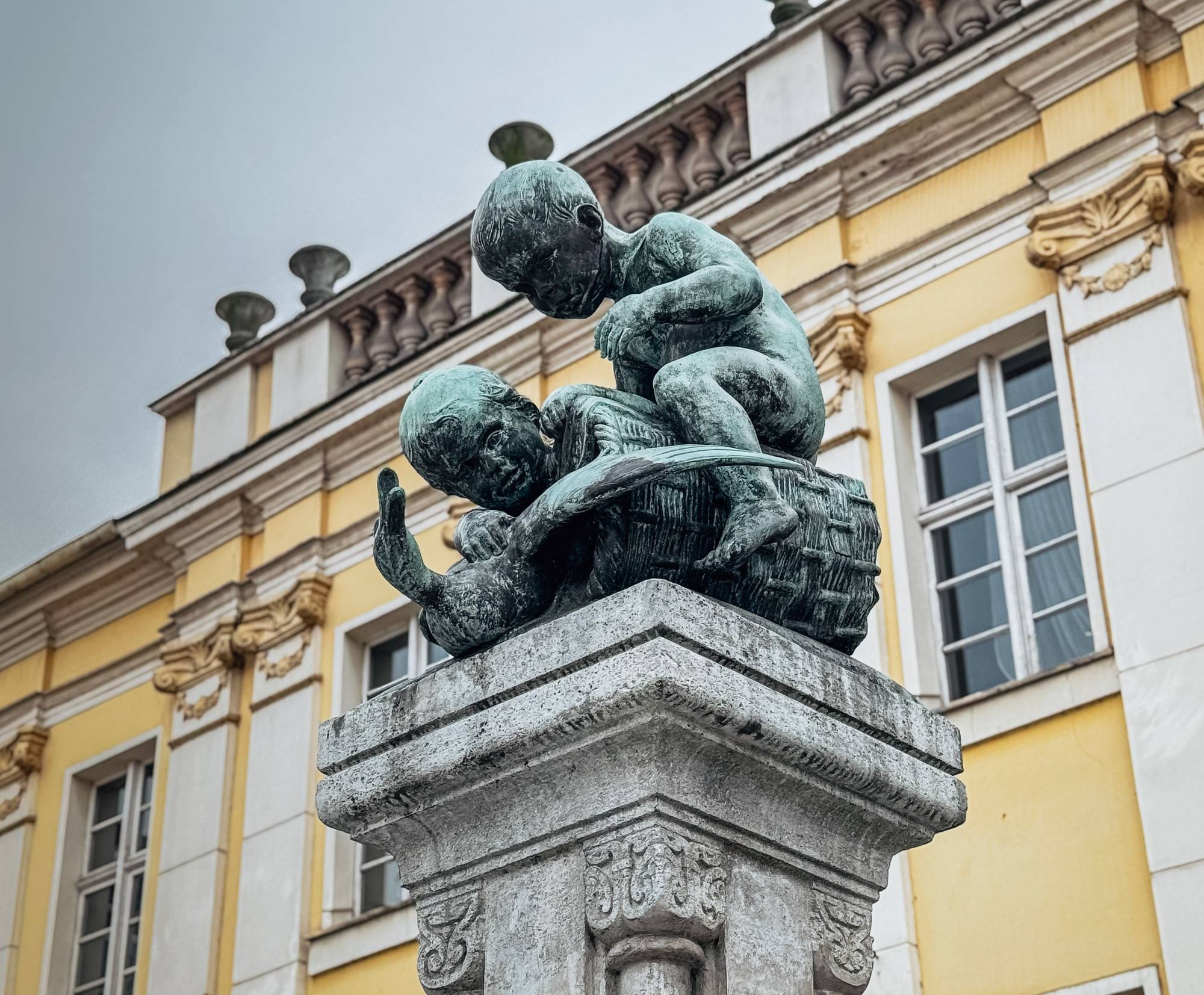
Now we go along Jana Kazimierza Street towards the Old Market Square. The western side of the Market Square is occupied by the classicist edifice of the Dr Witold Bełza Provincial and Municipal Public Library, erected in the 18th century for the Prussian administration. Collections of the library that used to belong to the Bydgoszcz Bernardine monastery are kept in the building. This is the city’s oldest preserved book collection, whose origins date back to the late 15th century. In front of the main entrance to the library, is the bewitching sculpture-fountain ”Children playing with a goose” (22) – a work by Karl P. Kowalczewski, which has adorned the Old Market Square since 1909. Originally, the fountain was located in front of the Pharmacy under the “Golden Eagle”, because it was funded by its owners, the Kupffender family, on the centennial of their pharmacy.
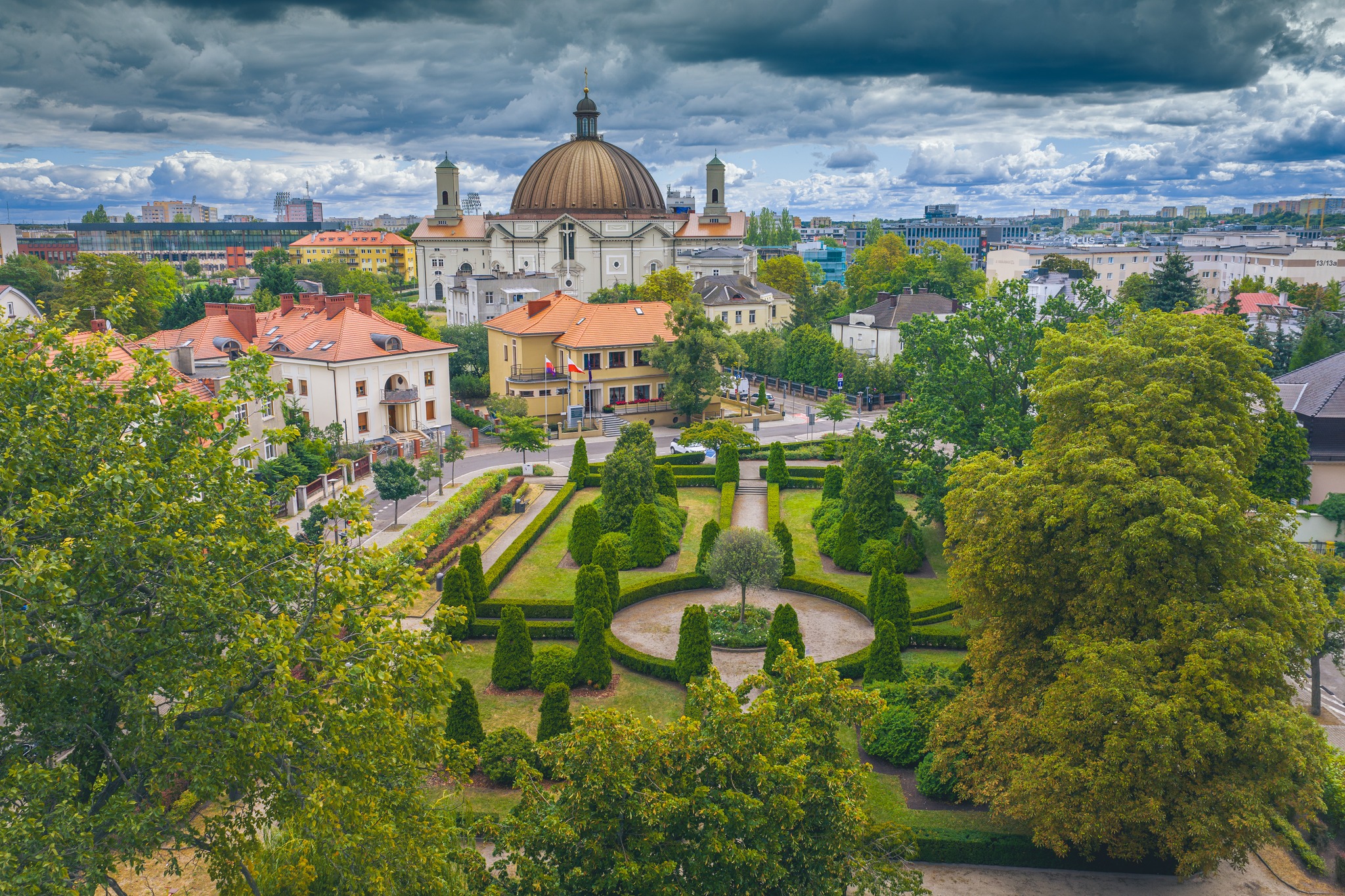
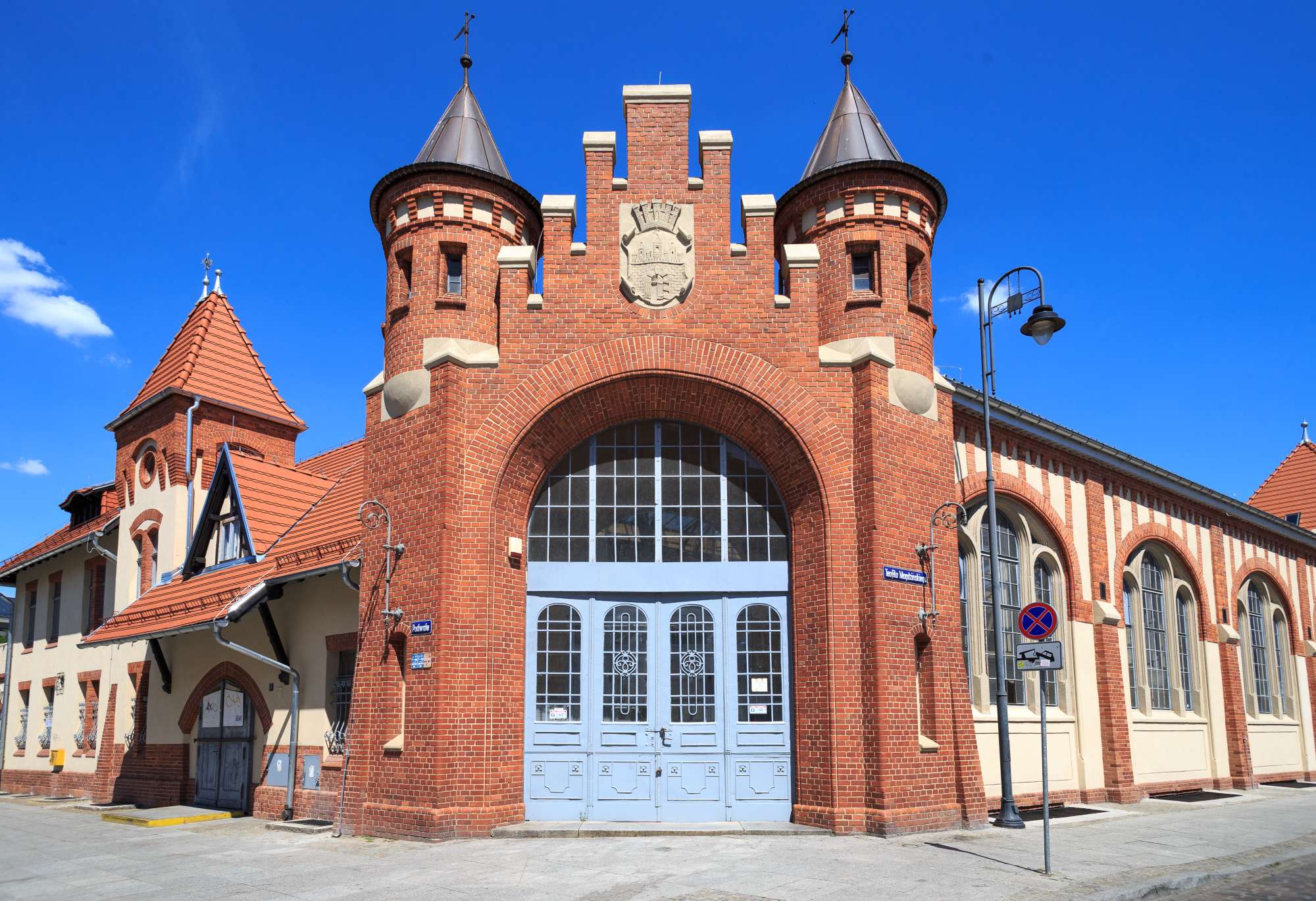
Down Magdzińskiego Street we go towards the historical covered market (24) opened in 1906 (to a design by the Berlin company of architects Boswau & Knauer). Above the entrance to the covered market, there is the city’s impressive coat of arms, while inside the steel structure is an interesting roof. Meat, fish, crayfish and seafood used to be sold here. The viewing axis from the Old Market Square via Magdzińskiego Street is closed by the neo-Gothic Church of St Andrew Bobola (25) with a slender clock tower, dominating Kościeleckich Square. The church, designed by Berlin architect Heinrich Seeling, was erected for the Bydgoszcz Protestants in 1903. Quite surprising is the fact that these days the Jesuit church still remains the highest (75 m) building in Bydgoszcz.
Eljazz and Master Twardowski
Roman Bosiacki
From in front of the covered market we go down Podwale Street (on the site of an old moat) towards Rybi Rynek (Fish Market Square). We turn into Kręta Street, running slightly uphill, which leads us again to the Old Market Square. At 3 Kręta Street, there is an interesting brick building, in the past a part of Herman Franke’s industrial complex, nowadays the famous music club “Eljazz”. The entrance steps are covered with notes – the score of the jazz standard Seven steps to heaven by Miles Davis (for the needs of the steps to the club changed into Three steps to heaven).
Entering the main Market Square of the city, it is worthwhile looking at the corner tenement house at 15 Stary Rynek (23). In one of its attic windows, Master Twardowski appears exactly at 1:13 p.m. and 9:13 p.m. At the corner of the Old Market Square and Batorego Street, is the artistic Węgliszek Cafe, with a window decorated with an image of the devil of the same name, which had shady dealings with Master Twardowski.
This concludes our tour of the historic Old Town. Be sure to discover our other scenic sightseeing itineraries: